My Plan for Oct. 5

As I mentioned, I’m going to be at the Ragan Employee Communications, PR, and Social Media Summit from Oct. 3 – 5.  There are a few different sessions offered during each period, so I wanted to share the sessions I’m planning to attend here.  You can always follow my live (West Coast time zone) on Twitter (@kkozlen), or here on this blog. If requested, I might do some live video coverage via this site… please take a look at my plan for the conference and let me know if there are any questions or things I can look into on your behalf.

Kim Darnofall

8:30 a.m.-9:30 a.m. (PST)
7 ways internal communications can help create a great place to work
Kim Darnofall (@KimDarnofall), Internal Communications Project Manager, SAS

SAS has been in the Top 3 on the FORTUNE 100 Best Companies to Work For® List in the United States, including two No. 1 rankings, in the past three years. Internal communications plays a vital role in earning this distinction by creating or promoting programs featured in the award application, by enhancing leadership communications, and by fostering pride in the company and encouraging camaraderie. All of these are measured in an employee survey, which counts for two-thirds of a company’s ranking. SAS’ Kim Darnofall will not only outline the ways internal communications creates an award-winning workplace, but will give examples of how they “keep the corporate culture.”


I’M STILL DEBATING BETWEEN 2 SESSIONS DURING THE NEXT TIMESLOT… HERE ARE THE 2, LET ME KNOW WHICH ONE YOU’D BE MOST INTERESTED IN HEARING ABOUT.

Andrew Hokenson

9:45 a.m.-10:45 a.m. (PST)
How Best Buy provides a voice for its remote workforce using social media
Andrew Hokenson (@Andreux), Senior Specialist—Employee Communications, Best Buy

With the average age of Facebook users pushing into the northern 30s, the mystique of social media isn’t such a mystery anymore. However, with a new generation of employees integrating into the workforce (a generation that views email as antiquated and “corporatey”), it’s time to integrate the social media philosophy so many are comfortable with at home into the workplace. Andrew Hokenson will take you on a narrative of Best Buy’s journey from a monolithic state to a culture of 167,000 communicators.

In this session:

  • Challenges of changing a “new” communication culture
  • How to develop a social media policy for your intranet
  • Why and how to bridge the gap between corporate and field employees
  • Why social media shouldn’t become another communications strategy
  • Why companies shouldn’t have a CEO featured on the TV show “Undercover Boss”

Drew Keller

Paolo Tosolini

9:45 a.m.-10:45 a.m. (PST)
How mobile video can make you a communication hero
Drew Keller (@DrewKeller), Owner, StoryGuide, and Paolo Tosolini (@Tosolini), Director of Digital and Emerging Media, Run Studios

Smartphones and tablets are the new best friends of corporate communicators. They are portable, connected and multitalented. You can push their powerful versatility in new and creative ways that will far exceed their traditional uses. Through practical demonstrations, Drew Keller and Paolo Tosolini will show you how to exploit the multimedia capabilities of mobile devices. At the end of this session you’ll be able to transform your stories through mobile video.

In this session:

  • Create powerful photo montages out of your pictures
  • Master best practices to shoot and edit interviews with your mobile phone
  • Use tags and videos to promote your products and services
  • Live-stream an event from your phone
  • Surprise your team using Augmented Reality

11 a.m.-12 p.m. (PST) – CLOSING KEYNOTEDux Sy

Deliver digital marketing success: 8 steps PR professionals can take to maximize social media
Dux Raymond Sy (@MeetDux), PMP Managing Partner, Innovative-e

As traditional marketing and social media become increasingly adopted for building relationships with existing and prospective customers, what is the value of social media for PR professionals engaging in a business-to-business environment?

Join Dux Raymond Sy as he shares practical strategies, tips and best practices on how PR professionals can best maximize social media for marketing, brand awareness, customer engagement and sales acquisition. You’ll see real-world examples of how utilizing social media can generate legitimate results, including increased business leads and loyalty among existing customers.

In this interactive closing keynote:

  • Distinguish the value of various social media channels for your PR initiatives
  • Establish relevant metrics for measuring digital marketing success
  • Amplify corporate messaging with an industry “echo” system
  • Integrate social media channels with existing marketing initiatives and sales efforts
  • Leverage internal and external tools like SharePoint, SocialOomph, Google Analytics and Feed Burner to manage social media activities
  • Drive a targeted social media campaign for brand awareness, lead generation, customer engagement and partner initiatives
  • Create a strategic social media roadmap for your organization

Participants will receive a workshop recording, digital marketing templates and checklists, and a strategic social media roadmap template.

Outsource Social Media?

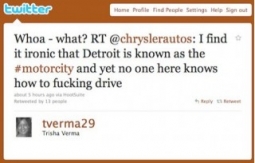
This wasn’t necessarily a presentation I attended at iMedia, the Social Business Summit, or SXSW, but among the many brand people I got to meet, it was an extremely hot topic of discussion.  The discussion was further fueled by something that happened the day before the Social Business Summit.  If you hadn’t seen the news, an employee from a company called New Media Strategies, accidentally dropped an f-bomb on behalf of their client, Chrysler’s twitter account.  As you can imagine, the employee was immediately fired and Chrysler let the agency go the following day.

Many of the brand people I met worked in various parts of the company, and something mentioned in the Ad Age article about the incident sparked a lot of discussion…

Turf battles over social media between marketing and communications have been an issue at the automaker — and other companies — for a few years. Early in the day after the tweet went out, Chrysler’s communications team was grappling to get hold of the details of the episode after bloggers and media began calling, in part because Chrysler’s marketing department controls Facebook and Twitter social-media accounts that are “consumer facing.” The communications department has separate Twitter, Facebook, YouTube and Flickr accounts that are meant to be “media facing.”

Many companies say the divide only serves turf and budget wars, not the brands. “All that has blurred, so it’s critical for communications and marketing to be coordinating and cooperating all the time,” said Stuart Schorr, VP-communications and public affairs at Jaguar-Land Rover North America. One of the issues creating the turf war, he noted, is which department gets the budget.

What I think we all discovered was social media is something that can’t be fit into a traditional box, as it has blurred the lines between paid and earned media, marketing and customer service, as well as transactional versus relational communications.  I’m not sure anyone has figured it out, but everyone expressed frustration about how this confusion was causing issues within their companies  (like the ones mentioned above).

The general perception is that social media is “cheap,” because sites like Twitter, Facebook, and YouTube don’t necessarily charge you to be there.  However, in order to do it right, you have to invest first in listening to conversations about your brand and industry… which isn’t easy, when there are over 1 billion tweets per week, 1 billion Facebook messages posted per day, or the 24 hours of video uploaded to YouTube every minute.  Imagine the resources it takes just to do this… and if you want to respond to any of these messages, that takes more resources – and as pointed out above, multiple resources across functions/silos.

Hopefully you can agree, at the very least, it takes a large amount of time and organization.  Generally, brands are already heavily committed to traditional media – and spending money to outsource this work to traditional media agencies – because the “push my message through a one-to-many framework” has been in place for so long.  Even more important, leaders aren’t yet prepared to organize new internal communications structures to deal with a “new” media which requires one-to-one relationships.

In the meantime, there are certain to be many, many more ethical debates (like this one – Should You Outsource Social Media?) about whether or not you should hire someone to manage customer relationships in social media on your behalf.  Please tell us what your take in this debate is by commenting on this post.

More than a Crowd at SXSW this Year

Attendance at SXSW has grown by leaps and bounds the last several years.  In 2009, attendance at the Interactive portion of the conference was around 10,000.  Last year, for the first time, the interactive crowd overtook the music crowd with over 14,000 attendees.  If growth holds true, they are expecting nearly 20,000 people to attend SXSWi this year.  In a previous post, I highlighted a post from Robert Scoble, who wondered if SXSWi has gotten too big to be the meaningful experience it once was.

Here, I guess Bettywriter and I did a pretty good job covering the event last year, because we’re now aware of many more Central Illinoisans attending.  Of course, we know it’s not just our reporting skills, it’s the topics and companies that use SXSW as a platform to highlight their cutting edge products and services. Along with being able to rub elbows with cutting edge thinkers, it’s invigorating to be around so many people that share innovation, technology, and creativity as a passion.

Just here in Blono (that’s Bloomington-Normal for short for non-locals), we’re aware of at least 21 people going for the interactive portion alone.  I’m certain they’ll have a great time and come back with a renewed energy and enthusiasm for digital, creative, and new media.  The more that can bring this feeling back to Central Illinois, the better.

While we certainly invite anyone attending SXSWi to join us in blogging and reporting from the event, we hope those locals attending will join us on this blog.  If you are attending SXSWi and would like to participate in sharing your SXSWi experience and knowledge here, please contact us.

Brand 2.0

Presenter: Kevin Yam – Directer, mobile and interactive platforms, National Geographic

500-x-BusHomeFew other publications have the longevity of National Geographic, but like any magazine, it has had to adjust to adapt to technological changes and the way that users choose to experience media.  A few years ago, the company looked at all of its media offerings – magazines, tv, games, online, image collection, music, books, films, and maps – and discussed how it could offer that compelling content together across all of that existing media.  As they develop new content, they consider how it could be used (licensing) and how to best tell the story in many different ways.

Developing this led to a heavy focus on user experiences, which forced them to examine the context in which their content was consumed.  With the emergence of mobile, consumers now have immediate access to information and resources, and National Geographic wants to be there with their rich, outstanding content.  This recent led to the development of a Bird Finder app which helps users identify birds (using location information), and incorporates sounds and video.  Additionally the app allows them to “check in” the bird, creating crowdsourced maps of where types of birds have been seen.

They also recently completed a project to tell the story of going to Antarctica – Bus 2 Antarctica.  They used new and social media to help tell the story of, “1 man, 10 weeks, and 10,000 miles,” traveling from National Geographic’s offices to Antarctica.  He kept followers up-to-the-hour on his travels via Twitter (@bus2antarctica), a blog, facebook, an interactive map, and media partnerships with FOX, ABC, and CBS.  The traveler used only an iPhone, still camera, video camera, GPS, and a tracking device to report his stories through all of these media.  It helped to prove they could tell a tremendously compelling story, in real time, for an extremely low cost.  Every brand needs to consider how they can take advantage of new and social media to tell their story or provide brand content.

Slashing Red Tape to Revolutionize Corporate Communications

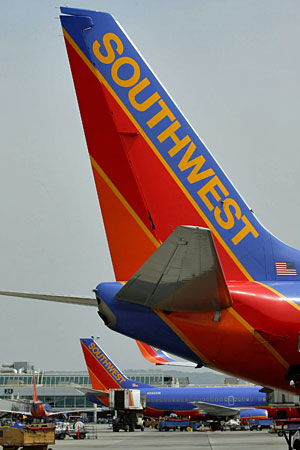
Presenter: Paula Berglinhartpr.com – formerly at Southwest Airlines

When Paula Berg started in the customer service area at Southwest Airlines, she never thought she’d end up where she did – with a seven personal social media team.  She started doing some of the social media stuff on the side and made it her goal to integrate social media into every internal and external communication effort in a way that made sense for the community and brand.  She offered five tips for inspiring organization change and helping both the organization and its executives to “get it.”

1. Make jaw-dropping reports – Don’t just focus on the numbers and great looking charts (although great design helps).  Be sure to thoroughly evaluate what the numbers mean, especially in terms of your business and communications goals (make sure they care about the results).  Include what you learned and your intended next steps to do things differently.

2. Launch an Internal PR Assault – People can’t just hear about social media, they have to live it.  Insert social media into every newsletter, magazine, mailer, department update, every meeting, lucheon, summit, etc.

3. Make your executives love it – Make sure you dazzel them, scare them, hypnotize them, and whatever you have to do to get them to understand and appreciate social media.  They need to understand that the risk of not going into it is greater than the risk of doing it.

4. Get your house in order – Social media is more than just PR and/or marketing.  It’s about engaging with consumers when/how they want.  This requires speed, agility, and trusted employees who know the business.  Too often companies try to hand this job over to the “young guns” – the interns or first year people – who must know social media.  It’s better to get people who know your culture implicitly and teach them how to use the tools to communicate.

5. Get tough – It’s a new world, and it’s not going to be easy.  You have to be willing to fight and you have to be willing to take risks and be wrong.  No matter what, things are going to fail, or things will go wrong, and you have to be ready and willing to personally take it on the chin for your company.

Mobile Content is Social

Presenters: Michael Sharon – Facebook , Tom Watson – Facebook, Justin Shaffer – Hotpotato

By itself, mobile devices are immersive – it’s always with you and provides a way for you to exist in a physical or mental place other than where you currently are.  Tools that have been added to those devices have made them “social hubs,” allowing you to connect with others almost anywhere.  There are several things which will continue to evolve to make it even more social.

Friends – Above all, users will tell and demonstrate that this is most important.  However, the debate is what information people want from their friends.  When Facebook changed its mobile friend feed from alphabetized to most recent, it saw an enormous spike in use.  The next debate is figuring out if people want to see the “Top News” or “Most Recent.”  More and more, you’ll see a combination of your Facebook contacts merging with your address book to make sure you have the most updated contact information as well.  Finally, Facebook Connect is even making the gaming experience more social as people can connect games and apps to their friends.

Notifications – There are two types of notifications people are interested in – Active, or what’s happening now, and Passive, or what’s happened since I last checked.  While “push” features make active notifications easier, there’s a fine line between wanted updates and spam.  Therefore, it is extremely important to test this feature before implementation.

Sharing – Facebook knows that people want to share photos (and more and more video and audio).  What has helped this explode has been the speed at which someone can post a photo from a mobile device, and the added ability to “tag” people in photos.  Tagging photos has significantly increased photo viewing as sharing photos becomes a social experience.

Serendipity – The introduction of location based services help you figure out which of your friends is nearby.  This feature has already been implemented by Foursquare, Gowalla, HotPotato, etc.

Discovery – While finding out a friend is nearby is serendipitous, there’s also the potential to discover new people or events.  Mobile offers the ability to do this even better, but what we have yet to see are the privacy implications and the ability to see both your friends and people you don’t know who are nearby (or at the same event).

Control – There has been an explosion in where you can post content.  The same photo/message can be uploaded to Twitter, Facebook, Flickr, YouTube, etc. in the click of a button.  Users want to know how they can decide where to send it, and “take it back” if necessary (which apparently happens WAY more often than you might think).

Intent – Tools need to be designed to elicit the response you’re looking for.  Make it easy to find the way you want people to participate and put it right up front.

Feedback – Commenting provides a cycle of reinforcement and mobile makes this instantaneous.  Feedback is essential, whether it’s comments or Rewards (like Foursquare badges or Gowalla virtual items). Giving somebody something to respond to makes it social.

Mobile becoming more social will be driven by 3 things – Touch, Speed, and Connection

Touch – How it’s designed and what it information it can allow you to share.  An emerging element of touch is a phone that automatically monitors things – temperature, location, weather, altitude, etc.  Things must be designed for the medium (Facebook’s mobile experience diverges significantly from its web experience) and the context in which it will be used.

Speed – Devices are become faster and can do more, but it’s also about the speed of transferring information through networks (getting this information into the cloud and not just onto the device).

Connection – API’s will rule the future.  It’s about connecting all of your networks and information together and allowing the user to determine how/when/what/where/etc. is shared.

New Rules of Marketing & PR

Presenter: David Meerman Scott, New Rules of Marketing & PR

No one doubts that the rules have changed and social media has made it necessary for businesses to interact with and engage with customers and potential customers.  If companies want to be successful in this new world, Meerman suggests a few principles they’ll have to abide by.

Lose control – Brands don’t just have to adapt and change to their customers’ wants/needs, but they should let their customers help them shape the brand.  It lets them feel most engaged with the brand and makes them more likely to evangelists of your brand.

Be human – Customers are individuals and they want to be dealt with on a one-on-one basis.  They want to deal with a person, not a big faceless corporation, and they want to be genuinely listened to.

Nobody cares about your products except you – People care what they do for them (make their lives easier, better, etc.).  Highlight the benefits and services you provide and don’t use big, fancy, or irrelevant language to talk about them (See The Gobbledygook Manifesto).  Find out the information people are looking for – which you are an expert in – and give them content.  Every brand should be constantly putting out content that illustrates its values and is relevant and interesting to their target consumers (Brand Journalism).

Create triggers that encourage people to share – If people love what you provide them, give them a way to share it with others.  Give them both a method and very subtle reminders to do so.

No coercion required – If people love you, they’ll want to share your message or talk about your brand.  Strive to be the type of brand people want to tell others about – Apple, HP (video), etc.

Stop making excuses – These are the new rules, and the only reasons not to follow them are self-imposed.  It doesn’t matter what your product/service/industry is, anyone can follow these rules.

Media Relations Goes Social

Presenter: Capt. Nathan Broshear, US Air Force

The US Air Force has recognized the power or social media and has been actively opening up its network allowing every airman to post their experiences (in photo, video, etc.) to their personal Twitter, Facebook, etc.  Their goal is to humanize military members, and they feel that this helps enable that mission.  Of course there are concerns about what they may post, and geolocation as part of social media is creating concerns, but as Broshear put it, “you’ve got a 26 year-old kid in charge of a $50 million airplane, and you’re not going to trust him with a Facebook page?”

Obviously, during times of crisis, war, etc. the military is sought out by the media for information.  “I don’t have to find them,” says Broshear.  “They find me.”  Social media has made it easier than ever for media to connect with their public affairs officers.  The Air Force has stopped sending out press releases and manages their relationships with various media through social networking  outlets.  “Only 16 percent of people trust PR people,” says Broshear, ” but 70 percent trust people like themselves or their peers.  It only makes sense to connect via social networks and build relationships with people.”

The theme is that social media enables relationships – which is essential for PR people.  People are coming to the Air Force for bite sized pieces of information when they need them, and that’s a benefit that social media offers.  They are always connected to each other through social media and the flow of communication goes both ways.

Crush It! with Gary Vaynerchuk

Gary Vaynerchuk, Author of Crush it! – Cashing in on your passion

Filled with energy, gratitude, and passion Gary Vynerchuk demands attention (and it doesn’t have to do with him dropping the regular f-bomb).  He’s passionate about what he does and is an evangelist for using your passion to promote your love on the web.  He’s all about using social media to connect with individuals, whether its for your personal brand or your business.

He’s passionate about his belief that everyone is, or should be, in the customer service business and technology is only making that more necessary.  He relayed a story about his brother showing up at a restaurant after calling for a reservation.  They told him he’d have to wait, so he pulled out his phone to call to let people know, and as soon as he pulled out his phone, the hostess told him she’d find him a table immediately.  In the age of social media, and review sites like Yelp, companies are starting to realize they have to change the way they do business and start paying attention to customers needs.  “Word of mouth connects us to good shit, or tells us what to avoid, and that’s the new way of the world,” says Vaynerchuk

Vaynerchuk believes in investing in customer relationships, showing you care for them, and eventually it will pay off.  He says, “everyone is trying to be a 19 year-old dude – they’re trying to close too fast.”  Every business needs to be providing their customers/communities with the attention and content they’re looking for.  Content has never been more valuable, and everyone is in the content business.  People told him his book wouldn’t sell (it made the NYT best sellers list) because he “gave too much content away,” but he believes we live in a “thank you economy” where people are appreciative of his knowledge and buy because of the trust and relationship that has been built.  “You have to care and do good first,” he says, “it’s the only way to convert.

SXSW Scene: Who’s the dude playing four square?

Foursquare playing foursquareKoz and I were leaving the Austin Convention Center tonight and saw these guys playing four square right outside the doors. We stopped to watch and take a few pictures.


It was a fun, retro moment that reminded me of what four square used to mean … and of the new meaning it has taken on in the age of social media.


Little did we know that the guy in the blue shirt in this friendly game was one of the founders of foursquare, Dennis Crowley.

While other up-and-coming brands are spending hundreds of thousands of dollars to get their buzz on at South by Southwest Interactive, this simple game (which cost about $5.99 in sidewalk chalk) had people lined up to play.

News via Social Media

Well, I just found out – via a friend’s status update on Facebook – that there was a U.S. Air plane that crash landed in the Hudson River (about an hour ago). I first turned to the usual places, CNN, NBC, etc. and thought I’d see if there was anything on Twitter. Sure enough, I found a person on twitter who was actually on one of the Ferry boats going out to rescue people(http://twitter.com/JKrums) and had taken a picture with his (I assume) cellphone and also posted it to Twitter. Not only did “JKrums” photo posting to twitpic.com seemingly shut down the site (due to heavy traffic), but I watched as his Twitter “followers” grew from around 500 to nearly 1000 in the last 15 minutes or so (that guy’s email must be insane with Twitter notifications of new followers… although he seems to be responding as the number of people he’s “following” seems to be growing almost as fast). It’s a sign of the rise of citizen journalism and by being in the right place, at the right time, with the right equipment can make you an instant “journalist.”

UPDATE: In the time it took for me to write this, JKrums added an additional 150 followers (he’s up to around 1100) and is now following that many more people as well.

UPDATE 1/16/09: JKrums is up to over 2700 followers now and twits that he’s making appearances on Good Morning America and other shows.

UPDATE 1/16/09 approx. Midnight: JKrums now has over 3100 followers.