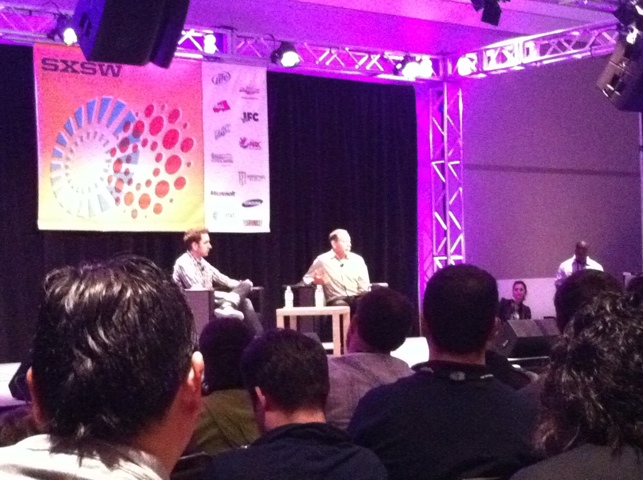
Bre Pettis Opening Remarks

brepettis

SXSW 2013 Opening Remarks

@Bre, Bre Pettis, Founder Makerbot

I’ve been following Makerbot the last several years, as my SXSW buddy John Biehler has been a big advocate and user of 3D printers (in fact, he’s got a session on the topic at SXSW this year). It’s really cool to see all of the things they can do, and can’t wait until the technology becomes more commonplace.

Here’s a bit of what Pettis shared with the audience:

  • In the same way Photoshop changed the way photography works, Makerbot is dedicated to helping change the playing field for innovative explorers.
  • They just announced a digital scanner which can help to scan existing 3D items to replicate them using 3D printing, as well as a partnership with AutoDesk which will allow designers to design and make things much more easily.
  • While the Makerbot primarily uses the extruder to melt plastic and form it into your design, you can use different types of extruders to make all sorts of things – from a syringe filled with icing or chocolate for cupcakes to metal and other things.
  • The vision is to have makerbots everywhere, from schools to homes.
  • Yes, you can build your own legos, but it takes quite a long time. It’s primarily used right now to help designers and inventors prototype items. Even Ford Motors is using 3D printers to design and prototype car parts.
  • They’ve grown Thingverse – a website for designs of various 3D printed items to over 40,000 items, with nearly a fourth of things submitted in just the last few months.

All in all, 3D printers are very cool and have the potential. It should be interesting to see what happens to things like the toy industry and how big an impact it can have on things like that. Much like Pettis, I think this has the potential to be huge for future inventors – in fact, most of the Kickstarter campaigns I’ve seen recently have used 3D printers to prototype their inventions. Imagine how this levels the playing field!


Creating Magical Experiences

Thomas SmithDisney Parks Social Media Content: Creating Magical Experiences
Thomas Smith (@ThomasSmith) is Social Media Director at Disney Destinations

It was obvious from the start of the presentation that Disney has a significant social media presence.  On Facebook alone, their properties have over 381 million fans.  They monitor (using Radian 6) and respond on their social media properties 24/7.  The Disney Parks blog is the hub of their social media strategy, and everything else is a spoke out from that central location.

The mission of the blog and social media focus is no different than the vision Walt Disney had for his theme parks – “A place for people to find happiness and knowledge.”  Their strategy is driven by the following goals:

  • Humanize Disney
  • Purposeful Storytelling
  • Remarkable Experiences
  • Curiosity = Ideas (Ask what if? and why not?)

They prioritize the blog the same way they do any of their other properties, and as Smith said, “We look at every day like a new ‘show’ on the blog,” and, utilizing a network of more than 75 bloggers and content contributors from across the company they prepare a lot of content on a daily basis.  This network of bloggers and contributors ranges from the CEO to managers in multiple departments throughout the company.  Their content strategy is made up of the following:

20121004-170007.jpg

  • Information
  • Data
  • Messaging
  • Context
  • Products
  • Passion

Because they treat their blog like a daily “show” they also plan content in advance and have a – in my position for releasing content (see photo on right).  For content, they also reflect on another quote from Walt Disney, “Always, as you travel, assimilate the sounds and sights of the world.”  Borrowing from Cirque de Soleil, they know they always need to “change the act” and are regularly updating, changing, and providing new content.  What’s been most successful has been giving people a peek behind the scenes.  For example, one thing they tested is a live chat with an Imagineer to release facts about the new Fantasyland, and they were overwhelmed with questions.

One thing they’ve discovered is the value of content as it lives on, particularly through search.  Most of their site traffic comes from content that’s more than 2 weeks old. Their SEO team even helped them discover when people began searching for certain things, such as Halloween at the theme parks.  Because people were planning their trips well in advance, they started using Google Trends to identify when to talk about certain things (see photo on right).  For example, they even started talking about things like Christmas trips to the park, in July.

He said he’s been most proud by his ability to give a voice to buisiness units that didn’t normally get very much attention.  For example, they posted an article for Disney Floral about sending Mom a bouquet (with a link to where you could buy them).  That was the first time Disney Floral sold out of a product. “That was the day the power of social media became real to us,” said the director of Disney Floral.  Another example he gave was being able to post the backstory of a Disney book (with a link to purchase the book).  Revenue projects for the book exceeded projections by 500%.

“You can’t be on the social media team unless you know how to tell a good story,” he said.  He gave several examples of using their blog to tell incredibly interesting and visual stories, including this cool video:


They are trying to utilize the power of their virtual relationships to bring people into the parks.  Through the blog, they’ve coordinated meetups with bloggers and passionate “friends” from the blog.  In these meetups, they offer experiences you can’t normally get in the park to help build buzz around the attractions.  Mobile is the next thing they are looking into, with a mobile version of the blog.

What they’ve learned to focus on:

  • People – It’s all about making a connection.
  • Storytelling – It’s in Disney’s DNA, and essential to what they do.
  • Experiences – Have to be memorable, etched into your brain.
  • Curiosity drives it all – “Ideas come from curiosity” – Walt Disney
  • Analytics are very important.  Everything is tracked, but results sometimes results trickle in… you have to watch what happens over the long term.


12 Slides, 3 Writers – Different Approaches to Writing

Presenters: Jim Coudal, Michael Lopp, and John Gruber

As a writer, I’ve learned that anyone can write, but it’s your approach that sets you apart. In this presentation, three different writers walk through the same set of 12 slides. Each explains their approach to getting started, editing, getting unstuck, and understanding when they’re finished. The only way to really illustrate this presentation is with the video here…


Tags

Related Posts

Share This

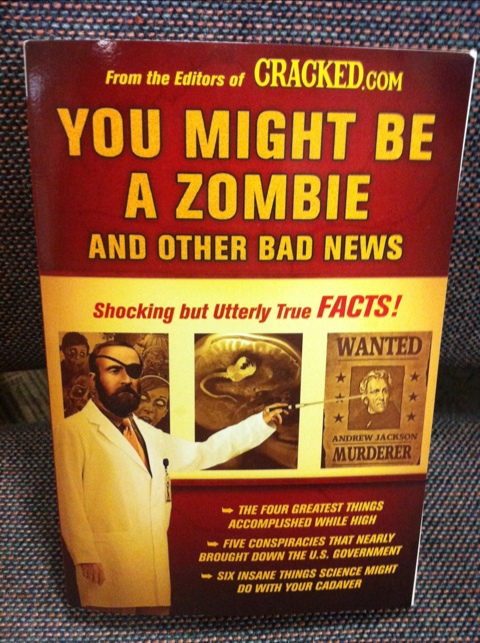
Another Giveaway – You Might be a Zombie Book

You Might be a Zombie Book giveawayI haven’t forgotten about all the giveaways I promised! You still have time to enter these giveaways – Flipboard T-Shirt, the Will it Blend? DVD, the Square device, the Delivering Happiness Book, and the Eyeballs Out book.  I will select the winners near the end of the month.

Now you have a chance to win You Might be a Zombie and Other Bad News from the editors of Cracked.com.  The book is rated 4.5 stars on Amazon.com, and appears to be a great book.  I just don’t have time to read it and wanted to give it away to one lucky reader of this blog.

To enter, simply click the comments link at the top of this post and make a comment.  Make sure to include your email address so I know how to contact you to send you the book.

Good luck and thanks for reading.  Keep an eye out for more giveaways to  come!

Augmented Reality for Marketers

Presenters: Lynne D Johnson – R/GA, John Havens – Porter Novelli
Hashtag: #arsxsw

There’s been a lot of talk over the last few years about augmented reality (AR), and the increasing adoption of smartphones and portable devices has accelerated predictions about its possibilities.  In fact, Juniper Research expects global revenue of AR to reach $1.5 billion in 2015.  Much of this is currently being driven by location based apps.  Those which have been successful for consumers have focused on utility and ease of use, and marketers have used it successfully for awareness and tracking ROI.

There are many, many different things that qualify as AR on this spectrum:

<–  SMS/QR codes – Web/Hologram – Location-Based – POS – Real World Applications –>

Here are a few examples of these types of AR:

QR Codes,  Webcam/Holigram example  – Dabs Acer Augmented Reality ad, Tissot watches (experience of how watch would look on you, and in store sales of watches grew by 85%), Location based examles: Le Bar Guide, Quiznos Layar, Yelp Monocle, Ebay Classifieds, Point of Service example with Legos Kiosk.

In order to move beyond the hype, AR must move beyond simple experimentation, gimmicks, and unnatural behaviors to things that are more useful, natural, and have advanced utility.  We’re only now moving toward real world applications that make life easier and will ultimately increase its adoption.  Examples include Google’s GogglesWord LensBMW’s extension of reality for mechanics, Converse Sampler App (try shoe on virtually to see how it looks), and General Motors augmented reality windshield.

Right now, augmented reality is limited to certain devices, however, as it matures, and people see the utility in it and begin to view it as a virtual “GPS” for their lives, the next step are glasses, contacts, and eye tracking cameras that provide facial recognition.   Examples of things people already see this type of value in includes displaying nutritional information about food at restaurants and in dating – displaying web information about a person using facial recognition.

You can imagine that these types of things bring up interesting concerns, from individual privacy to “virtual air rights.”  The virtual air rights are a concern because, as the world around you is literally manipulated, it must be determined who can put what, where.  For example, can Pepsi pay to literally prevent you from seeing Coke machines?

Other interesting visions of what the future holds inlcudes:

TagWhat Augmented Reality network – lets you tag the virtual world, creating a virtual scrapbook at locations for you or your friends.

Virtual graffiti (seen here)

Bump (the iPhone app) – The next phase is to automatically send your information to other people in the same room, based entirely on certain criteria, such as their number of twitter followers.

Checking into products – Such as Stickybits – Illustrates that community management goes beyond online and into the world of virtual reality – listening to what consumers are saying in this new place.

Products checking in to you, through Facebook sponsored stories

Kraft – Anonymous Video Analytics (AVA) – At the point of purchase, the machine looks at you, estimates your age, sex, health, etc, and provides you with a unique ad/offer based upon your estimated demographics.

Activity Interference –  Jon Froehlich, at the University of Washington uses a microphone in the ear to detect when you are eating (with 99% accuracy).  He uses it to pick up on eating patterns and health, but this could be used in the future to help you track your eating habits, or even sound an alarm when you eating when you aren’t supposed to.

Facial recognition – allows you to see more information on the people you are with.  For example, Viewdle is a facial recognition program that shows you the most recent tweet, Facebook post, etc. of the people you are with.  It lets you identify who you may want to talk to in a social context, or in a business context, screen the people you are around to get more information on them.  Similarly, some companies are giving Facebook and Twitter credibility scores (such as Klout), which could allow you to scan the influential people in the room.

This same technology lets police now scan a crowd with a phone and see, through a tag in their phone, who the former criminals are in a crowd.  It’s good because it allows police to find people with a criminal history quickly, but bad because of potential implications of viewing – or blocking – people.  For example, a person might choose to not view any homeless people laying on the street, changing their perspective on the world.

As mentioned earlier, there are definite concerns with virtual air rights and virtual advertising rights.  For example, Bing can block out existing advertising and resell the rights to those ad spaces within their Streetview platform.

As you can see, the world of augmented reality is incredibly interesting, and it will only be a matter of time before we see the tipping point on many of these cutting edge technologies.


Outsource Social Media?

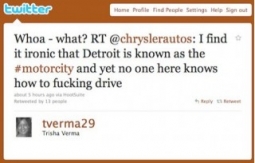
This wasn’t necessarily a presentation I attended at iMedia, the Social Business Summit, or SXSW, but among the many brand people I got to meet, it was an extremely hot topic of discussion.  The discussion was further fueled by something that happened the day before the Social Business Summit.  If you hadn’t seen the news, an employee from a company called New Media Strategies, accidentally dropped an f-bomb on behalf of their client, Chrysler’s twitter account.  As you can imagine, the employee was immediately fired and Chrysler let the agency go the following day.

Many of the brand people I met worked in various parts of the company, and something mentioned in the Ad Age article about the incident sparked a lot of discussion…

Turf battles over social media between marketing and communications have been an issue at the automaker — and other companies — for a few years. Early in the day after the tweet went out, Chrysler’s communications team was grappling to get hold of the details of the episode after bloggers and media began calling, in part because Chrysler’s marketing department controls Facebook and Twitter social-media accounts that are “consumer facing.” The communications department has separate Twitter, Facebook, YouTube and Flickr accounts that are meant to be “media facing.”

Many companies say the divide only serves turf and budget wars, not the brands. “All that has blurred, so it’s critical for communications and marketing to be coordinating and cooperating all the time,” said Stuart Schorr, VP-communications and public affairs at Jaguar-Land Rover North America. One of the issues creating the turf war, he noted, is which department gets the budget.

What I think we all discovered was social media is something that can’t be fit into a traditional box, as it has blurred the lines between paid and earned media, marketing and customer service, as well as transactional versus relational communications.  I’m not sure anyone has figured it out, but everyone expressed frustration about how this confusion was causing issues within their companies  (like the ones mentioned above).

The general perception is that social media is “cheap,” because sites like Twitter, Facebook, and YouTube don’t necessarily charge you to be there.  However, in order to do it right, you have to invest first in listening to conversations about your brand and industry… which isn’t easy, when there are over 1 billion tweets per week, 1 billion Facebook messages posted per day, or the 24 hours of video uploaded to YouTube every minute.  Imagine the resources it takes just to do this… and if you want to respond to any of these messages, that takes more resources – and as pointed out above, multiple resources across functions/silos.

Hopefully you can agree, at the very least, it takes a large amount of time and organization.  Generally, brands are already heavily committed to traditional media – and spending money to outsource this work to traditional media agencies – because the “push my message through a one-to-many framework” has been in place for so long.  Even more important, leaders aren’t yet prepared to organize new internal communications structures to deal with a “new” media which requires one-to-one relationships.

In the meantime, there are certain to be many, many more ethical debates (like this one – Should You Outsource Social Media?) about whether or not you should hire someone to manage customer relationships in social media on your behalf.  Please tell us what your take in this debate is by commenting on this post.

Talk with Paul Ruebens / Pee Wee Herman

Like last year, I’ll periodically attend a session that’s a little more self indulgent (like the Booze and Blogging session I attended last year).  This year, it was attending this session.  It was an interesting perspective in several ways.  I learned about his background a bit, but also a little about what it takes to make it.

Pee Wee Herman Paul Reubens SXSW

Ruebens started with the Groundlings, an improve troupe, and developed the character of Pee Wee because in a performance one night, he had to play a bad comedian.   It all came out that night – suit, bowtie, voice (based on an earlier character), behaviors (based on kids he knew).  He wrote a play based on the character in 1981.  He said he was an up and comer in comedy and missed out on his shot at SNL (to Gilbert Gottfried).  So on the way home from the audition, he wrote the show in a bit out of a panic of what to do with his life.  He said, “It was a bit of a ‘let me show you.'”

One piece of advice he gave was to learn how to write, as he said that if you a good writer and can tell stories, you can write your future.  In fact, he said he had to read a book on screenwriting to write Pee Wee’s Big Adventure.  In fact, the storyline followed the guide in the book almost directly.

He also gave some insights on a conversation he had with fellow comedian, Phil Hartman.  Hartman felt that Reubens was throwing away other great characters from his Groundlings days to concentrate on this one.  However, he said he had a gut feeling about this character.

He fully committed to it, almost never going out in public, except as Pee Wee.  To him it was performance art, but others started to see he as being just like the character.  He feels that it was what made his arrest an even bigger issue.  Since then, he been acting and rewriting his play to include his work from Pee Wee’s playhouse.  He’s in the process of shooting an HBO special as well.  Early on Pee Wee was sweet, but he got a bit snarkier over time. Snarky Pee Wee was what most people liked, so he’s headed a bit in that direction.  He also said he’s working on a new movie with Jud Apatow, but can’t reveal yet what it is – “2011 and the internet has changed everything, you can’t do anything in secret anymore.”

He provided some other insights, such as how Tim Burton became the director of Pee Wee’s Big Adventure.  The studio approached him with their choice and he didn’t like it.  He stuck to his guns and was told he had a week to find someone who was available, affordable, and approvable. He found Tim Burton through a friend on the groundlings, and loved his attention to art direction.

He also said the most fun he had was writing Pee Wee’s playhouse – especially when they would think of something that they knew was successful for a 6 year old – it was the most gratifying for him.  The first season of the show, he had 5 writers, working together to write all 13 episodes.   After that, he would hire a couple or a duo and together they write the season – putting in long, long days.

Overall, it was interesting to learn a little more about his background and get his perspective on what it took to succeed.

Transmedia Storytelling

Presenter: Barbara R. Vance
Hashtag: #brvance

With traditional storytelling, the audience enters at a certain point and exits at a certain point. There’s control over when it begins and ends. With transmedia storytelling, you’re creating a world where people can enter and continue following the story as far as you take it. Transmedia storytelling allows you to take a story beyond a one-off, it’s a deeper story which allows you to create more. Transmedia storytelling is about building a good story, it’s not necessarily a “marketing gimmick,” but good marketers know how to tell good stories.

If you want to build a good story, you first need to deeply understand 3 things – The Character, The Plot, The Story World. In order to keep this information straight, you need to keep in a database – because you need to know it all, inside and out. Central database so all contributors know the world and keep the stories consistent. This is your foundation, cohesion, and it makes your world easier to develop. You need to know the story even deeper than what you actually reveal to the audience. You can use this technique to drop in hints and information that is revealed later. The only way to have good forshadowing is to do this.

Character

A story is not about a character, it’s about many characters, a network of characters. The job of the other characters is to make the main character real and flesh them out. You don’t need to tell people about a character, we should learn about them by watching them interact with other people, and you need that network to show how they compare to others.

We like stories because we like to understand ourselves, and we want to get a certain emotion out of it. This means, as a writer, you are a slave to the audience. Keep your audience in mind and what they’re looking for, and offer that to emotional connection in your story.

Character traits:

Selectivity – Only choose traits that are relevant to the story, and when you’re developing the character, you need to only reveal things that are relevant to the story. It’s OK to have quirks with a character, but it needs to have some relevance to the story. People pick up on these things and try to anticipate how it will be applied, but only give as much information about a character is needed. Don’t forget that the more information revealed about a character, the more perceived importance there is.

Reason Why – Why does the character have the traits they have? it needs to be strategic about why they do it. For example, it wasn’t until the 3rd movie we learn why Indiana Jones hates snakes. But what it revealed was that he was adventurous, even as a boy, and has a heroic streak. Constantly ask yourself why surface traits matter on a deeper level, as it helps you build character traits across stories.

Play off each other – Character traits should play off of each other. They should be fun. If you’ve got someone who can’t stand pompus people, put him in a room with them. Capitolize on purposeful inconsistencies in characters. If your hero is perfect all the time, and doesn’t have inconsistencies, they’re not a human character, but make sure they are consistent inconsistencies.

Archetypes
They provide a universal form to build the foundation on which your story sits. There’s no shame in building a story on archetypes, but make sure you make it a somewhat unique archetype. Gives the audience a foundation of understanding, relateability to how we understand people. People come to the story faster when they know a little of what to expect from the person. That’s why many transmedia stories are based off of superheros – because they’re easy to understand.
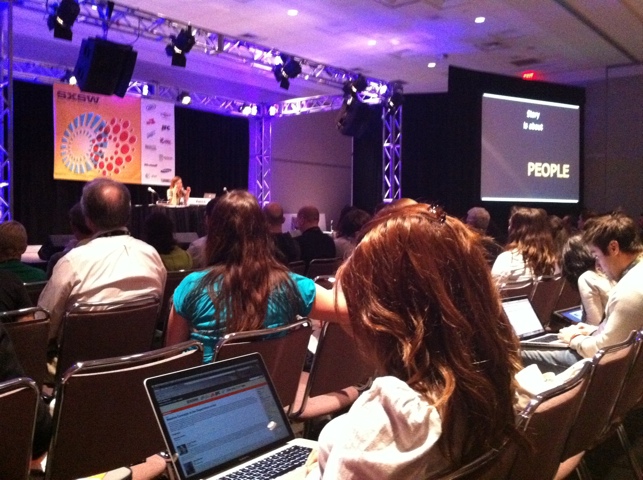
Transmedia Narratives

Hero vs Main Opponent
They are the 2 most important people in the story, and the audience should know and care more about what’s going on with these two than anyone else.

HERO
Flawed – If you’re hero doesn’t have problems, he won’t be genuine, won’t be relateable. If the audience can’t find a bit of themselves in the hero, they won’t be able to relate to them.
Interesting/Quirks – They have some interesting little things that make them unique.
Mysterious – We want to know more about this person. As a writer, you have to plant this mystery. For example, in the opening scene of Mad Men, we see him look at a purple heart – reveals there is something about him we don’t know. That’s where you go back to the database and know what is revealed and when.
Moral problem – The hero always has an issue they are dealing with. The opponent challenges the hero, forcing them to restle with it more.
Tries Options – The hero will always try to take the easy way out first. It makes the story build along with the pressure to succeed.

Opponent
– They should always be as fleshed out of a character as the hero – if not, they don’t seem formidable
– Wants the same thing as the hero – this is what creates the conflict
– Not necessarily someone the hero hates – but they kind of hate each other because they want the same thing

Event = Change
If something happens, it’s a transition in the plot. Every event needs to elicit a change. The hero needs to be under pressure the entire time, and these changes amount to a greater amount of pressure on the hero. For example, the hero should embody this quote from Martin Luther King, “The true measure of a man is not how he behaves in moments of comfort and convenience but how he stands at times of controversy and challenges”

Story & Character Progression
Introduce Hero -> Reveal Hero’s True Nature -> How true nature is at odds with outer appearances -> Pressure -> Climax -> Hero is changed

Your story is about polarity and it’s about a balance. The good guys get something and bad guys get something – back and forth. For example, here’s the story contradiction from Lord of the Rings illustrated whether it was positive or negative for the hero Frodo:

+Frodo has the ring -almost encounters Ringwrath +Encounter Strider -Ringwrath attack +Strider fights them off -Frodo wounded +Frodo healed +frodo gets a fellowship +Frodo says, I will take the ring -cannot pass over the mountains -Mines of Moria -Orcal -Baltrog

The audience has to feel like no one has the upper edge for too long, so you have to make sure you keep the ball in the air, going back and forth like a tennis match. The conflict progression gets worse and worse with constant rising pressure. You have to make these changes big and extreme, because the audience finds a middle ground boring.

Ultimately, stories are fundamentally about people, and when you’re building a whole world for transmedia storytelling, you can’t forget that it’s about people. A lot of effort goes into creating the world, but people won’t want to explore that world if the story is not there.

Banking on Big Brands/Celebs for the Web

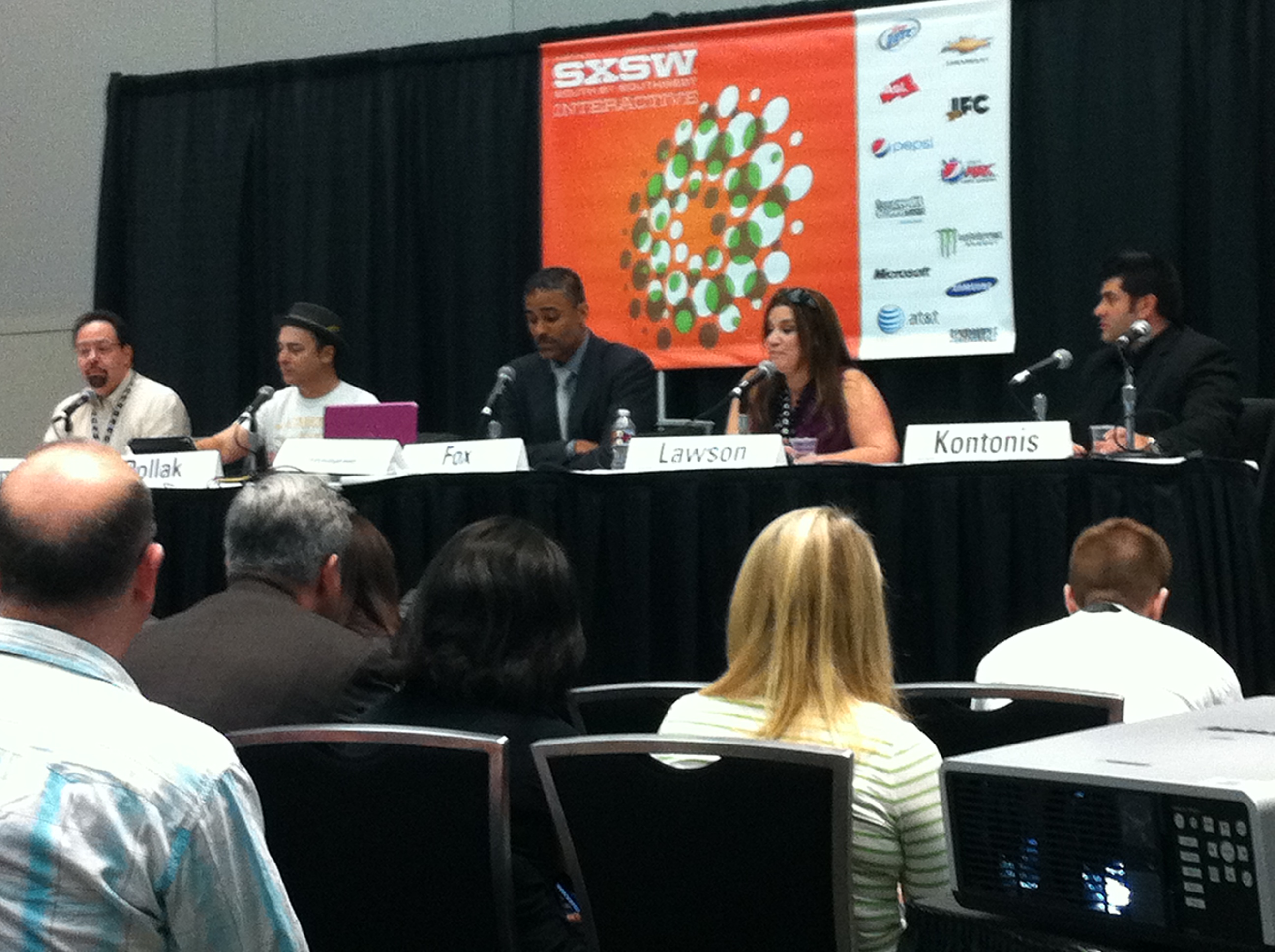
Panel: Amber J Lawson – Head of Original Programming, AOL, David Tochterman – Head of Digital Media, Innovative Artists, Rick Fox – NBA All star/Entertainer, Kevin Pollak – Actor, Paul Kontonis – Digitals
Hashtag: #sxswbigbrandsKevin Pollak and Rick Fox panel at sxsw

This panel discussed how traditional media is changing and how brands can get involved to take advantage of this shift.  In particular, two celebrities on the panel are taking slightly different approaches to this.

Actor Kevin Pollak, created Kevin Pollak’s Chat show – http://kevinpollakschatshow.com – because he said, “If you’re not creating your waiting.”  As an actor, you wait for the phone to ring for the next thing.  He felt that new media provided a tremendous opportunity to create his own content.  He used Felicia Day as another example of someone who created their own show to take their future and potential in their own hands.  He simply tries to create interesting content to draw an audience, as he said, “If you can earn an audience you can earn a living.”

Pollak gets brands involved from a very traditional perspective, through pre-roll advertising, display ads around the content, etc.  He feels that this helps big brands who may not be comfortable jumping into this area, get involved.  Therefore, they primarily use impressions as a way to sell the show to brands.

NBA all-star, and now entertainer, Rick Fox, takes a slightly different approach.  What’s important to him is telling a good story, and he looks for opportunities to integrate brands into the story.  For example, on one of his shows, you may see a basketball player having a Gatorade after a game.  It’s a bit like celebrity endorsements, but extends it by showing how the product is used and its benefits.  This takes cooperation between the celebrity/producer and the brand.

Working through partnerships like VuGuru/AOL, he can offer these product integrations, as well as non-traditional promotions.  He believes you are not only bring on a celebrity to use/endorse your product, but you’re also utilizing their Twitter followers and other social media “klout” to influence their fans.  And it’s not just the celebrities’ followers, but their personal networks.  For example, when Rick Fox was on Dancing with the Stars, he was able to get friends (Kobe Bryant and Shaq) to post messages to their followers asking for support.  This can get a little muddy when you’ve got multiple projects going on at the same time.

Will it Blend?

A bonus that was not on the agenda at the Tweet House today was the addition of Blendtec’s Tom Dickson.  He spoke a bit about how they started and got to be as successful as they’ve been with their “Will it Blend?” series on YouTube.  Here’s a brief video of his presentation.


As a BONUS, I received a DVD of 50 Will it Blend videos as well as a behind the scenes video of how they make it.  I’m giving it away to one blog reader.  As usual if you comment on this post, I’ll select one commenter to give the DVD to.  Please make sure to include your email address when commenting.

Tags

Related Posts

Share This

Delivering Happiness

Presenters: Tony Hsieh, CEO of Zappos.com

tony Hsieh Delivering HappinessZappos focus is on the customer experience, to an almost fanatical extent.  In pursuit of customer service, they’ve coined the term, “Delivering Happiness” to describe their mission.  Much like he describes in his book of the same name, Hsieh talked about how they focus on culture.  It’s their #1 priority, and he feels that if they can create the right culture and focus on customers, the results will follow.
Hsieh has done a lot of research in his own pursuit of happiness, and outlined a framework for happiness.  It requires these elements:

  1. Perceived control
  2. Perceived progress
  3. Connectedness
  4. Vision/meaning (being part of something bigger)

They use these concepts to select the right employees and focus on growing them from a job to a career, to eventually making it a calling.  Additionally, there are 3 types of happiness

  1. Pleasure – chasing the next high (Rock star)
  2. Engagement – time flies – flow
  3. Meaning/higher purpose – being part of something bigger than yourself

Therefore, in order to build a great business, Hsieh focused on ensuring the culture provided employees with pleasure, passion, and purpose.  They hire for the culture and won’t hire someone who is great if they don’t fit in.  Many have heard of their $2000 offer, where they offer new employees a bonus for leaving the company after training if they don’t feel they are a fit.  Things like connecting employees with twitter have helped improve all of those areas, as well as a sense of connectedness.  Ultimately, the culture is about commitable core values.  It’s not just “a meaningless plaque on the wall,” it’s about being willing to hire and fire based on those values.  In fact, if you Google any one of Zappos core values, their site will appear #1 in the rankings.

Most of the presentation covered things he talked about in his book, Delivering Happiness.  At the end of the talk, Hsieh gave everyone a copy of his book.  Since I’ve already read the book  I’m giving away a copy of Delivering Happiness to 2 blog readers.  Simply click on the comments above and send us a note (be sure to include your email address), and we’ll select 2 winners to receive a copy of the book!

Also, don’t forget about my other book giveaway from the iMedia Brand Summit.


The Shakespeare Brand & What it Teaches Marketers in 2011

After a break for lunch and a very interesting presentation by Google regarding their display advertising capabilities, there was a session by @BradBerens, Chief Content Officer, Digital Marketing Sector.

He started out by illustrating that Shakespeare created one of history’s most powerful brands.  He was able to do this because of the resources and skills available to him.  He was an actor, sharer, theatre owner, and writer/dramatist.  By understanding the environment, and owning the Globe Theater, he was able to move from simple meaning transmission to environment cultivation.

Berens condensed Shakespeare’s marketing brilliance and methodology into his use of space, time, and identity:

  • Space – Context is critical, and Shakespeare created a different kind of emersion – a “theater in the round” – which created a unique viewing experience for participants.
  • Time – He compared watching The Globe Theater  to watching a football game today. It was powered by the presence of other people and their shared emotion.
  • Identity –  Shakespeare divided his audience into “first timers” and “loyal customers,” writing dynamic storylines where he created a sense of discovery for first timers, and a sense of expertise for repeat viewers.

He broke down the foundation to friction and frames.  Friction leads to satisfaction, whereas framing is how you experience the context of the message.  His stories created friction, and The Globe Theatre created the context.

Marketers have the ability to use marketing experiences and technologies to create deeper bonds with and between people and to give them more richly satisfying experiences in relation to our brands.

Brands should strive to create an environment where consumers contribute, get to be creative, and feel like experts using Shakespeare’s techniques.