10th Annual Great Pumpkin Ale

Great Pumpkin Ale 2010
Great Pumpkin Ale 2009
Great Pumpkin Ale 2008
RIP Stout Russian Imperial Pumpkin

Ever since the second year I started brewing (2003), I’ve brewed a pumpkin ale.  It started when I was still brewing with a Mr. Beer kit and found a recipe for it.  At the time, there weren’t many commercial pumpkin beers (the only one I could find at the time was Buffalo Bill’s).  Ever since then, I’ve brewed my Great Pumpkin ale every year (and actually brewed a porter or stout version as well the last couple years).  The recipe usually varies, depending upon what ingredients I have at hand, however, some things never change – like adding pureed pumpkin and spices both after the boil and in the secondary.

Great Pumpkin Ale 2012

21-A Spice, Herb, or Vegetable Beer

Author: Kevin Kozlen

Date: 9/16/2012

BeerTools Pro Color Graphic

Size: 10.5 gal

Efficiency: 75.0%

Attenuation: 80.5%

Calories: 223.28 kcal per 12.0 fl oz

Original Gravity: 1.067 (1.026 – 1.120)

|===============#================|

Terminal Gravity: 1.013 (0.995 – 1.035)

|===============#================|

Color: 8.0 (1.0 – 50.0)

|==========#=====================|

Alcohol: 7.14% (2.5% – 14.5%)

|==============#=================|

Bitterness: 19.0 (0.0 – 100.0)

|===========#====================|

Ingredients:

2.0 lb (10.5%) Pale Ale Malt – added during mash

1 lb (5.3%) Crystal Malt 40°L – added during mash

2 lb (10.5%) Vienna Malt – added during mash

2.0 lb (10.5%) White Wheat Malt – added during mash

10.0 lb (52.6%) Pilsner DME – added during boil

2.0 lb (10.5%) Lactose – added during mash

1.5 oz (42.9%) Willamette (4.8%) – added during boil, boiled 60 m

1 oz (28.6%) Willamette (4.8%) – added during boil, boiled 30 m

2 tsp Irish Moss – added during boil, boiled 15 m

1.0 oz (28.6%) Fuggle (4.0%) – added during boil

2 tsp Cinnamon (ground) – steeped after boil

2 tsp Allspice – steeped after boil

2 tsp Nutmeg (ground) – steeped after boil

29 oz Pumpkin (canned) – steeped after boil

2.0 ea White Labs WLP090 San Diego Super Yeast

Schedule:

Ambient Air: 70.0 °F

Source Water: 60.0 °F

Elevation: 0.0 m

Notes

Mash temp of about 150F
Added spices and pumpkin after chilled to around 100F
Ended with about 9.5 gallons in fermenters
Gravity reading in the fermenter is brix=17 or 1.068

Started fermentation in basement at approximately 68F

Transferred each carboy over to the secondary after 2 weeks on top of: 1 large 29oz can of pure pureed pumpkin, 1 tsp each of cinnamon, nutmeg, allspice

Creating Magical Experiences

Thomas SmithDisney Parks Social Media Content: Creating Magical Experiences
Thomas Smith (@ThomasSmith) is Social Media Director at Disney Destinations

It was obvious from the start of the presentation that Disney has a significant social media presence.  On Facebook alone, their properties have over 381 million fans.  They monitor (using Radian 6) and respond on their social media properties 24/7.  The Disney Parks blog is the hub of their social media strategy, and everything else is a spoke out from that central location.

The mission of the blog and social media focus is no different than the vision Walt Disney had for his theme parks – “A place for people to find happiness and knowledge.”  Their strategy is driven by the following goals:

  • Humanize Disney
  • Purposeful Storytelling
  • Remarkable Experiences
  • Curiosity = Ideas (Ask what if? and why not?)

They prioritize the blog the same way they do any of their other properties, and as Smith said, “We look at every day like a new ‘show’ on the blog,” and, utilizing a network of more than 75 bloggers and content contributors from across the company they prepare a lot of content on a daily basis.  This network of bloggers and contributors ranges from the CEO to managers in multiple departments throughout the company.  Their content strategy is made up of the following:

20121004-170007.jpg

  • Information
  • Data
  • Messaging
  • Context
  • Products
  • Passion

Because they treat their blog like a daily “show” they also plan content in advance and have a – in my position for releasing content (see photo on right).  For content, they also reflect on another quote from Walt Disney, “Always, as you travel, assimilate the sounds and sights of the world.”  Borrowing from Cirque de Soleil, they know they always need to “change the act” and are regularly updating, changing, and providing new content.  What’s been most successful has been giving people a peek behind the scenes.  For example, one thing they tested is a live chat with an Imagineer to release facts about the new Fantasyland, and they were overwhelmed with questions.

One thing they’ve discovered is the value of content as it lives on, particularly through search.  Most of their site traffic comes from content that’s more than 2 weeks old. Their SEO team even helped them discover when people began searching for certain things, such as Halloween at the theme parks.  Because people were planning their trips well in advance, they started using Google Trends to identify when to talk about certain things (see photo on right).  For example, they even started talking about things like Christmas trips to the park, in July.

He said he’s been most proud by his ability to give a voice to buisiness units that didn’t normally get very much attention.  For example, they posted an article for Disney Floral about sending Mom a bouquet (with a link to where you could buy them).  That was the first time Disney Floral sold out of a product. “That was the day the power of social media became real to us,” said the director of Disney Floral.  Another example he gave was being able to post the backstory of a Disney book (with a link to purchase the book).  Revenue projects for the book exceeded projections by 500%.

“You can’t be on the social media team unless you know how to tell a good story,” he said.  He gave several examples of using their blog to tell incredibly interesting and visual stories, including this cool video:


They are trying to utilize the power of their virtual relationships to bring people into the parks.  Through the blog, they’ve coordinated meetups with bloggers and passionate “friends” from the blog.  In these meetups, they offer experiences you can’t normally get in the park to help build buzz around the attractions.  Mobile is the next thing they are looking into, with a mobile version of the blog.

What they’ve learned to focus on:

  • People – It’s all about making a connection.
  • Storytelling – It’s in Disney’s DNA, and essential to what they do.
  • Experiences – Have to be memorable, etched into your brain.
  • Curiosity drives it all – “Ideas come from curiosity” – Walt Disney
  • Analytics are very important.  Everything is tracked, but results sometimes results trickle in… you have to watch what happens over the long term.


Maximize Social Media Success

Deliver digital marketing success: Steps PR professionals can take to maximize social media

Dux Raymond Sy (@MeetDux), PMP Managing Partner, Innovative-e

The presentation started out by talking about the recent “viral” phenomenon of “Gangnam Style” by the Korean artist Psy (if you’re not aware of it, see the video on the right).

We are in a social revolution, whether you like it or not. Here are 4 things that are happening today which will continue to increase:

  • BYOD – Bring your own device
  • Speed of Business
  • Do More w/ Less20121005-112355.jpg
  • Engagement

We’re moving from a transactional era, to one of engagement – it’s not social or traditional, it’s both.

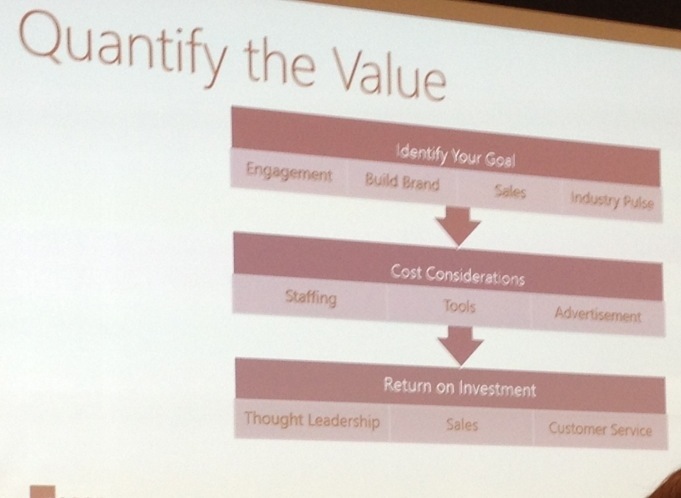
Define success criteria – Quantify the Value by the following steps:

  1. Identify the goal (i.e. engagement, build brand, sales, industry pulse)
  2. Cost considerations (i.e.Staffing, tools, advertisement)
  3. Return on Investment (i.e.thought leadership, sales, customer service)


Then Integrate Business Strategy. (see image at right)

How not to be successful with social

  • Making it a corporate hobby
  • Purely selling vs engaging in social

Consistency is very important

  • It has to be part of your daily business
  • Scheduling social media activities helps a lot

Engagement must be both proactive and responsive.

Utilize Relevant Tools to Integrate and Synchronize:

  • Client apps – Hootsuite, Seesmic
  • Scheduling tools – socialoomph.com
  • Hashtags – Use and monitor these for relevant info.
  • Sharing tools – Bit.ly, RSS feeds (External RSS can feed into SharePoint)
  • Polls – Voting tool that works in PowerPoint – @votebytweet

Amplify

Maximize your “Echo” system – Influence influencers by connecting with them in social media

Big Finish by Dux…

Creating Dialogue at Best Buy

Andrew HokensonHow Best Buy provides a voice for its remote workforce using social media

Andrew Hokenson (@Andreux), Senior Specialist—Employee Communications, Best Buy

The culture of Best Buy – 167,000 employees worldwide, the largest electronics retailer in the world, average age of employees is 27 years old, and the average corporate age is 38.  Everyone says that employees are the center of their business, but at Best Buy they truly feel this way.

Creating a culture of dialogue

They’ve defined their department with the mission: Communications function for delivering information, gathering feedback and making decisions.

They knew they needed to get away from the top-down, cascading structure in order to create a dialogue where employees can connect.  Now, more than ever, their employees are connected – mobile, social networks, etc. – and they expect to have tools that can connect them and let them participate in conversations.

Traditionally, Best Buy relied on newsletters, email, direct mail, meeting cascades, etc. to connect with employees.  A few years ago, they created a message board to connect with employees.  The message board failed because they didn’t know how to facilitate communication (by very conservative moderation and editing).  It evolved to another message board, eliminating the moderation, giving them the ability to connect with leadership and other employees – simply asking them to “be as trusted online as they are in the stores.”  Employees started to adopt this, and the internal communication team started including news and information about the company.  They wanted things to fit the medium, and started creating content there that was more personal, encouraging more dialogue.

Communication isn’t just about pushing messages to your audience, it’s also about listening.  You let people know you are listening by responding to comments, answering questions, and engaging in real time.  It’s been critical to do this in real time, but was easy since it was the people who had posted the message who responded.

Communications is more than a department

The principles that now guide Best Buy’s internal communications:

  • Connect with your audience
  • Create an experience
  • Become human
  • Stop telling, start sharing

For example, when the new CEO started, he posted directly to the company’s message board – in his own words.  Employees then engaged with him as a person through comments.  Not only did he connect with them on the message board, but he went and worked in stores and shared his stories on the message board (sometimes asking people in the store to interview him and write stories).

As communicators – our competition are viral videos, weird photos, and all the bizarre things that get posted on Facebook pages and get a lot of traffic on the web.  How are we going to try to engage them on an equal level?  Here are the do’s and don’ts for doing so:

Don’t over-moderate – Lay down the rules (no cursing) and ask them to police themselves (let employees flag content). However, they have fun with their language filter, so profanity might show up as “What the {Pancake Bunny}!!!”

Don’t micromanage – Trust them online the same way you trust them with customers.

Use the data for good, not evil – It’s easy to look at what you want employees to stop doing, but you should focus on using the data to giving employees what they want.

Know the risks – Give them a protected venue to have conversations, and often employees will vent there, rather than taking it public.  However, there’s always risk in these conversations… BUT the conversations are happening anyway, and there’s also risk in not providing a venue for this dialogue (i.e. they take the conversation elsewhere, you’re missing out on feedback, etc.)

Finally, your social media policy should reflect the language most of your employees use… and most of your employees are not lawyers.

Question from audience: How do you manage getting hourly employees to participate?  Answer: Every employee is allotted training and development time, and they can log hours they spend on these tools to that.

Create a Great Place to Work

Kim Darnofall7 ways internal communications can help create a great place to work
Kim Darnofall (@KimDarnofall), Internal Communications Project Manager, SAS

SAS has been the Number 1 best company to work for, as rated by Forbes magazine several times in the last few years. They are a technology company, so their audience is very techno-centric, and they have great IT support. Their company has 12,000 people and their internal communication team is made up of 11 people (Senior Director, Social Media & Technology Manager (3), Managing Editor (6), International Liaison, Admin Asst.).

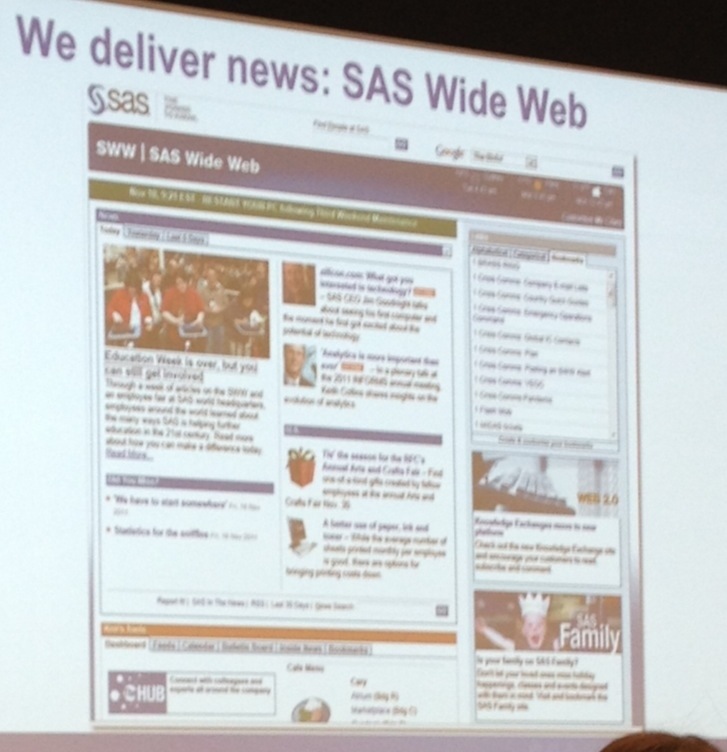
20121005-084707.jpgThey deliver news from the SAS Wide Web, the company’s intranet portal, as well as to other country’s mirror portal sites. Some countries adopt this, others don’t, it’s not forced to pull corporate content.

They focus on engaging employees through:

Customization – They utilize RSS feeds to deliver customized content to the portal page.

Inclusion – They handle the SAS Family Site, which provides information externally to spouses/families of the employees.

Participation – They allow comments on every story they post, as well as lots of blogs (from individuals and groups/departments).  They also engage employees through photos and videos – asking employees to submit them.

Contests – Conducted a photo contest among employees, and got over 25,000 submissions (that’s more than 2 per employee). They had employees vote on the best.

Polls & Quizzes – Give people a chance to give you their thoughts, and quizzes to see if communication or training has been effective.

Report it! – Borrowed idea from CNN and other news outlets, it lets employees can submit stories and articles to the internal communication team.

Connect employees to Leadership – Conversations over coffee (like a town hall format), executive update webcasts (deliver message and answer questions in town hall format, and in addition, have live interactions via chat stream on their social hub during webcast), executive blogs, Leadership Live (one-on-one conversation with a leader), Meals (managers met with employees over breakfast, and the CEO might just show up and participate like any other employee).  Also got execs to participate in employee programs  – like “Leanest Loser,” a corporate flash mob, and “Camp Chill” (an event where they brought in snow and road down the hill with their kids).

Connect employees to each other – This includes different kinds of profiles of employees on their news site, post responses to questions with names attached.

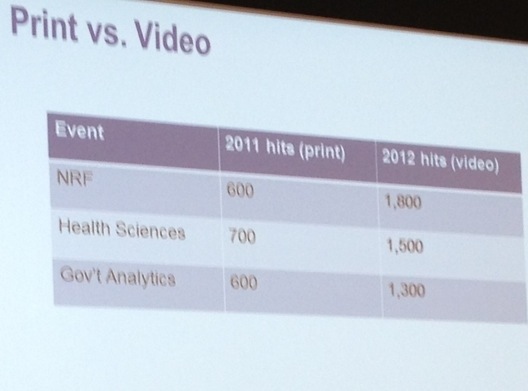
Stay on the cutting edge – They have invested in equipment to shoot their own video, and have found better success with engagement and viewership than they have with print articles (see photo to right).

Keep the Corporate Culture – Internal communications is the voice of the company to show everything the company does, who the people are, and the values they hold.

Have fun – Highlighted things like “Talk Like a Pirate Day” and “Pi” Day with executive involvement.

Results – Regularly ranked in top 3 of best places to work, and employee surveys rate communications and satisfaction highly.

Connecting Internally Using Video

Justin FongHow to create buzz and excitement with employee communications—from a stale monthly newsletter to an energizing monthly talk show
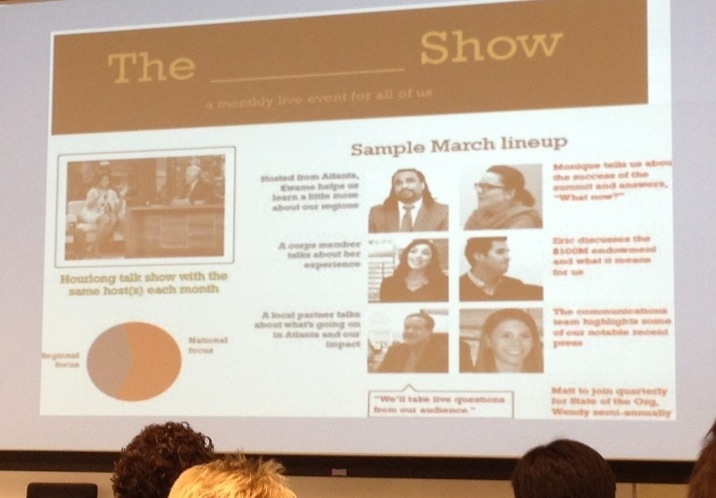

Justin Fong (@jgfong), Vice President of Internal Communications, Teach For America

Had an organization newsletter, until around February 2010, with notes from senior leaders and some other news items. Readership was poor, and at the same time, video was exploding.

Why video?

  • Richer media form
  • Brings people closer to the action
  • Greater ability to convey tone and emotion – brings people to life.

20121004-151418.jpg

Benefits of live video?

  • Minimal production time
  • Unscripted, real, human
  • Interactive
  • Event excitement

Change Management

  • Being honest about what’s not working – newletter results (10% readership)
  • Getting buy in from senior leadership
  • Appealing to the masses
  • Pilot and test

Goals:

  • Entergizing our people and create excitement about the work
  • Liberates people to laugh more
  • Broadens understanding of their work

Discussions Behind the Scenes

  • Talk about diversity
  • Discuss the narrative, what’s the story and who will deliver it?
  • Talk about wordrobe
  • Feedback from the audience
  • Tone/feeling of each show

Growth

Phase I

  • $300 camera, WebEx (audio via phone)
  • Host and co-host
  • Multiple cameras (another $300 camera) with feeds from other cities
  • Video was only so-so, audio-video out of sync, and could only do it live.

Phase II

  • Mix live shots with recorded segments
  • Livestream.com @ $350/month
  • Chat Functionality – to create event excitement
  • New equipment: $2500 camera, microphones, lights
  • Travel expenses are the bulk of cost
  • Streaming relies on internet connection

Phase III

  • Highest production quality, all pre-taped
  • Studio shots and segments from the field
  • Team of four travels to produce
  • Video quality is usually external-grade
  • Audience misses the excitement of a live event

Attracting an audience

  • Attendance is about 50-60% of the organization
  • Trailers, posters, and Yammer promote the show
  • Groups watch the show together as a ritual
  • Create a brand around the show – with a logo for each show
  • Focus on the quality of the program
  • Weaving the fabric of the organization’s culture – creating tradition, ritual, rhythm with Year in Review and Back to School Tour

Lessons:

  • Stick with it
  • Pilot – by not committing too much, being flexible, leaving space for innovation
  • Constantly evolve – the first show looks drastically different than today’s
  • Think expansively about the potential impact of internal communications
  • Don’t be afraid you can do it

Guiding Senior Leaders

Diana Kowalsky Libby Catalinich

Support a strong corporate culture by guiding your senior leaders to speak with authenticity and transparency
Diana Kowalsky (@dianakowalsky), Internal Communications Manager
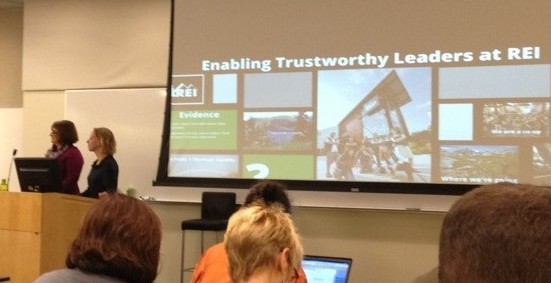
Libby Catalinich (@lcatali), Director of Corporate Communications, REI

REI has 123 stores in 30 states, with 10,500 employees and has over $2 billion in sales. The have a co-op ownership – anyone can become a member for as little as $20. Pay dividends of around 10% each year. Because they are not a shareholder owned company, they tend to be more transparent and open. However, when you tell everyone, everything, you need to be more focused on being strategic about messages. The company has many long-tenured employees and it has traditionally been a smaller company. Now, as they are growing, the culture is changing and growing which is a bit uncomfortable for many. Two-thirds of employees don’t even have a company email address, making connecting with employees a bit difficult. Therefore, leaders are the source of information, especially since research indicates their leaders are the best source of information.

2 Types of Leaders at REI:

  • Day-to-day leaders – lots of direct contact with employees
  • Strategic leaders – Set long-term vision and direction of the company

3 Characteristics of trustworthy leadership

  1. Honesty – Leaders need to tell it like it is, and mean what they say.
  2. Humility – Leaders are open to feedback and learning from employees.
  3. Humanity – Leaders speak from the heart and make personal connections with employees.

Honesty

They accomplish this by encouraging conversations – The leadership team visits every store, every year to do this. The CEO and other leaders also stay connected by living among employees – at lunch, in the vanpool, at service projects, etc.

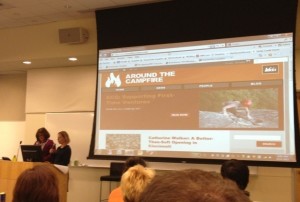
They also connect online, using various social media – recently built www.aroundthecampfire.mobi as an employee portal (built on WordPress). In the first month, they’ve had over 200 comments, and average use is 5 minutes.  CEO and other senior leaders blog here, no filters.

They learned that leaders weren’t necessarily prepared to blog, and they’ve had to teach them what to talk about and give them direction. Make sure you keep it real, prepare leaders for what to expect, and be consistent.

Humility

Make sure you ask for feedback.  Get data and act on it.  They give each leader feedback on themselves.  They’ve also focused on sharing ideas, and recently created REIdea, a SharePoint community to share ideas between store managers.

They learned that feedback isn’t always easy to get or give, but you can drive it by telling stories with examples of how change was driven by feedback.  Most the time, if you want to know, just ask.

Humanity

You need to focus on cultivating personality, having fun, and being real.  Focus on making leaders accessible and doing things to bring out their personality.

They’ve learned it’s about incremental change.  You need to start small – suggest they talk about something other than business on their blog.  Mix in personal learnings and illustrations with your talks and erase the corporate speak.

Case Studies

  • Marriage Equality – CEO came out on blog and gave reasons for the change in the company.
  • Layoffs – Prepared information for local leaders, so they had consistent speaking points and knew how to handle situations.

Results

People stick around when they have leaders they trust, like and believe in.  They’re ranked as one of the best companies to work for, and have record retention of employees in the retail industry.

Enhancing Employee Engagement Online

Kristin Graham Mark Schmitt

Come on, get happy: How Expedia enhances employee engagement online
Kristin Graham, Vice President, Engagement & Communications, Expedia, Inc.
Mark Schmitt, Senior Communications Manager, Employee Programs, Expedia, Inc.

The Culture Connection

Every company has a culture, but there’s also subcultures, and there are occasional cultural disconnects. Culture is the defining element of the company (the personality that makes it unique). The sub-culture is how an individual or group experiences the culture. Companies have both. The right combination can:

  • Improve company performance – increased retention and engagement
  • Enhance the customer experience
  • Inspire intense passion for the product
  • Drive innovation

Mission: To revolutionize travel through the power of technology

Cultural elements needed to be defined, so they came up with Supporting Values:

  • Passionate about travel – love travel and making it easier and better.
  • We are Innovative – use intelligence and technology to create and simplify.
  • We are Enterprising – seek out opportunity, take risks and act with speed.

20121004-125217.jpg

Engagement Expectations

Employees want (based on feedback):

  • Leaders who are “available”
  • Personal development
  • Ongoing, specific feedback
  • Sense of community
  • Flexibility
  • Reasonable compensation (Money & More)

Key to success/general goals:

  • Set a few expectations that match your culture and meet every one
  • Build employee trust: what you do vs. what you say
  • Communicate: early and often
Examples/Case Studies
  • Visible Leadership– Includes a CEO blog with an “Ask the CEO” page where employees can ask questions and he’ll respond on the blog within a week. Tjhey have a quarterly town hall on video, and a Leader Travel Blog
    Quarterly town hall on video.
    Leader Travel blog – how they experience the brand and experience as a consumer
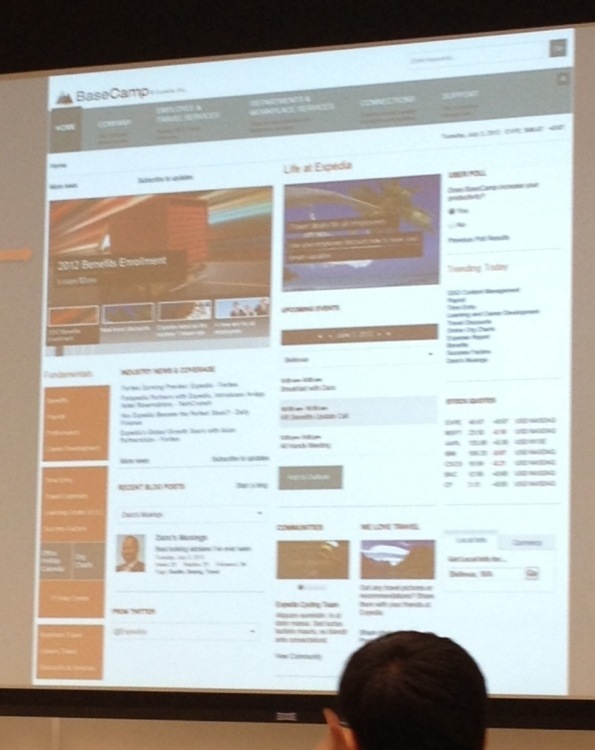
  • Personalizaation – Company News Your Way – Create a new Intranet portal that showcase local interest, make coverage scalable, leverage employee sentement, and creates 2-way communication (see photo).
  • Segmentation – GO! site a wellness program – targeted users based on a matrix by age, motivation type, hourly/salaried, and global (cultural similarities and benefits offerings) with information that was likely most relevant to them.
  • Philanthropy – Global Day of Caring – A day off to give your time.  Everyone registered on a website with what they were doing and then asked for photos.
  • Technology – We love travel internal site – Employee travel site with tips, advice, recommendations and allows users to post photos, comments, etc.  The external website folks asked to post the employee photos on the public facing site.

Results

  • Segmentation engages folks by making it about them.
  • People look for community – real or virtual
  • Technology can make communication more personal, local and relevant
  • Feedback isn’t optional anymore (internal feedback) – incorporate it into what you’re doing
  • “Fun” is a strategic element – if you’re not having fun or enjoying it, they won’t enjoy it or be engaged

Change Management vs Communications

Tobin Burgess Microsoft’s Aquisition of Skype and Change Management
Tobin Burgess
is Senior HR Business Partner

Tobin lead Microsoft’s acquisition of Skype, the largest in the company’s history, and talks about the success of change management vs communications.

Skype (by the numbers)

  • 25% of all international calls are done through Skype
  • 300 Billion minutes of voice and video calls
  • 200,000,000 active users (over 100 minutes a month)
  • 40% Growth Rate

Challenges:

  • Big & Expensive – Largest company acquisition ever ($8.5 Billion).
  • Truly Global – In 10 countries with no headquarters.
  • Stand Alone Division – On it’s own, and has the first president that’s not in Redmond.
  • Change fatigue – Leadership changed frequently, and most employees tenure was less than 2 years.
  • Brand, consumer base, and culture – Strong engineering culture were critical to preserve

20121004-111908.jpg

How do you win their hearts?

They started with a communcation plan, built a team, and made tools to carry out their plan. After a few months, they didn’t win their hearts and minds – 2/3 were negative about the acquisition. So, they gave them XBoxs and Microsoft Phones – but you can’t buy love. So they changed their strategy, and learned, it’s not just about communications, it’s about change management.

Created a change roadmap – Included communications, training, leadership, invovlement based on leadership levels.

  • Leader lead communication – Utilized the CFO because he was trusted (CEO hadn’t been there that long to be trusted)
  • Make a big splash – They had a very interactive culture, and everyone had a voice. They used the company meeting as a platform for kicking things off. They picked 27 of the most influential people to help carry the flame (everyone from new employees to executives) – flew them in and did a week long series of meetings for dialogue (not push, truly a dialogue). Also created a change managment leadership team by supplementing the 27 people with more senior level folks, as well as key stakeholders (based on feedback). They reviewed Skype chats and saw the tone change based on the influence of these individuals.
  • Integrate Milestone Videos – Show and emotional and emersive view of the changes taking place.
  • Let them Help Themselves – Homepage for information about the acquisition.

Survey at the end showed 75% of employees surveyed felt the change was good, and 90% felt they had enough information, and most importantly, production didn’t suffer and product continues to grow.

Ultimately, communications is just a part of a overall change management strategy. It’s important to remember how collaborative and wholistic approach you must take.

Moving Employees to Action

Caitlin DuffyEmployee communications tactics for an ADD world: How to engage, collaborate and motivate employees
Caitlin Duffy (@duffycait), Managing Editor of MSW, Microsoft

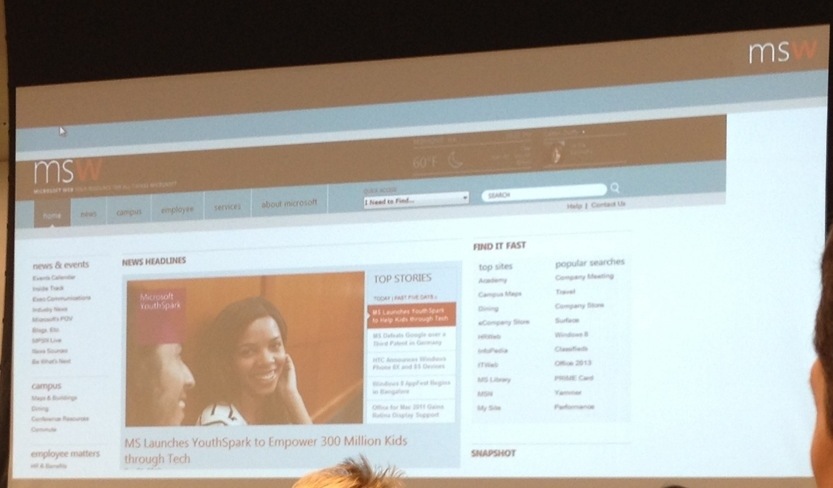
MSW is Microsoft’s internal portal site, includes news and information, as well as links to company resources.  They have a five person editorial team, and a vendor who built the site and manages placing the content.  They handle enterprise-level topics, and localized information is handled separately.  Their sections include – Articles (1 daily editorial story and external story responses), employee submission of stories, snapshot (employee submitted photos), and a few others.  They let people choose their own homepage/portal and don’t force this site on them.  They still have a very high awareness and readership rate.

5 lessons for employee engagment:

  1. Skate to where the puck is going

    Microsoft MSW

    Microsoft’s MSW is their internal portal – a source for news and links to company intranet resources.

    People want information wherever/whenever, want shorter bursts of information, and they expect to be able to interact.  They created “The Pulse” as an extension for their MSW internal brand.  It’s a place for microblogging and interaction in order to engage in conversations.  They can use this to monitor employee sentiment and change internal perceptions around certain issues.

    Similarly, mobile is critical – there’s often more participation due to accessibility of content whenever/wherever – so they’ve developed all these tools on a mobile app.  Mobile is so critical, they’ve eliminated their mass email program to free up resources to implement the mobile aspect of the site.

    What didn’t work – “Submit a Question” – surveys revealed people wanted to ask executives questions.  So they developed a tool to let people post questions and vote them up based on popularity.  Failed because questions that came in often related to secret information that wasn’t ready to be discussed.  They failed to work together with departmental communications managers to be prepared for the questions coming in.

  2. Make it Easy for People to Act
    Infographics make it easy to explain content in a simple way, and can be utilized both internally and externally.  What doesn’t work: A complicated call to action.
  3. Make your Events Social
    Utilized their social platform to socialize events.  There were some minor issues with employee submissions, they were prepared and acted on it.
  4. Make it Real
    Don’t force participation, highlight events, meetings, employee retail deals, etc. to give them what they want and may not be aware of them.
  5. Involve them in Big Moments
    This includes product launches, acquisitions, company meetings, and other big changes impacting the company.  This can be used as a focus group to determine employee sentiment and engagement.


Changing Nature and Pace of Communications

Frank ShawStrategies for the changing nature and pace of communicationsFrank X Shaw (@FXShaw), Corporate Vice President of Corporate Communications, Microsoft
Trends impacting communications:

  • Tech trends – personal computing, cloud computing, social computing.
  • Consumer trends – multi device world, your stuff – everywhere, social networking
  • Marketing trends – Social media marketing, multi channel marketing, video, Interactivity

Nature and pace of communications has changed in the following ways:

  • 20121004-095150.jpgPublishing explosion – Technology tools make it easier and faster than ever for everyone to publish.
  • Influencers are dynamic – Microsoft now watches and develops relationships with blogging influencers. They are literally scouting the up and coming influencers on industry blogs.
  • Direct storytelling drives action– You can now tell your story as a brand without having to go through anyone else. Microsoft created a News Center to tell their story directly. Internally, they created a news center (includes social features) – it has 5 million page views/month and reachs about 85% of employee base on a monthly basis. They also utilize their corporate Facebook page and have learned, images and tone is everything. People engage most frequently with images. Tone has to be light, some humor, invites conversation, and there’s almost no selling.
  • Engaging invites attention – Before engaging, Microsoft asks the following questions.

    • Do you have the right resources to engage or respond?
      It’s not cheap. You need a dedicated resource to engage. An example: Smoked by Windows Phone – It has a lower cost as a campaign, but it requires a dedicated resource.  They’ve invested in resources because it has great ROI.
    • Does engaging align to your goals?
      Engagement should support a goal. Example: Microsoft Lost Decade – respond, but didn’t want to draw attention to source article, so they responded on TechCrunch article.
    • What is the value you can deliver or contribute?
      On internal surveys, they discovered that external press coverage is one of their most influential things which impacts their employees’ view of the company. Now, when they run a story from the media on their News Central site about the company, they run an accompanying article to tell employees their point of view and give them message points for responding. This clearly adds value to their employees view of company. Externally, goals have clearly defined marketing goals and are usually part of a larger campaign.
    • Will you shift the conversation in your favor?
      Anticipate debate and issues, and share your company’s point of view to help shift the conversation. After a conversation emerges, always discuss whether or not to engage in the conversation. Then when you decide to, track the conversation.
    • Does the risk out weigh the reward?
      If results are going to be negative, what is the impact? Think about it from a short term vs long term – if there’s long-term gain, that will be the focus. Also examine legal/shareholder responsibility and potential impact. Brand, customer, and employee implications need to be reviewed. Finally, personal/professional reputation is examined.

Using Video and Storytelling

Drew KellerHow organizations need to use video and storytelling to create and protect their brand

Drew Keller (@DrewKeller), Owner, StoryGuide

Your brand is a structure – organization and clarity – under which people can define, talk about, identify your company.

Why manage brand in social enterprise video?

Content – either internal or external – is going to be shared – that’s social, so consider how it’ll be distributed or syndicated.  There’s a lot of video out there (70 hours of video is uploaded every minute, and there are over 700 tweets linking to videos every minute), so you need to make sure your audience can find what you want them to find.

Brand Storytelling

Always start with 3 questions when considering a video:

  1. What are the expectations?  It should be an emotional response the audience gives (not views/hits/likes)
  2. What is your story?  Create a narrative structure
  3. Who is your audience?  Choices you make should be driven by the reaction/response/needs of the type of person you’re trying to reach.

Keep it short and to the point (see the chart)

What video gets watched & shared?

  • Tastemakers drive awareness
  • Communities of participation
  • Surprise – the unexpected

A mix of unexpected, short, and transparent – if all 3, creates engagement.

3 biggest people challenges to manage video branding

  1. Corporate cowboy – No clue there are brand guidelines, creates content that dilutes the brand.
  2. Design renegade – Think they are smarter than the organization and want to do their own thing.
  3. Turf builder – Create brand identity for their team/area, and has little to do with the organization.

When Brand Videos Go Awry

Going for the laugh – The problem with comedy is always contextual and cultural. The paradigm is usually as sane person surrounded by lunatics, or the lunatic surrounded by sanity.  The viewer is an observer of someone acting out.  There’s a complicated rhythm and cadence to comedy that’s really an art form.  Corporate video, which goes for funny, almost always makes fun of a stereotype – the easy joke.   Be careful… any content you create, even internally, you have to imagine that it’s going to show up on YouTube.

This is an example from Microsoft of a video created in Europe, illustrating how cultural differences in comedy/taste can impact the brand.

Beware of Unmanaged Team Videos

  • Often created with the best intentions
  • Usually reflect team values/culture, not necessarily company values
  • Can confuse market base with non-aligned message – not consistent with company image
  • Tend to leverage unlicensed media
  • Can create firestorm when local cultural values are not shared by wider audience

Mitigate this by educating people on the values of the brand and brand associations.  All video – internally and externally – should reflect the brand message and should be reviewed by the brand managers.

Branding Too Much?

A recent Harvard Business Review Article points out that you can use too much branding in your video.  Specifically, a study discovered that the more prominent or intrusive the logo, the more likely visitors will stop watching.  They suggest using “Brand Pulsing” where you weave logo and other brand elements into the video that is logical, integrated it into content.  This technique has ben shown to increase viewership and retention by 20 percent.

Takeaways

  • Be consistent – Internal & External
  • Unique, creative and compelling story
  • Tone of message fits the company’s values
  • All brand assets must fit brand identity
  • Respond quickly to challenges – have a plan in place
  • Sweat the details

Check out the excellent series on video and storytelling by StoryGuide.

Ragan’s Coverage of this session.