Top Takeaways from #RaganMSFT

As you could probably tell by my last several posts, I had a wonderful time at the Ragan Employee Communications, PR, and Social Media Summit at Microsoft.  As I’ve done with the last several conferences I’ve been to, I wanted to wrap things up with a summary of the themes and takeaways I had at the conference.  Here you go:

SharePoint Can Be More
It was the excellent opening workshop by Dux that made me realize that SharePoint could be so much more than simply a document repository.  He showed example after example of how SharePoint could easily implement things like workflows and be used to build dashboards.  I’ve come back with a better sense of optimism and I’m in the process of looking for ways to utlize SharePoint to help my team.

Video Helps Tell Your Story
While the presentation by Drew Keller on using video to tell stories was excellent, it was the presentation connecting internally using video by Justin Fong, of Teach For America, that energized me.  Not only was he able to use video to increase internal reader/viewership by 5 times, but he laid out the phases of his plan.  It was obvious in the video examples he showed, that members of the organization were much more energized with the videos than they were with the newsletter.  Having worked in video for the last 7 years, I knew this, but it took these presentation and examples to remind me of the power of video for internal communications.

Every Company is Different
Some great companies presented on internal communications, from SAS and REI, to Best Buy, Expedia, and Microsoft.  What I learned is that every company is different.  While companies like REI and Best Buy have to worry about a huge portion of their employees who don’t have a company-provided computer, there are other companies like SAS and Microsoft who are able to build robust Intranet Hubs for information.  Every company communicated with employees differently, but that’s because they all remembered to put the audience first and let their audiences’ needs be their guide.

Make Executives More Human
It was  neat to see how, particularly SASExpedia, and REI get their executives out of the office and into the mix with employees.  Whether that’s visiting the locations where they work, revealing parts of their lives on a blog, or working side-by-side with them on projects.  The presentation by Mark Schumann (@dmarkschumann), which covered leadership communication in a social world and maximizing leadership communication, gave some excellent examples of how you can help make executives more human.

Change Management is Way More than Communications
Hearing about how Skype was brought into Microsoft was enlightening.  As they showed in their presentation about change management communication, change takes a lot of communication, but it also takes a whole lot more – like partnerships, leadership communities, and a strategic plan.

There are always New Tools
I consider myself to be fairly tech saavy, and while I was aware of many of the tools Dux used in his presentation about maximizing social media success, there were several I wasn’t aware of.  There were some excellent tools for incorporating Twitter into PowerPoint that I’m going to borrow.  Both from this presenation and catching up with @BevJack, I’m always excited to learn about new tools, apps, etc. that folks in social media find useful.

Maximize Social Media Success

Deliver digital marketing success: Steps PR professionals can take to maximize social media

Dux Raymond Sy (@MeetDux), PMP Managing Partner, Innovative-e

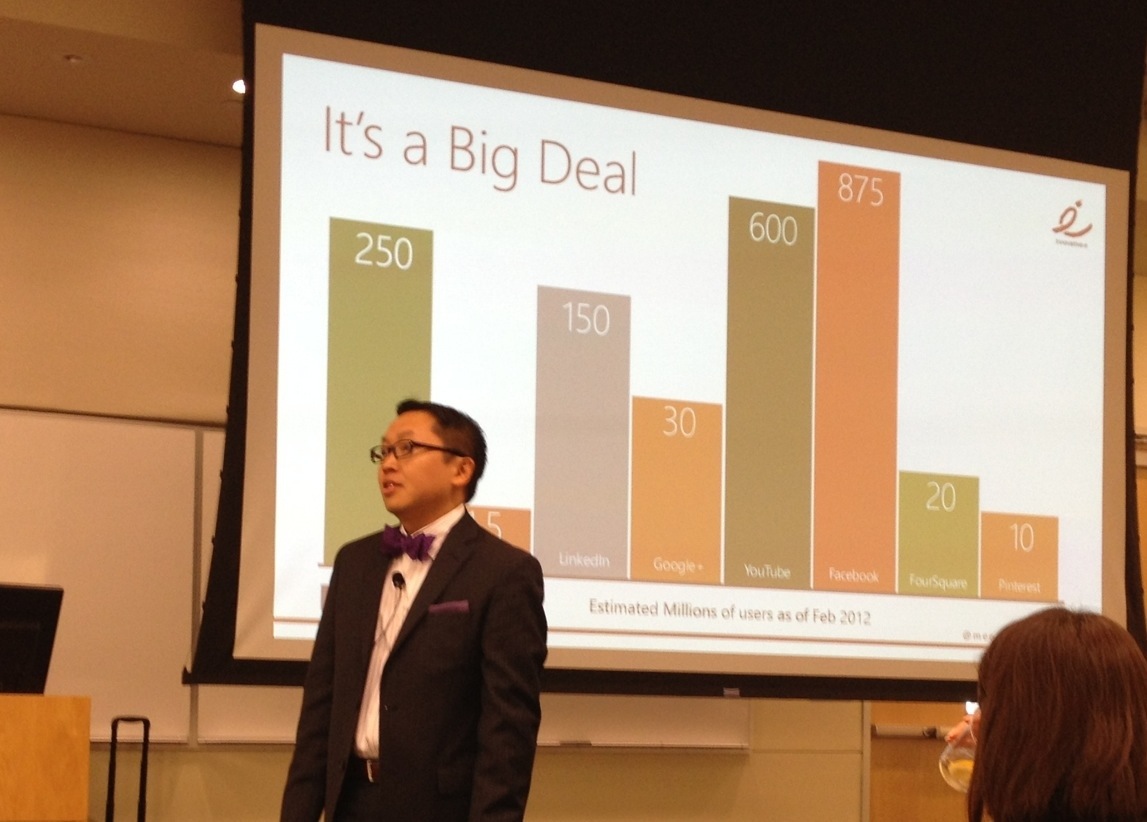
The presentation started out by talking about the recent “viral” phenomenon of “Gangnam Style” by the Korean artist Psy (if you’re not aware of it, see the video on the right).

We are in a social revolution, whether you like it or not. Here are 4 things that are happening today which will continue to increase:

  • BYOD – Bring your own device
  • Speed of Business
  • Do More w/ Less20121005-112355.jpg
  • Engagement

We’re moving from a transactional era, to one of engagement – it’s not social or traditional, it’s both.

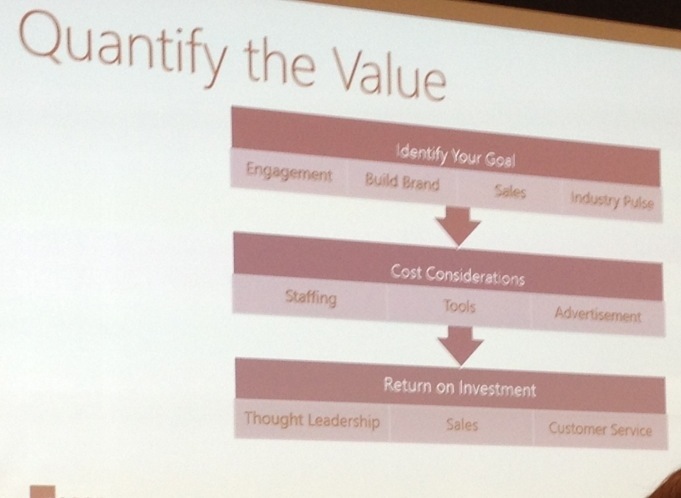
Define success criteria – Quantify the Value by the following steps:

  1. Identify the goal (i.e. engagement, build brand, sales, industry pulse)
  2. Cost considerations (i.e.Staffing, tools, advertisement)
  3. Return on Investment (i.e.thought leadership, sales, customer service)


Then Integrate Business Strategy. (see image at right)

How not to be successful with social

  • Making it a corporate hobby
  • Purely selling vs engaging in social

Consistency is very important

  • It has to be part of your daily business
  • Scheduling social media activities helps a lot

Engagement must be both proactive and responsive.

Utilize Relevant Tools to Integrate and Synchronize:

  • Client apps – Hootsuite, Seesmic
  • Scheduling tools – socialoomph.com
  • Hashtags – Use and monitor these for relevant info.
  • Sharing tools – Bit.ly, RSS feeds (External RSS can feed into SharePoint)
  • Polls – Voting tool that works in PowerPoint – @votebytweet

Amplify

Maximize your “Echo” system – Influence influencers by connecting with them in social media

Big Finish by Dux…

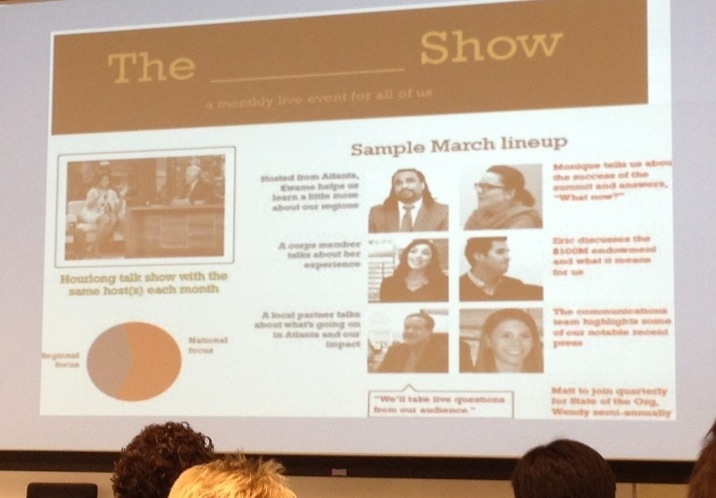
Connecting Internally Using Video

Justin FongHow to create buzz and excitement with employee communications—from a stale monthly newsletter to an energizing monthly talk show
Justin Fong (@jgfong), Vice President of Internal Communications, Teach For America

Had an organization newsletter, until around February 2010, with notes from senior leaders and some other news items. Readership was poor, and at the same time, video was exploding.

Why video?

  • Richer media form
  • Brings people closer to the action
  • Greater ability to convey tone and emotion – brings people to life.

20121004-151418.jpg

Benefits of live video?

  • Minimal production time
  • Unscripted, real, human
  • Interactive
  • Event excitement

Change Management

  • Being honest about what’s not working – newletter results (10% readership)
  • Getting buy in from senior leadership
  • Appealing to the masses
  • Pilot and test

Goals:

  • Entergizing our people and create excitement about the work
  • Liberates people to laugh more
  • Broadens understanding of their work

Discussions Behind the Scenes

  • Talk about diversity
  • Discuss the narrative, what’s the story and who will deliver it?
  • Talk about wordrobe
  • Feedback from the audience
  • Tone/feeling of each show

Growth

Phase I

  • $300 camera, WebEx (audio via phone)
  • Host and co-host
  • Multiple cameras (another $300 camera) with feeds from other cities
  • Video was only so-so, audio-video out of sync, and could only do it live.

Phase II

  • Mix live shots with recorded segments
  • Livestream.com @ $350/month
  • Chat Functionality – to create event excitement
  • New equipment: $2500 camera, microphones, lights
  • Travel expenses are the bulk of cost
  • Streaming relies on internet connection

Phase III

  • Highest production quality, all pre-taped
  • Studio shots and segments from the field
  • Team of four travels to produce
  • Video quality is usually external-grade
  • Audience misses the excitement of a live event

Attracting an audience

  • Attendance is about 50-60% of the organization
  • Trailers, posters, and Yammer promote the show
  • Groups watch the show together as a ritual
  • Create a brand around the show – with a logo for each show
  • Focus on the quality of the program
  • Weaving the fabric of the organization’s culture – creating tradition, ritual, rhythm with Year in Review and Back to School Tour

Lessons:

  • Stick with it
  • Pilot – by not committing too much, being flexible, leaving space for innovation
  • Constantly evolve – the first show looks drastically different than today’s
  • Think expansively about the potential impact of internal communications
  • Don’t be afraid you can do it

Moving Employees to Action

Caitlin DuffyEmployee communications tactics for an ADD world: How to engage, collaborate and motivate employees
Caitlin Duffy (@duffycait), Managing Editor of MSW, Microsoft

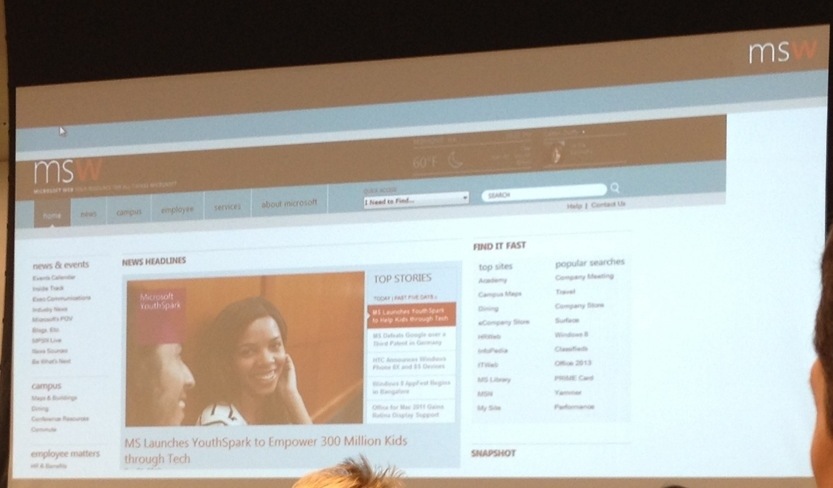
MSW is Microsoft’s internal portal site, includes news and information, as well as links to company resources.  They have a five person editorial team, and a vendor who built the site and manages placing the content.  They handle enterprise-level topics, and localized information is handled separately.  Their sections include – Articles (1 daily editorial story and external story responses), employee submission of stories, snapshot (employee submitted photos), and a few others.  They let people choose their own homepage/portal and don’t force this site on them.  They still have a very high awareness and readership rate.

5 lessons for employee engagment:

  1. Skate to where the puck is going

    Microsoft MSW

    Microsoft’s MSW is their internal portal – a source for news and links to company intranet resources.

    People want information wherever/whenever, want shorter bursts of information, and they expect to be able to interact.  They created “The Pulse” as an extension for their MSW internal brand.  It’s a place for microblogging and interaction in order to engage in conversations.  They can use this to monitor employee sentiment and change internal perceptions around certain issues.

    Similarly, mobile is critical – there’s often more participation due to accessibility of content whenever/wherever – so they’ve developed all these tools on a mobile app.  Mobile is so critical, they’ve eliminated their mass email program to free up resources to implement the mobile aspect of the site.

    What didn’t work – “Submit a Question” – surveys revealed people wanted to ask executives questions.  So they developed a tool to let people post questions and vote them up based on popularity.  Failed because questions that came in often related to secret information that wasn’t ready to be discussed.  They failed to work together with departmental communications managers to be prepared for the questions coming in.

  2. Make it Easy for People to Act
    Infographics make it easy to explain content in a simple way, and can be utilized both internally and externally.  What doesn’t work: A complicated call to action.
  3. Make your Events Social
    Utilized their social platform to socialize events.  There were some minor issues with employee submissions, they were prepared and acted on it.
  4. Make it Real
    Don’t force participation, highlight events, meetings, employee retail deals, etc. to give them what they want and may not be aware of them.
  5. Involve them in Big Moments
    This includes product launches, acquisitions, company meetings, and other big changes impacting the company.  This can be used as a focus group to determine employee sentiment and engagement.


Changing Nature and Pace of Communications

Frank ShawStrategies for the changing nature and pace of communicationsFrank X Shaw (@FXShaw), Corporate Vice President of Corporate Communications, Microsoft

Trends impacting communications:

  • Tech trends – personal computing, cloud computing, social computing.
  • Consumer trends – multi device world, your stuff – everywhere, social networking
  • Marketing trends – Social media marketing, multi channel marketing, video, Interactivity

Nature and pace of communications has changed in the following ways:

  • 20121004-095150.jpgPublishing explosion – Technology tools make it easier and faster than ever for everyone to publish.
  • Influencers are dynamic – Microsoft now watches and develops relationships with blogging influencers. They are literally scouting the up and coming influencers on industry blogs.
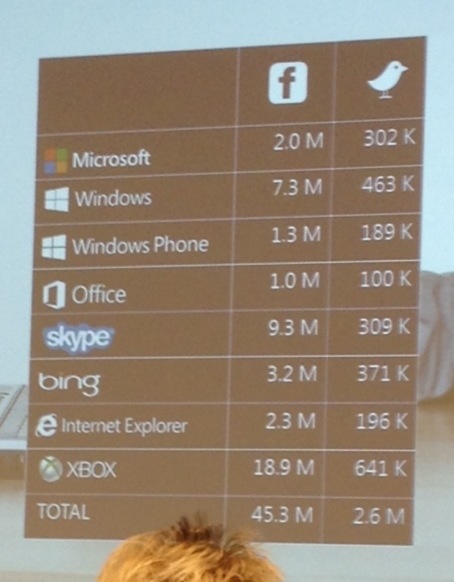
  • Direct storytelling drives action– You can now tell your story as a brand without having to go through anyone else. Microsoft created a News Center to tell their story directly. Internally, they created a news center (includes social features) – it has 5 million page views/month and reachs about 85% of employee base on a monthly basis. They also utilize their corporate Facebook page and have learned, images and tone is everything. People engage most frequently with images. Tone has to be light, some humor, invites conversation, and there’s almost no selling.
  • Engaging invites attention – Before engaging, Microsoft asks the following questions.

    • Do you have the right resources to engage or respond?
      It’s not cheap. You need a dedicated resource to engage. An example: Smoked by Windows Phone – It has a lower cost as a campaign, but it requires a dedicated resource.  They’ve invested in resources because it has great ROI.
    • Does engaging align to your goals?
      Engagement should support a goal. Example: Microsoft Lost Decade – respond, but didn’t want to draw attention to source article, so they responded on TechCrunch article.
    • What is the value you can deliver or contribute?
      On internal surveys, they discovered that external press coverage is one of their most influential things which impacts their employees’ view of the company. Now, when they run a story from the media on their News Central site about the company, they run an accompanying article to tell employees their point of view and give them message points for responding. This clearly adds value to their employees view of company. Externally, goals have clearly defined marketing goals and are usually part of a larger campaign.
    • Will you shift the conversation in your favor?
      Anticipate debate and issues, and share your company’s point of view to help shift the conversation. After a conversation emerges, always discuss whether or not to engage in the conversation. Then when you decide to, track the conversation.
    • Does the risk out weigh the reward?
      If results are going to be negative, what is the impact? Think about it from a short term vs long term – if there’s long-term gain, that will be the focus. Also examine legal/shareholder responsibility and potential impact. Brand, customer, and employee implications need to be reviewed. Finally, personal/professional reputation is examined.

My Plan for Oct. 5

As I mentioned, I’m going to be at the Ragan Employee Communications, PR, and Social Media Summit from Oct. 3 – 5.  There are a few different sessions offered during each period, so I wanted to share the sessions I’m planning to attend here.  You can always follow my live (West Coast time zone) on Twitter (@kkozlen), or here on this blog. If requested, I might do some live video coverage via this site… please take a look at my plan for the conference and let me know if there are any questions or things I can look into on your behalf.

Kim Darnofall

8:30 a.m.-9:30 a.m. (PST)
7 ways internal communications can help create a great place to work
Kim Darnofall (@KimDarnofall), Internal Communications Project Manager, SAS

SAS has been in the Top 3 on the FORTUNE 100 Best Companies to Work For® List in the United States, including two No. 1 rankings, in the past three years. Internal communications plays a vital role in earning this distinction by creating or promoting programs featured in the award application, by enhancing leadership communications, and by fostering pride in the company and encouraging camaraderie. All of these are measured in an employee survey, which counts for two-thirds of a company’s ranking. SAS’ Kim Darnofall will not only outline the ways internal communications creates an award-winning workplace, but will give examples of how they “keep the corporate culture.”


I’M STILL DEBATING BETWEEN 2 SESSIONS DURING THE NEXT TIMESLOT… HERE ARE THE 2, LET ME KNOW WHICH ONE YOU’D BE MOST INTERESTED IN HEARING ABOUT.

Andrew Hokenson

9:45 a.m.-10:45 a.m. (PST)
How Best Buy provides a voice for its remote workforce using social media
Andrew Hokenson (@Andreux), Senior Specialist—Employee Communications, Best Buy

With the average age of Facebook users pushing into the northern 30s, the mystique of social media isn’t such a mystery anymore. However, with a new generation of employees integrating into the workforce (a generation that views email as antiquated and “corporatey”), it’s time to integrate the social media philosophy so many are comfortable with at home into the workplace. Andrew Hokenson will take you on a narrative of Best Buy’s journey from a monolithic state to a culture of 167,000 communicators.

In this session:

  • Challenges of changing a “new” communication culture
  • How to develop a social media policy for your intranet
  • Why and how to bridge the gap between corporate and field employees
  • Why social media shouldn’t become another communications strategy
  • Why companies shouldn’t have a CEO featured on the TV show “Undercover Boss”

Drew Keller

Paolo Tosolini

9:45 a.m.-10:45 a.m. (PST)
How mobile video can make you a communication hero
Drew Keller (@DrewKeller), Owner, StoryGuide, and Paolo Tosolini (@Tosolini), Director of Digital and Emerging Media, Run Studios

Smartphones and tablets are the new best friends of corporate communicators. They are portable, connected and multitalented. You can push their powerful versatility in new and creative ways that will far exceed their traditional uses. Through practical demonstrations, Drew Keller and Paolo Tosolini will show you how to exploit the multimedia capabilities of mobile devices. At the end of this session you’ll be able to transform your stories through mobile video.

In this session:

  • Create powerful photo montages out of your pictures
  • Master best practices to shoot and edit interviews with your mobile phone
  • Use tags and videos to promote your products and services
  • Live-stream an event from your phone
  • Surprise your team using Augmented Reality

11 a.m.-12 p.m. (PST) – CLOSING KEYNOTEDux Sy

Deliver digital marketing success: 8 steps PR professionals can take to maximize social media
Dux Raymond Sy (@MeetDux), PMP Managing Partner, Innovative-e

As traditional marketing and social media become increasingly adopted for building relationships with existing and prospective customers, what is the value of social media for PR professionals engaging in a business-to-business environment?

Join Dux Raymond Sy as he shares practical strategies, tips and best practices on how PR professionals can best maximize social media for marketing, brand awareness, customer engagement and sales acquisition. You’ll see real-world examples of how utilizing social media can generate legitimate results, including increased business leads and loyalty among existing customers.

In this interactive closing keynote:

  • Distinguish the value of various social media channels for your PR initiatives
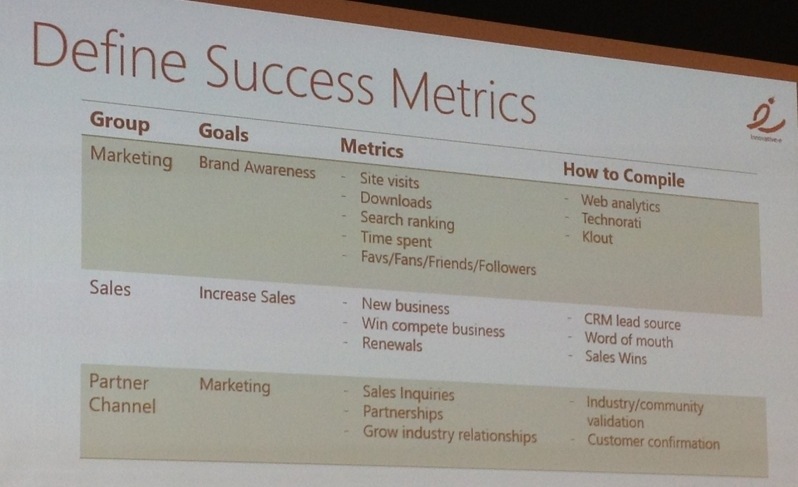
  • Establish relevant metrics for measuring digital marketing success
  • Amplify corporate messaging with an industry “echo” system
  • Integrate social media channels with existing marketing initiatives and sales efforts
  • Leverage internal and external tools like SharePoint, SocialOomph, Google Analytics and Feed Burner to manage social media activities
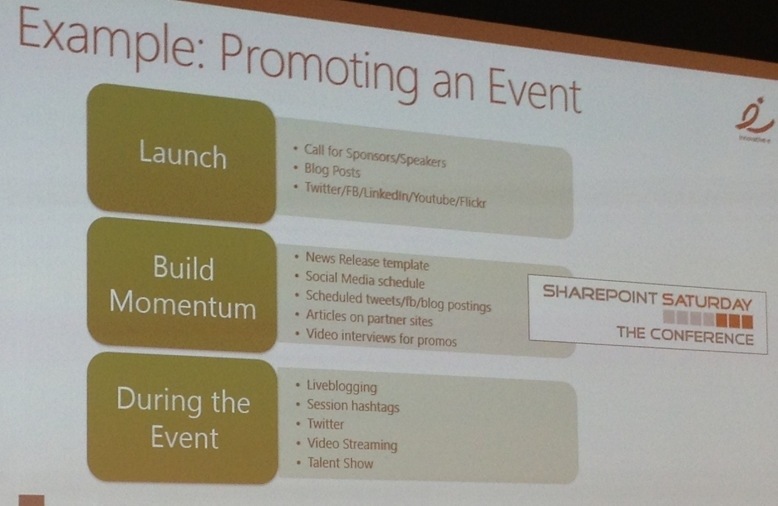
  • Drive a targeted social media campaign for brand awareness, lead generation, customer engagement and partner initiatives
  • Create a strategic social media roadmap for your organization

Participants will receive a workshop recording, digital marketing templates and checklists, and a strategic social media roadmap template.

My Plan for Oct. 4

As I mentioned, I’m going to be at the Ragan Employee Communications, PR, and Social Media Summit from Oct. 3 – 5.  There are a few different sessions offered during each period, so I wanted to share the sessions I’m planning to attend here.  You can always follow my live (West Coast time zone) on Twitter (@kkozlen), or here on this blog. If requested, I might do some live video coverage via this site… please take a look at my plan for the conference and let me know if there are any questions or things I can look into on your behalf.

Thursday, Oct. 4

8:45 a.m. (PST) Welcome with Mark Ragan

Frank Shaw

9 a.m.-10 a.m.
OPENING KEYNOTE – Strategies for the changing nature and pace of communications
Frank X Shaw (@FXShaw)
, Corporate Vice President of Corporate Communications, Microsoft

In today’s 24/7 global communications environment it’s harder than ever to know what to say when and what messages should travel through which channels. It’s becoming more challenging to understand what will have the most impact with your target audience. It is also becoming more difficult to strategically respond to competitive opportunities or threats when the pace of communications is instant.  Timely action and response is of the essence. Frank Shaw will share the things he’s learned over the past several years about the changing nature and pace of communications, with an emphasis on competitive PR.

  • What social strategies work best around competitive PR
  • How to best balance a timely response with need for legal review and involvement
  • How to identify a best practice
  • What to measure to know you’ve had impact reaching your target audience around competitive communications
  • When to take a risk and when not to act

Tobin Burgess

Caitlin Duffy

10:15 a.m.-11:15 a.m.
Employee communications tactics for an ADD world:  How to engage, collaborate and motivate employees
Tobin Burgess is Senior HR Business Partner, and Caitlin Duffy (@duffycait), Managing Editor of MSW, Microsoft

We all know that employee engagement is critical—it leads to higher retention, increased productivity and better morale. But between the “old-fashioned” tactics of email and events and the new wave of social tools, how do you really move employees to action as advocates and experts? Microsoft has learned key lessons in both old and new tactics—lessons that may help you reach and engage employees creatively no matter your set of tactics.

  • How employee comms is gathering followers and landing calls to action via internal social channels
  • Microsoft’s key take-aways in designing a mobile news app for employees
  • What kinds of events—from in-person to videocasts to microblogging Q&A—generate the best reach and engagement
  • How one company-turned-division, Skype, managed employee engagement through its acquisition and on-boarding into Microsoft
  • How both specific groups and the corporate team use employee deals and retail to get products into employee evangelists’ hands

Kristin Graham

Mark Schmitt

12:15 p.m.-1:15 p.m. (PST)
Come on, get happy: How Expedia enhances employee engagement online
Kristin Graham, Vice President, Engagement & Communications, Expedia, Inc.
Mark Schmitt, Senior Communications Manager, Employee Programs, Expedia, Inc.

First begun as a project within Microsoft, Expedia was a pioneer in the dot-com boom. Fifteen years later, the company is Expedia, Inc., the worlds largest online travel company, employing more than 9,000 people in 36 countries. Communicating across time zones to go-go employees who are by nature impatient of going through channels and following by-the-book formal procedures, Expedia tackles internal conversation, collaboration and community by using a portfolio of communication tools. Using both traditional and social channels, Expedia keeps learning and adapting to how these channels inform and inspire employees.   The goal is to get employees to share professional and personal content through tools on a global intranet. The mix of tools helps workers cultivate corporate culture, deepens its employee value proposition, and boosts Expedias brand.

In this session:

  • What Expedia learned the hard way as it introduced new tools to email addicts
  • How changing a vacation policy made a competitive difference
  • What channels drive a new health & wellness program
  • How an online employee referral program produces more than 12,000 referrals a year
  • How partnering with PR and IR extends reach, resources, and budget
  • Ideas to get the attention of distracted employees used to reading posts and tweets

Diana Kowalsky

Libby Catalinich

1:30 p.m.-2:30 p.m. (PST)
Support a strong corporate culture by guiding your senior leaders to speak with authenticity and transparency
Diana Kowalsky (@dianakowalsky), Internal Communications Manager, and Libby Catalinich (@lcatali), Director of Corporate Communications, REI

Trust is essential to a thriving business. We all know that leaders play a key part in building trust, fostering culture and sparking dialogue. In this session, you’ll hear how REI is working to empower and energize leaders as a critical voice in the organization to build employee confidence and engagement.

  • Why executives matter to employees and how to communicate that to your leaders
  • Tips to help managers be a voice for the organization
  • How a CEO blog can bring personality and connection to senior leaders
  • Why old-fashioned face-to-face conversation still matters

Justin Fong

2:45 p.m.-3:45 p.m. (PST)
How to create buzz and excitement with employee communications—from a stale monthly newsletter to an energizing monthly talk show
Justin Fong (@jgfong), Vice President of Internal Communications, Teach For America

In the last five years, Teach For America’s staff has grown six-fold to nearly 1,700 spread across 46 regions and countless home offices. Fostering community and an esprit de corps has become increasingly difficult, so they developed “The Blank Show,” a one-hour monthly live broadcast that strengthens team spirit, fuels the fire for their mission, and allows senior leaders to communicate important messages live to a wide audience.

During this session:

  • The power of live video broadcasts in shaping staff culture and internal branding
  • Internal change management: abandoning a monthly newsletter and starting a talk show
  • Creating buzz and generating buy-in for an hour-long show
  • Behind-the-scenes conversations about strategy and content for the show
  • The nitty-gritty of putting on a low-budget, high-impact production (including technology and equipment selection)

Thomas Smith

4 p.m-5 p.m. (PST) – SPECIAL KEYNOTE
Disney Parks Social Media Content: Creating Magical Experiences
Thomas Smith (@ThomasSmith) is Social Media Director at Disney Destinations

Similar to Walt Disney’s original idea for Disneyland, the Disney Parks social media program is driven by the simple notion that making guests happy is a key to success. Since launching the successful Walt Disney World Moms Panel, Disney Parks Blog and other channels, the program’s strategy has revolved around listening, building relationships, creating and sharing relevant stories and participating in online conversations. Disney Parks has a series of real-world case studies and examples to share as well as the secret to what keeps the company’s most powerful social program moving forward and grabbing attention.

  • The importance of purposeful storytelling
  • Why Disney Parks social operates like a next-generation newsroom
  • Disney’s secret to moving a social program forward
  • Why doing social right demands creativity
  • How to highlight the best of your company in the social space
  • The key to creating experiences worth sharing
  • How to build structure around your content


My Plan for Oct. 3

The Ragan Employee Communications, PR and Social Media Summit is coming up next week. You can always follow my live (West Coast time zone) on Twitter (@kkozlen), or here on this blog. If requested, I might do some live video coverage via this site… please take a look at my plan for the conference and let me know if there are any questions or things I can look into on your behalf.

The first thing I’m attending is a pre-conference workshop on Wednesday, October 3, covering various aspects of employee communication. Here are the workshop sessions I’ll be attending:

Dux Sy

9 a.m.-11 a.m (PST)
Transform your corporate communications with SharePoint
Dux Raymond Sy (@meetdux), PMP Managing Partner, Innovative-e

By leveraging SharePoint 2010, corporate communicators are empowered to create relevant solutions that can increase productivity by streamlining and automating communication processes and minimizing communicators’ dependence on IT.

  • Exploit the key benefits of SharePoint for corporate communicators
  • Automate corporate communications processes and workflows with SharePoint
  • Integrate SharePoint with existing corporate communication tools
  • Create a Web-based dashboard to track and measure relevant corporate communication metrics
  • Leverage social and mobile capabilities to better engage corporate audiences

Mark Schumann

12:30 p.m.-2:30 p.m. (PST)
Leadership communications: How a communicator in the social media world can support and maximize the impact when an executive communicates
Mark Schumann (@dmarkschumann), past Chair, IABC
Mark Schumann, ABC, past Chair of IABC and a 17-time Gold Quill winner, for a compelling workshop on how to reinvent your communication skills to provide the support a leader needs in the social media world.  Behind every great leader is a great communicator. And, in this 24/7 business environment of constant interaction, how a communicator supports a leader has significantly changed. No longer is helping a leader craft a message adequate support. Today’s communicator must continually coach the leader to make the most of each opportunity to engage.

This session will cover:

  • Help a leader discover a communication style, tone and level of comfort with a range of interactions
  • Coach a leader to work within an authentic voice that is natural to express and absorb
  • Introduce new media to a leader without forgetting that every tool is a means to an end of stakeholder engagement
  • Establish a curriculum of leadership message and content
  • Encourage a leader to become more involved in the development of communication strategy and approaches without delegating the task
  • Continually reinforce to the leader that communication is a fundamental part of the role

Drew Keller

3 p.m.-5 p.m. (PST)
How organizations need to use video and storytelling to create and protect their brand
Drew Keller (@DrewKeller), Owner, StoryGuide

Corporate communicators must explain, defend, and bolster the corporate brand internally and externally with imagination and verve. This is no small task now that social media has made it more difficult to manage your brand on many platforms. Video is one of the strongest weapons in your arsenal to create the look and feel of your brand. When you make a video, your audience pays attention to every detail. They look in the corners of your shots, they listen to the words, and they absorb your message… intended or accidental. Therefore it is critical that every video you produce has an identifiable relationship with the personality of your product.

This session will cover how to use video to tell your corporate stories. You will learn how to:

  • Make certain that your stories reflect your company or organization’s philosophy
  • Make sure the look and feel of your videos reflect the brand positively
  • Avoid common pitfalls of content creation that does not advance your brand
  • Capture inspirational and memorable stories that will bring your company renown
  • Write the perfect script through employee interviews and brainstorms