10 Things I Learned (or re-learned) at SXSWi 2010

Last year was my first SXSW and nothing short of a personal epiphany. This year’s Austin mashup of technology, creativity, and cultural tsunami has once again shifted the way I think about what it all means— to my work and to my life:

10. Crisis = Opportunity.
How do we take advantage of the disruptive innovation that’s toppling business models? Jeremy Gutsche is the founder of TrendHunter.com, the world’s largest network for trend spotting and innovation. He’s also the author of, “Exploiting CHAOS: 150 Ways to Spark Innovation During Times of Change.” There’s one question from Jeremy that I’m now asking myself every day; a question designed to help capitalize on chaos: Can I focus what I’m trying to do in seven words or less?

9. Technology is the new art. 

The notion of left brain/right brain is passé. My ability to adapt and thrive at the intersection of art and technology presents endless opportunities. My insistence on playing on one side, to the exclusion of the other, is an express ticket to irrelevance. What can I do to recast my skills and be ready for whatever comes next?

8. Be a student of “The Next Big Thing.”
Then, step back and see the big picture. There’s a “next big thing” breaking out every day. Great branding and communication isn’t about throwing stuff at every next big thing. It’s about being helpful, relevant, and genuine in the marketplace. I need to understand the difference between “thin value” and “thick value” and do the right things to be relevant every day, while strengthening value over the long haul.

7. Content is king.
So why has it taken us so long to figure out that content requires user-centered message architecture? According to Margot Bloomstein, the principal of brand and content strategy consultancy based in Boston, a comprehensive user experience shouldn’t be a carrot on a stick where we try to lure people to our content on our terms. It should be a big, delicious plate of cookies carefully crafted ingredient by ingredient.

6. Words won’t work.
Dan Roam has helped leaders at Microsoft, Wal-Mart, Boeing, eBay, and the United States Senate solve complex problems through visual thinking. He wrote the international bestseller, “The Back of the Napkin: Solving Problems and Selling Ideas With Pictures.” Why do we spend so much time talking to clarify our ideas? The person who draws the best picture wins. My goals: Fewer words. Better pictures. Stronger stories.

5. I didn’t know Twit.
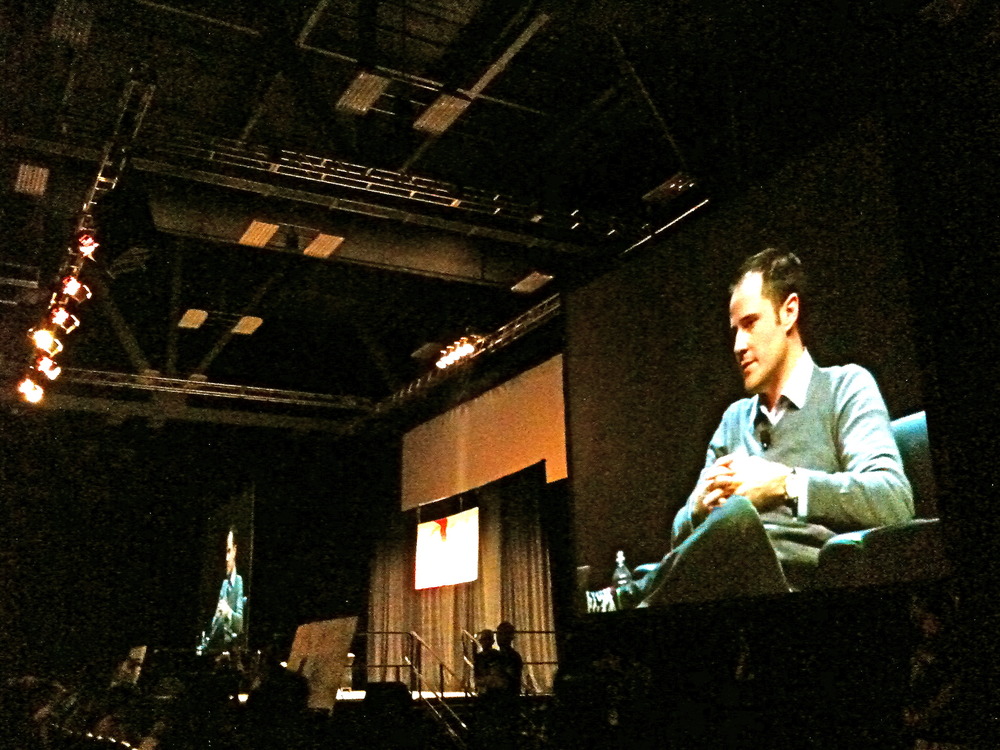
Twitter is my primary news source. The shape, speed, and value of information on Twitter is unlike anything we’ve ever seen. At SXSW, Twitter co-founder and CEO Evan Williams changed the way I think about it. The No. 1 company principle @twitter? Be a force for good. Why? Democratization of information changes the world. Tools like Twitter reach the weakest signals and can have profound impacts (think Haiti, Chile). Easy exchange of information gives people control. Everyone wins.

4. Corporate America is cautious.
Andrew McAfee is a research scientist at the Center for Digital Business, MIT Sloan School of Management. He researches and works extensively with corporations around the “2.0” model of communities, collaboration, and transparency. According the McAfee, the biggest corporate mindset challenges to embracing 2.0: We are risk-averse, busy, budget-constrained, uninterested in social revolution, hostile to auto-obsolescence, ROI-seeking, and overly convinced of our own uniqueness.

3. There’s no such thing.
There’s no such thing as social media or social marketing. It’s media. It’s marketing. It requires interesting, clear, helpful, user-focused content like it always has. There’s no such thing as Web content, mobile content, tablet content, Wii content. Everything is converging and users just want it to work and work right everywhere.

2. Technology = inclusion.
I tweeted. I posted. I photo’d. I video’d. I checked in. Got followed. Got retweeted. Direct messaged. Played contact and conduit. This is where I belong … with one foot inside the office and one on the path to the future of media.

1. After living in the future for five days at SXSW, I need to ask more questions:

  •  What are the right levers for change?
  • How do we create the right measurements of success?
  • What can I do to help solve problems, not solve symptoms?
  • How do I help strengthen our resolve as communication consultants that “less bad” is not the same as good?
  •  What can I do to help move the friction of process to real momentum and flawless execution?

Every profession bears the responsibility to understand the circumstances that enable its existence.

Brand 2.0

Presenter: Kevin Yam – Directer, mobile and interactive platforms, National Geographic

500-x-BusHomeFew other publications have the longevity of National Geographic, but like any magazine, it has had to adjust to adapt to technological changes and the way that users choose to experience media.  A few years ago, the company looked at all of its media offerings – magazines, tv, games, online, image collection, music, books, films, and maps – and discussed how it could offer that compelling content together across all of that existing media.  As they develop new content, they consider how it could be used (licensing) and how to best tell the story in many different ways.

Developing this led to a heavy focus on user experiences, which forced them to examine the context in which their content was consumed.  With the emergence of mobile, consumers now have immediate access to information and resources, and National Geographic wants to be there with their rich, outstanding content.  This recent led to the development of a Bird Finder app which helps users identify birds (using location information), and incorporates sounds and video.  Additionally the app allows them to “check in” the bird, creating crowdsourced maps of where types of birds have been seen.

They also recently completed a project to tell the story of going to Antarctica – Bus 2 Antarctica.  They used new and social media to help tell the story of, “1 man, 10 weeks, and 10,000 miles,” traveling from National Geographic’s offices to Antarctica.  He kept followers up-to-the-hour on his travels via Twitter (@bus2antarctica), a blog, facebook, an interactive map, and media partnerships with FOX, ABC, and CBS.  The traveler used only an iPhone, still camera, video camera, GPS, and a tracking device to report his stories through all of these media.  It helped to prove they could tell a tremendously compelling story, in real time, for an extremely low cost.  Every brand needs to consider how they can take advantage of new and social media to tell their story or provide brand content.

Brands Don’t Think What You Think They Think

Presenter: Andrew Palmer, The Barbarian Group

If you want a brand to buy your big idea, here are some things to keep in mind.  Brands want to get in on the next big thing, but…

1. Good Brands Trust Good Brands – They want to deal with professionals who know what they’re doing.  They need to have confidence in you and your brand, so set yourself up to succeed by promoting your brand as well as your idea.

2. Safety in Numbers – If someone else is doing it or involved, brands feel more comfortable.  Take the opportunity to get multiple brands involved in the same idea – utilize partnerships that make sense.

3. Give them Something Unique – Everyone wants something they can say they were first or best at.  The value proposition needs to show how they’ll be able to do that.

4. Know Who to Talk To – Do your homework and know who makes the decisions.  Don’t take a “no” from someone who can’t tell you “yes.”  And although someone can say “yes,” make sure you know all of the players involved so the “yes” doesn’t end up backfiring.

5. Know their Audience – There’s a difference between customers and consumers.  For example, a CPG company’s customer is actually Walmart, but the consumer is the one who buys the product.  Make sure you’re ideas cater as best as possible to both audiences.

Tags

Related Posts

Share This

New Rules of Marketing & PR

Presenter: David Meerman Scott, New Rules of Marketing & PR

No one doubts that the rules have changed and social media has made it necessary for businesses to interact with and engage with customers and potential customers.  If companies want to be successful in this new world, Meerman suggests a few principles they’ll have to abide by.
Lose control – Brands don’t just have to adapt and change to their customers’ wants/needs, but they should let their customers help them shape the brand.  It lets them feel most engaged with the brand and makes them more likely to evangelists of your brand.

Be human – Customers are individuals and they want to be dealt with on a one-on-one basis.  They want to deal with a person, not a big faceless corporation, and they want to be genuinely listened to.

Nobody cares about your products except you – People care what they do for them (make their lives easier, better, etc.).  Highlight the benefits and services you provide and don’t use big, fancy, or irrelevant language to talk about them (See The Gobbledygook Manifesto).  Find out the information people are looking for – which you are an expert in – and give them content.  Every brand should be constantly putting out content that illustrates its values and is relevant and interesting to their target consumers (Brand Journalism).

Create triggers that encourage people to share – If people love what you provide them, give them a way to share it with others.  Give them both a method and very subtle reminders to do so.

No coercion required – If people love you, they’ll want to share your message or talk about your brand.  Strive to be the type of brand people want to tell others about – Apple, HP (video), etc.

Stop making excuses – These are the new rules, and the only reasons not to follow them are self-imposed.  It doesn’t matter what your product/service/industry is, anyone can follow these rules.

Crush It! with Gary Vaynerchuk

Gary Vaynerchuk, Author of Crush it! – Cashing in on your passion

Filled with energy, gratitude, and passion Gary Vynerchuk demands attention (and it doesn’t have to do with him dropping the regular f-bomb).  He’s passionate about what he does and is an evangelist for using your passion to promote your love on the web.  He’s all about using social media to connect with individuals, whether its for your personal brand or your business.

He’s passionate about his belief that everyone is, or should be, in the customer service business and technology is only making that more necessary.  He relayed a story about his brother showing up at a restaurant after calling for a reservation.  They told him he’d have to wait, so he pulled out his phone to call to let people know, and as soon as he pulled out his phone, the hostess told him she’d find him a table immediately.  In the age of social media, and review sites like Yelp, companies are starting to realize they have to change the way they do business and start paying attention to customers needs.  “Word of mouth connects us to good shit, or tells us what to avoid, and that’s the new way of the world,” says Vaynerchuk

Vaynerchuk believes in investing in customer relationships, showing you care for them, and eventually it will pay off.  He says, “everyone is trying to be a 19 year-old dude – they’re trying to close too fast.”  Every business needs to be providing their customers/communities with the attention and content they’re looking for.  Content has never been more valuable, and everyone is in the content business.  People told him his book wouldn’t sell (it made the NYT best sellers list) because he “gave too much content away,” but he believes we live in a “thank you economy” where people are appreciative of his knowledge and buy because of the trust and relationship that has been built.  “You have to care and do good first,” he says, “it’s the only way to convert.

Twitter’s ‘@anywhere’ Third-Party-Integration App Announcement

Just a quick follow-up to the video clips Koz posted yesterday from Twitter co-founder and CEO Evan Williams’ SXSW Keynote interview:

  • There’s been a flood of analysis, opinion, and information on the heels of Williams’ (@ev) announcement of the new Twitter third-party-integration application, “@anywhere.”
  • If you’re not currently a Twitter user, the ability @anywhere will provide to seamlessly mesh Twitter with other sites, such as The New York Times, Amazon, and eBay, and let users share links and add “follows” without leaving the sites, may certainly bring more users to Twitter.
  • Here’s a good write-up from TechCrunch about the features and third-party partners (so far).

I can easily see how @anywhere will change the way I use Twitter. It may sound silly, but I also get how it aligns with Twitter’s No. 1 company principle: Be a force for good.

As @ev said yesterday, “Access to information … is about reducing the walls between influencers and the influenced. Democratization of information changes the world.”

ANYONE can Create a Video Game

Panel: Dustin Clingman – Full Sail University, Dave Werner – Atmosphir, Michael Agustin – GameSalad, Adam Saltsman – Flixel, Troy Gilbert – Mockingbirdgames, Shanna Tellerman – Wildpockets

Building a game is getting easier and easier, and the panelists build tools to help people without tech skills/knowledge build video games.  From simple to complex, it sounds like the video game industry is hungry for new ideas since many games are built upon the same premise – shoot ’em up, explore, etc.

Games don’t have to be just fun and/or entertaining, they have proven to be used to teach very effectively.  While it can obviously be used to teach simple tasks, games are tremendously good at teaching individuals organization or organizational models such as world-politics, physics, math, science.  If you have trouble explaining your business model to employees, consider a game that teaches them what the elements/values/principles of your model are.  When used for good, these games can communicate and engage users in things like the impact of natural disasters, geopolitics, and other significant societal issues.

Some games and systems choose to take advantage of “regular operative conditioning” which rewards you for a repetitive task.  It has been proven that people have an innate need to solve things and with things like gambling, people become addicted to the dopamine that is released when they are challenged and rewarded.  This is a tremendously effective tool for getting people engaged in your game, but it can also be dangerous if people start working toward “points” rather than pursuing the true purpose of the game.  However, reward structures – in the form of points, virtual items, money, etc. – can be a tremendously effective way of hooking people in and keeping them engaged.  Feedback, recognition, rewarding, earning, and achieving are human urges that come through in games.  You don’t necessarily have to make a “game” in order to incorporate this or exploit these urges.

If you are interested in getting started building your own game, here are a few resources to consider:

  • Game Maker, by yo-yo games – Not great, but it does the things people want it to do.
  • Game Jam – An event that is a good way to get with a group of developers.
  • Mockingbirdgames – Provides easy, super basic tools, and very limiting.  It’s flash based for the browser with plug-ins with existing communities.
  • GameSalad – Good for scaling and porting across formats. Xml format to be ported to mobile devices, flash for browser, etc. – want to be able to scale.
  • Flixel – Flash games for pc/linux – both web browser and download and play – incorporates social sharing
  • Wildpockets – Web based 3-D games that supports community – all points/currency shared across games

ROWE: No schedules, no meetings, no joke.

Imagine a work environment where you work when you want, how you want, and where you choose. A work environment where strict accountability for results is the norm. It’s simple: If you don’t deliver results, you don’t have a job.

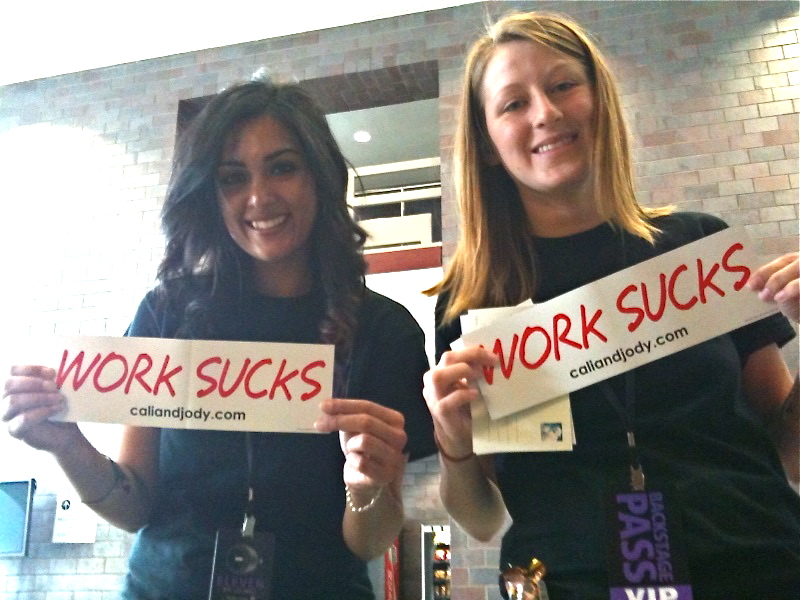
That’s the premise of the Results-Oriented Work Environment (ROWE), a concept pioneered and implemented by Cali Ressler and Jody Thompson when they were co-workers at Best Buy. It’s also the topic of their book, “Why Work Sucks and How to Fix it.”

I met them at a South by Southwest panel today, where they were by joined by workplace author and Wall Street Journal columnist, Alexandria Levit, and two CEOs of organizations that have implemented ROWE.

It was an honest discussion of the challenges and benefits, and the cultural shift required for ROWE to work. There’s a summary of the discussion here and more at GO ROWE.

Panelists: @jessicalawrence, @jeffgunther, @caliandjody, @alevit. Meet them on YouTube.

Tags

Related Posts

Share This

Web Series 2.0: Big Campaigns on Digital Dollars

Panel: Melissa Fallon – Davie Brown Entertainment, Chris HanadaRetrofit Films, Milo Ventimiglia – DiVide Pictures, Wilson ClevelandCJP Digital Media, Andrew Hampp – Ad Age

Media is increasingly fragmented and more and more people are turning to the web to get both information and entertainment.  One of the panelists noted that even TV executives mentioned that their kids don’t watch TV anymore, but instead view shows on the web.  Many brands are moving some money over to digital, particularly for online video.  However, the perception is that digital is cheap.  While many are willing to “work with what you’ve got” you can certainly do better work with better budgets.  The challenge with getting those budgets is is that there are few examples out there and many still think in terms of traditional media measurement.

“”Big brands tend to say, ‘give me something that’s never been done before… but I want you to give me examples of how it has successful in other places’,” said Melissa Fallon of Davie Brown Entertainment.

Since paid media is, paid, you are guaranteed eyeballs, but that’s not something that online video can deliver.  The real challenge is distribution and syndication.  Partner with your existing fan networks to let them share your message.  For example, a video series for IKEA was successful by getting the top 10 IKEA fan blogs to post and promote the online episodes (the blog that directed the most traffic got a spot in the season finale).  People aren’t going to seek out your show, you have to go to where they are and put it in the channels where they are.  However, you can also use paid media effectively to cross promote your web videos.

What is most effective is when you can pair a brand with a creative way to tell a story online.  Good content is good content, whether its on the web or on TV – content really is king.  The challenge is really determining what your brand is about and then finding a compelling way to tell that story.  In a way, Chief Marketing Officers need to be like producers and movie studio execs – they’re investing in something that they want to make sure it is successful.  Especially as brands begin building their own content – which is necessary, because no one understands their business or industry better than they do, and they should make sure their brand sentiment is the one that people see.

The challenge for big brands moving forward is that online video and storytelling is now accessible to anyone.  A small brand or unknown player in your industry has the same (if not easier access to) things like YouTube and other social media outlets – and if they’ve got a compelling story, they’ll get the recognition and set the bar in your industry.  For example, “The Temp Life” is a web series created in 2006 for Spherion.  Their challenge was they had trouble building loyalty among their temps.  Therefore, the webisodes highlight that the brand knows the jobs aren’t always great, but we can empathize with you.

Finally, big name talent has started to play in the online video and social media space.  The key is getting them involved and engaged with your story or project.  Right now, it’s not necessarily about the money for them, it’s about collaboration.  They’re doing it because it’s fun, its different, and they feel like they can be part of the creative process.  When a big name brand is attached, the actors also feel more comfortable that it’s not completely going to flop – there’s money and credibility behind it.

Gary Vaynerchuk Now

Here’s a quick video from the Gary Vaynerchuk presentation going on right now.

SXSW: Bizness, brews, and bonding

It’s Sunday night and I’ve landed in one of the many South by Southwest lounges – with a cold Lone Star Beer at my side and blisters on my feet.

There is significant party cred attached to the SXSW franchise, and no shortage of (free) drinks and (free) food to be found at the Austin Convention Center and beyond. But that’s just one small piece of a cozy conference vibe that fosters a culture of work hard, play hard, and get to know each other. (Related story: Booze and Blogging.)

Make no mistake about it: SXSWi is a five-day marathon. The choice of sessions, panels, workshops, keynotes, and meetups is overwhelming. And with two more days yet to go, it was energizing to hear from many of you over the weekend who were following along on Twitter and foursquare. What a great blend of technology and inclusion.

Thanks to a tip from @briansullan, I tracked down Web standards guru and author, Jeffrey Zeldman, and co-author, Ethan Marcotte. Ed Matesevac, @ep3runs, turned me on to Dan Ariely––an acclaimed professor at Duke University and best-selling author of “Predictably Irrational: The Hidden Forces that Shape Our Decisions.”I also noted Company partners outside our department tapping into Twitter and retweeting some of our live-blogging. Thanks for joining us!

SXSW Interactive ends Tuesday night and we’ll keep bringing it to you until then.

Creativity Through Play

Presenter: Sara Summers, User Experience Evangelist for Microsoft

Play is important, particularly in the workplace.  Science (lead by Dr. Stuart Brown at The Institute of Play) has proven that a life without play leads to depression, rigidity, and dissocial activities.  It’s critical, not just to our well being, but for adaptation and idea generation.  It’s proven that play drives us to seek novelty and newness.

Play elicits our best qualities – it inspires empathy, helpfulness, hopefulness, and betters emotions.  It’s crucial to visual thinking and processing.  Dr. Robert Epstein’s “Shifting” suggests a period of individual ideation, followed by group building and generation produces significantly better ideas.

“To invent, you need a good imagination and a pile of junk.” -Thomas Edison

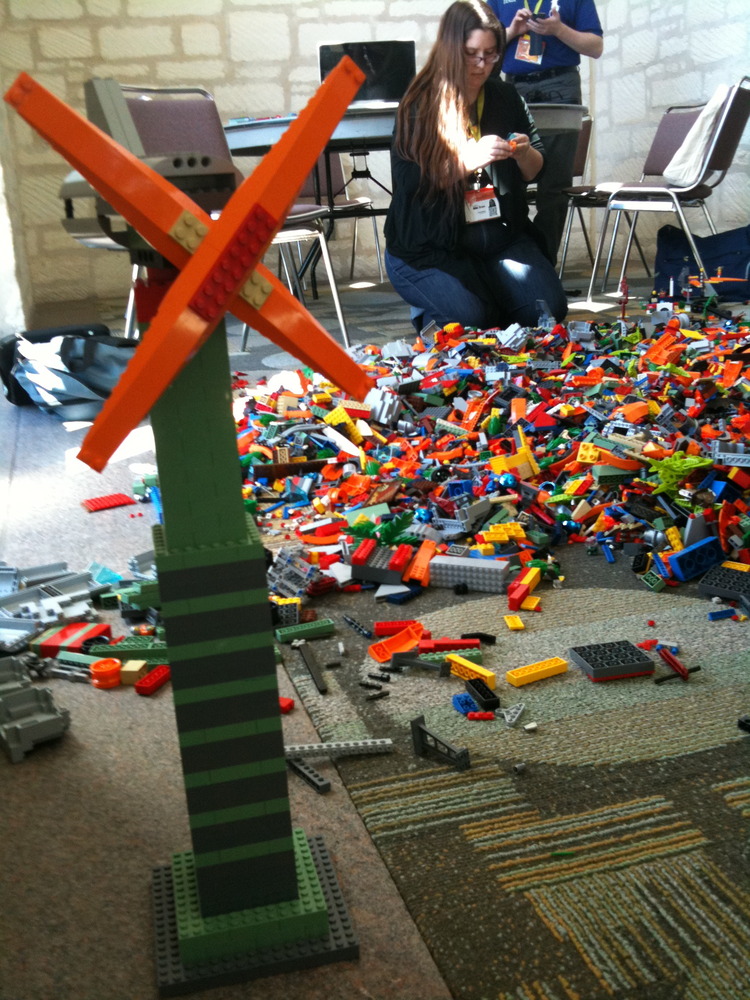
It’s a short blog post, but most of this workshop involved hands on play and brainstorming to illustrate the points made.

A period of individual ideation, followed by group building and generation produces significantly better ideas. – Dr. Robert Epstein #sxsw

Tags

Related Posts

Share This