Disaster: The Future of Crisis Communications

panicbuttonI followed this session via Twitter and huge thanks to live blogging/tweeting from Elysa Ellis.

Everyone now has the ability to be an immediate publisher, and we are in an age of “permissionless information.” People can post information immediately, with no filter. The real challenge is editorial – getting out information quickly, but getting out what’s most important and coordinating all the information so it becomes relevant and prevents clutter. Even the United States Air Force knows “speed is more important than security in a crisis.”

The real goal is to get the most amount of information out there, in the shortest amount of time. While everyone has the ability to be out there, you as a brand or company have to be out there too. If you’re not out there, speaking to your audience, someone else will do it for you. Audiences are looking for “verified” information, and as a brand or established company, you carry some credibility others don’t. However, as a brand, you need to be prepared for this and plan ahead:

  • Understand what you can and can’t say – build corporate/legal approvals – and TRUST – in advance
  • Establish boundaries and rules of engagement
  • Make sure you have the right technology to tell the story
  • Establish networks (police, fire, social media influencers, etc.) before events, so you can call on your network when you need to

Remember, things move fast, so you need to plan ahead, but be flexible and forgiving. If you make a mistake or do something wrong, admit it. Be flexible, be honest and genuine, and don’t be afraid to utilize/curate information from the hundreds or thousands of citizens on the ground gathering and sharing information.

Constantly review the tools in your toolbelt (blogs, photos, videos) and the sites you use, and make sure you’re ready to tell your story in the best way possible, because if you don’t have approval to use it, you’re at a disadvantage, because the average citizen doesn’t need it. That certainly doesn’t mean leaving out traditional media, it’s just that newer tools typically allow you to get out there quicker.


SXSW 2013

logoIt’s not to strong of me to say I love SXSW, it’s such an awesome event full of digital creatives. It’s a tremendous event to learn and network with thousands there to challenge thinking and try new things.

I’m not there, but I’m watching as much as I can live online and following twitter hashtags. I really want to be there, but will cover as much of it as I can right here, just as I have in previous years when I’ve attended.

If you want to watch some of the sessions streamed live, visit http://sxsw.com/live

And huge thanks to Oracle for making the live stream available.

Enabling New Experiences Through Check-ins

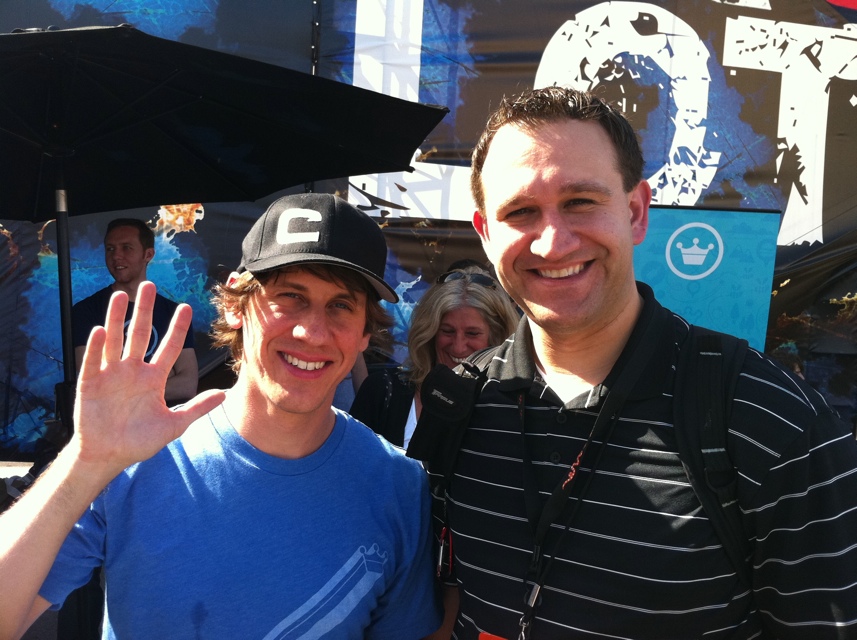
Dennis Crowley Founder of Foursquare and me

Dennis Crowley, Founder of Foursquare, and me.

Dennis Crowley – Foursquare & Pete Cashmore – Mashable

One of the big keynote presentations was with Dennis Crowley, the founder of Foursquare (he’s the one waving in the picture with me to the right).  He talked a lot about what it’s been like at Foursquare during their growth over the last year or two.  However, he also gave some interesting information about what they’ve learned and where they’re headed.

They currently have over 7.5 million users, and over 250,000 merchants who use their system.  These users provide them with a ton of data, since the average user has 3 checkins per day and gives back in the form of recommendations.

They have a ton of ideas about where they want to go, but there are only 50 people who currently work there, so they have to carefully prioritize what’s next for them.  They’re focused on providing badges to encourage positive behaviors, such as the gym-rat badge for checking into a gym 10 times a month, or the “I voted” badge during the elections.  Also, just before SXSW, they launched the “Explore” tab, which utilizes their rich data about you and your friends and provides “an amazon-like recommendation engine” about where you might want to shop, eat, etc.

Crowley feels that their future lies in their ability to “blow out the possibilities of the database of information” they have.  This means both providing information to users about what can help them, but also what it means for businesses who utilize Foursquare.  For example, imagine knowing the potential income for your business when someone walks in your location.  In addition, Foursquare has already proven to provide a lot of potential for small businesses who don’t have an organized loyalty program.  Foursquare has the potential to further become a more universal and amplified loyalty program that provides rich data for venue owners.  We’re seeing just the tip of this with the Foursquare/American Express partnership that’s part of SXSW.  By combining Foursquare checkin data with AMEX financial data, they’ll be able to show the exact amount you spent, where, when, how often, and more.

Along with the potential that lies in what’s already been mentioned, Foursquare has their eye on the future.  They’re looking at things like auto check-ins on new phones with technologies like near field communications (NFC) chips.  “How much easier is it to check in when all you have to do is tap or swipe.”  Not only are they focused on new devices and adapting to new technologies, they’re currently working with over 200 brands, and have their sights set on working with many more.  Much like Twitter, they “love it when people build stuff on top of” their service, and know that others’ innovations could fuel their success.

While most of the conversation felt like Cashmore was having a personal conversation with Crowley, which was off topic, and Crowley avoiding most probing questions, there were some hints at Foursquare’s future.  It was more obvious than ever that Foursquare’s future success lies in its database and the potential to grow it.  The ability for venue owners (businesses) to take advantage of deep, detailed knowledge on people who walk into their locations will help them better market to customers, and at the same time, enhance the customer relationship.

Video From My First Few Days of SXSW 2011


How to be South by South Best

This is from the IFC Crossroads house folks. I thought it was pretty good. Despite the sarcasm, it’s scarily on target (not sure about the tent though).


SXSW App Now Available

SXSW iPhone App

A week or so ago, I posted about the apps I’m planning to use at SXSW. One of the most important apps I used last year, and will use this year, wasn’t yet released. However, today I noticed the official SXSW app has been released (for the iPhone). Called “SXSW Go,” it contains a list of all of the SXSW events and activities (including your customized schedule), a map of the locations of all of the activities, trade show information, and links to SXSW social media sites. I would definitely include this in the must-have apps for SXSW. This will come in particularly helpful when you find yourself shut out of a session you wanted to attend due to the large crowds, and then you have to scramble to find a new one.

Also available on Android and iPad.


More than a Crowd at SXSW this Year

Attendance at SXSW has grown by leaps and bounds the last several years.  In 2009, attendance at the Interactive portion of the conference was around 10,000.  Last year, for the first time, the interactive crowd overtook the music crowd with over 14,000 attendees.  If growth holds true, they are expecting nearly 20,000 people to attend SXSWi this year.  In a previous post, I highlighted a post from Robert Scoble, who wondered if SXSWi has gotten too big to be the meaningful experience it once was.

Here, I guess Bettywriter and I did a pretty good job covering the event last year, because we’re now aware of many more Central Illinoisans attending.  Of course, we know it’s not just our reporting skills, it’s the topics and companies that use SXSW as a platform to highlight their cutting edge products and services. Along with being able to rub elbows with cutting edge thinkers, it’s invigorating to be around so many people that share innovation, technology, and creativity as a passion.

Just here in Blono (that’s Bloomington-Normal for short for non-locals), we’re aware of at least 21 people going for the interactive portion alone.  I’m certain they’ll have a great time and come back with a renewed energy and enthusiasm for digital, creative, and new media.  The more that can bring this feeling back to Central Illinois, the better.

While we certainly invite anyone attending SXSWi to join us in blogging and reporting from the event, we hope those locals attending will join us on this blog.  If you are attending SXSWi and would like to participate in sharing your SXSWi experience and knowledge here, please contact us.

Challenge: build “MicroSXSW” to bring back fun at SXSW

I read a great article from Robert Scoble on his blog Scoblizer about the growth of SXSWi. He discusses the explosive growth of it, and what can be done to bring back some of the intimacy and true connections that make this a great growth and learning experience.

Do we turn SXSW into something that really becomes a parody of itself, or do we try to save it?

Me? I want to get more of those intimate experiences we used to have. I remember when the entire Web Standards Project fit at one picnic table. I remember having a fun conversation with a small group, all huddled around Craig Newmark in the rain at a BBQ place across the street. I remember being able to get into parties without being a VIP and last year the VIPs even had to wait in line at nearly every party. Heck, I remember when Scott Beale Tweeted in 2007 that he was sitting all alone in an empty pub and I joined him and had a leisurely beer at a picnic table with him and a few other friends. Those days are seemingly gone.

Can we bring them back?

Visit An industry challenge: build “MicroSXSW” to bring back fun times at SXSW at Scoblizer to give your input and suggestions.

Customer Service Goes Social

Presenter: Melanie Baker, Postrank

Technology has increased consumers’ expectations for speed and response, and companies have to adapt to provide the level of customer service that’s now expected of them.  Customer service tends to be a bottleneck simply because the amount of people who are “assigned” to do this is limited – there’s typically a “customer service center” or “response center.”  While these are certainly necessarily for efficient business, company cultures must change so that everyone is a customer services advocate.  Even if they can’t directly help or answer the questions, customers want to know that they are being dealt with personally and with sincerity – no matter how they decide to contact you (phone, Twitter, email, etc.).

Baker suggests starting by having everyone in your company go through the same training as the “customer service” people.  Even if it isn’t “in their job” to handle customer service, they need to be prepared to do so if the situation presents itself.  Provide education and resources on how to handle situations.  Opening up this information to everyone in the company – rather than limiting access to it – makes for a more customer-centric organization.  And as consumers take to talking about your company in social media, everyone is prepared to assist (when appropriate), and it’s not just shoved off to “the people whose job it is,” – great customer service should be everyone’s job.

Twitter’s ‘@anywhere’ Third-Party-Integration App Announcement

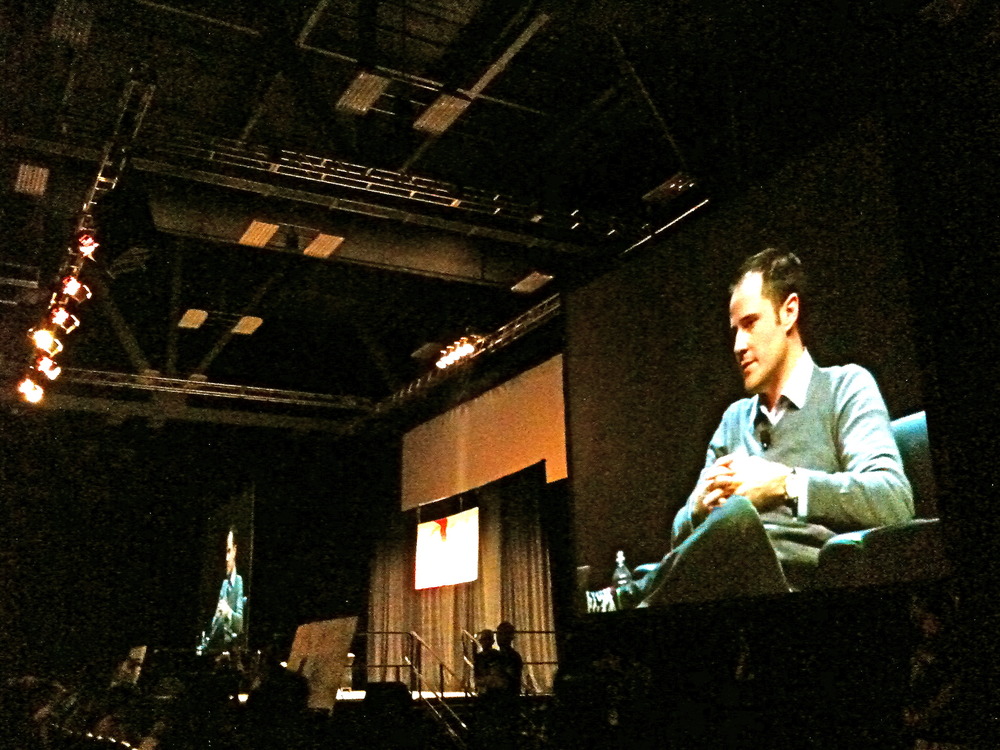
Just a quick follow-up to the video clips Koz posted yesterday from Twitter co-founder and CEO Evan Williams’ SXSW Keynote interview:

  • There’s been a flood of analysis, opinion, and information on the heels of Williams’ (@ev) announcement of the new Twitter third-party-integration application, “@anywhere.”
  • If you’re not currently a Twitter user, the ability @anywhere will provide to seamlessly mesh Twitter with other sites, such as The New York Times, Amazon, and eBay, and let users share links and add “follows” without leaving the sites, may certainly bring more users to Twitter.
  • Here’s a good write-up from TechCrunch about the features and third-party partners (so far).

I can easily see how @anywhere will change the way I use Twitter. It may sound silly, but I also get how it aligns with Twitter’s No. 1 company principle: Be a force for good.

As @ev said yesterday, “Access to information … is about reducing the walls between influencers and the influenced. Democratization of information changes the world.”

What does corporate America think of 2.0?

Do mainstream companies get Twitter? Are executives in non-high tech industries embracing social technologies and the communities that form on top of them, or are they scared to death?

A report from the field was delivered at South by Southwest Interactive today by MIT scientist Andrew McAfee, who coined the phrase “Enterprise 2.0.”

McAfee laid out some good news and some bad news about the corporate mindset on the free-form collaboration that is 2.0, and offered some advice on how to talk to your boss about social tools that are evolving around the user:

  • Corporate mindset challenges: We are risk-averse, busy, budget constrained, uninterested in social revolution, hostile to auto-obsolescence, ROI-seeking, and convinced of our own uniqueness.
  • Some good news: We can be swayed by theory, evidence, narratives, peers; we’re afraid of being left behind.
  • Talking to the boss: Present theories and frameworks, not jargon. Use data, case studies, and narratives. Make it relevant to our business; combat “time-wasting narcissism” perceptions about social tools.

According to McAfee, social software is maturing and we’re beginning to see more evidence of the business benefits of 2.0 (McKinsey Study, CEO case studies). Only time will tell if a tipping point is in the cards.

For more highlights, see the Twitter stream from today’s event. More at SXSW Report.

Presenter: Andrew McAfee, Principal Research Scientist, Center for Digital Business, MIT Sloan School of Management. Contact: @amcafeeamcafee@mit.edu. Resources: 2.0 Adoption Council