
Enabling New Experiences Through Check-ins
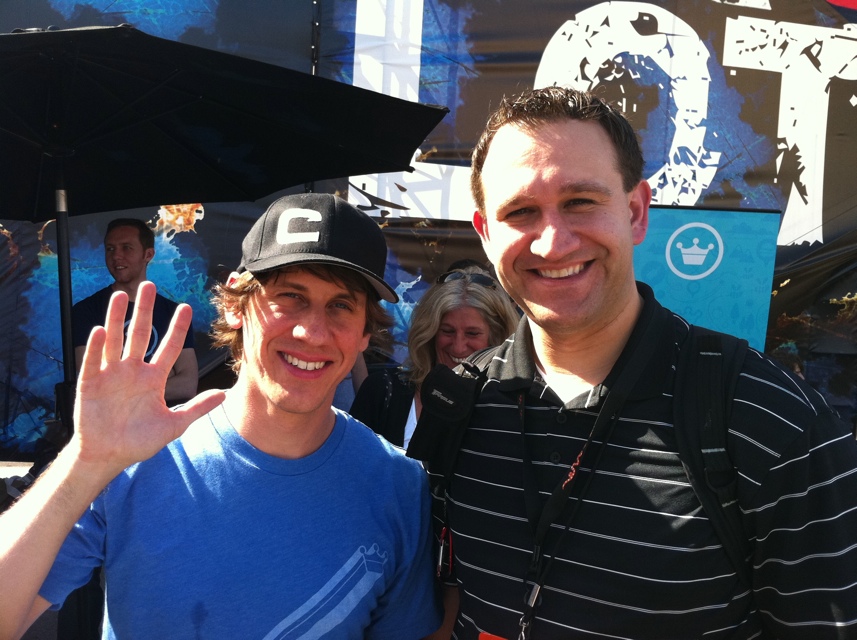
Dennis Crowley, Founder of Foursquare, and me.
Dennis Crowley – Foursquare & Pete Cashmore – Mashable
One of the big keynote presentations was with Dennis Crowley, the founder of Foursquare (he’s the one waving in the picture with me to the right). He talked a lot about what it’s been like at Foursquare during their growth over the last year or two. However, he also gave some interesting information about what they’ve learned and where they’re headed.
They currently have over 7.5 million users, and over 250,000 merchants who use their system. These users provide them with a ton of data, since the average user has 3 checkins per day and gives back in the form of recommendations.
They have a ton of ideas about where they want to go, but there are only 50 people who currently work there, so they have to carefully prioritize what’s next for them. They’re focused on providing badges to encourage positive behaviors, such as the gym-rat badge for checking into a gym 10 times a month, or the “I voted” badge during the elections. Also, just before SXSW, they launched the “Explore” tab, which utilizes their rich data about you and your friends and provides “an amazon-like recommendation engine” about where you might want to shop, eat, etc.
Crowley feels that their future lies in their ability to “blow out the possibilities of the database of information” they have. This means both providing information to users about what can help them, but also what it means for businesses who utilize Foursquare. For example, imagine knowing the potential income for your business when someone walks in your location. In addition, Foursquare has already proven to provide a lot of potential for small businesses who don’t have an organized loyalty program. Foursquare has the potential to further become a more universal and amplified loyalty program that provides rich data for venue owners. We’re seeing just the tip of this with the Foursquare/American Express partnership that’s part of SXSW. By combining Foursquare checkin data with AMEX financial data, they’ll be able to show the exact amount you spent, where, when, how often, and more.
Along with the potential that lies in what’s already been mentioned, Foursquare has their eye on the future. They’re looking at things like auto check-ins on new phones with technologies like near field communications (NFC) chips. “How much easier is it to check in when all you have to do is tap or swipe.” Not only are they focused on new devices and adapting to new technologies, they’re currently working with over 200 brands, and have their sights set on working with many more. Much like Twitter, they “love it when people build stuff on top of” their service, and know that others’ innovations could fuel their success.
While most of the conversation felt like Cashmore was having a personal conversation with Crowley, which was off topic, and Crowley avoiding most probing questions, there were some hints at Foursquare’s future. It was more obvious than ever that Foursquare’s future success lies in its database and the potential to grow it. The ability for venue owners (businesses) to take advantage of deep, detailed knowledge on people who walk into their locations will help them better market to customers, and at the same time, enhance the customer relationship.
Tags
Related Posts
Share This


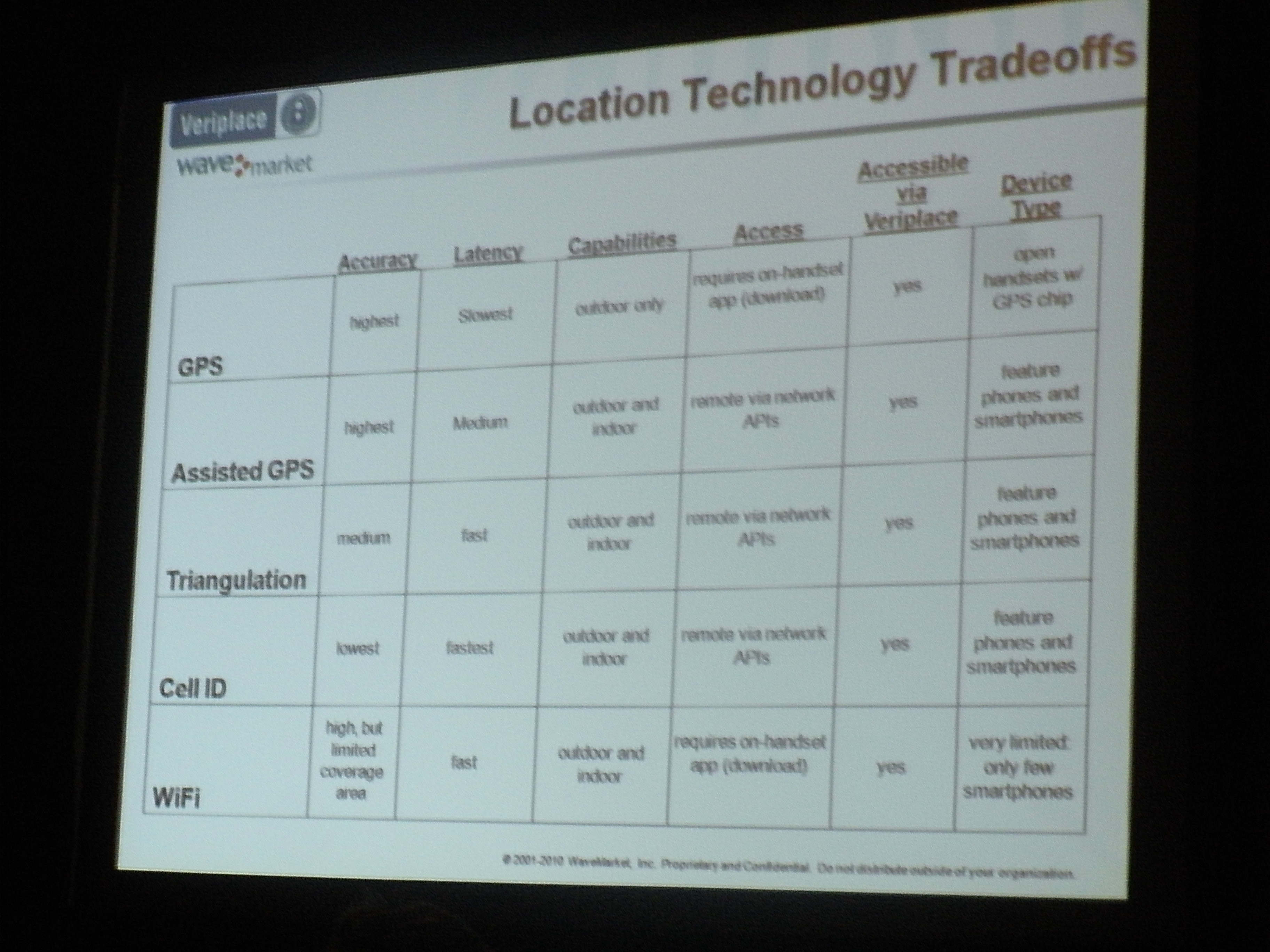


 Since Twitter hit it big on Oprah about this time last year, everyone’s been wondering, “What’s the next big thing.” The technology that has been emerging as the next big thing appears to be location based social networking tools. Over the last year, services like
 Subscribe via email