Innovations in Community Building: The Latest in Social Marketing

Speakers: Mary HenigeDirector, Social Media & Digital Communications at GMErika Brookes – Vice President, Marketing for VitruePaull Young – Director of Digital Engagement and Fundraising, charity: water, Moderator: Steve Broback

I decided to spend the afternoon at the Tweet House, an intimate setting with some pretty good panels on social media.  This panel included folks from GM, charity: water, and Vitrue.  The discussion really covered managing communities and managing relationships and brands in the social media space.

All panelists agreed that one of the strengths of social media is the ability to tell an interesting story.  It gives brands a platform for storytelling.  In particular, Mary Henige from GM discussed how they’ve tried to use social media to humanize their brand.

“You can hate a brand, but it’s hard to truly hate a person if you get to know them.  You have to humanize your brand, and this provides a great venue to do that,” said Henige.  They’ve created a site called the Faces of GM – http://www.facesofgm.com – where they’re telling interesting stories and giving a behind the scenes look at the brand.

Getting people with passion for creating content is key, as Ericka Brookes from Vitrue illustrated.  While they have a blog owner, they’ve tried to get anyone who wants to participate involved – someone from engineering, marketing, etc.  People who are passionate about it will create content and will express their passion in their messages.

Of course any discussion of social media these days comes around to ROI and whether or not you’re being effective in this space.  As Henige said, “you can’t always measure ROI directly.  Sometimes you do something because it’s the right thing to do.”  Being in social media and interacting with customers is a relationship building activity and relationships can’t always be measured quantitatively.   However, all of the panelists agreed that you need to measure what you’re doing and estimate the impact it’s having.  One brand uses a customer happiness index which compiles interactions, mentions, and sentiment.  Whatever you choose to measure, you have to look at it as an indicator, not a direct measurement.

Henige also mentioned that there’s a tendency in the industry to focus to much on those who don’t like us, instead of spending time on/with brand advocates.  During the auto show, GM met with fans and interacted with them, giving a few of them a behind the scenes tour.  They’ve found them to be tremendous brand advocates, even helping other customers themselves in the social media space.

Charity Water had a kid who asked friends not to give him a 17th birthday gift, and instead donate$17 to charity water on his behalf.  He did it on his own and raised $50k in a couple days.  Paull Young from charity: water said that when he started they tried to focus on the 50% of site visitors who hadn’t donated.  He found it to be unsuccessful, so he has turned his focus on the 50% who do donate.  He’s found it to be much more successful.  Similarly, one of the most successful campaigns Brookes said she has seen was the release of Katy Perry’s new album.  Facebook fans were given a preview before anyone else, and these fans shared the content and had the feeling of being rewarded for their loyalty to Perry.

Leadership in a Socially Calibrated Business

Presenter: Lee Bryant, Headshift

Social media is a new world, especially for corporate executives.  Bryant started by dispelling a few myths about leadership as it applies to social media within the business world.

Myth 1. Flat structures don’t need leaders
In fact, social business opens up new opportunities for traditional leadership strengths.  Those who have strengths in communication, strategy, planning, engaging people will naturally rise to the top.

Myth 2. Distributed leadership is based on distributing process, not passion
Passion works better than process control, such as Zappos – if they don’t see a connected purpose, they’re not going to do well.  Common purpose is more important than strategic planning.  He used an example of a military exercise in which the defense had no plan, but was able to pull off a victory repeatedly.  A famous quote – “If you want to build a ship, don’t drum up the men to gather wood, divide the work and give orders… instead teach them to yearn for the vast and endless sea.”

The question is how can we actually do this and make it repeatable.  And what to do if you don’t have exceptional leaders?  What does social business have to offer?

Connected systems and social networks allow for intimacy & presence at scale.  In the past, good leaders “walked the floor” and had a physical presence with their employees.  Social networks now allow you to virtually walk the floor as a leader.  Social media also encourages personal quests and re-invention on the edges of the organization.  Essentially it helps like-minded folks organize, encourage each other, and share information.  Leaders should open the taps on internal social media to create feeds and flows of data.  Sharing of information internally improves performance and reduces friction.

Smart leaders don’t limit employees access to, or ability to hold conversations.  Real leaders thrive in open culture with feedback.  Typically they thrive on being challenged to solve problems and improve situations.  It takes moving beyond carrot and stick thinking to connect with peoples’ intrinsic motivation and sense of purpose – and then enabling them network.  You must provide them with the tools to do so.

Harness the power of open data to evolve.  Data gives you feedback, and you can use to adjust what you’re doing based on the needs of the customer (or employees).  A social business strategy and infrastructure create the conditions for buisnesses to evolve and succeed.

Ecosystems + passion + active listening = transformation

Real Time Marketing

Presenter: Shiv Singh, PepsiCo
This was easily the best and most practical presentation of the day, providing a very clear outline for building a company structure to take advantage of a real-time environment.  The recent revolution in in Egypt highlighted the power of real-time communication and timeliness of information. Businesses can utilize social media for real time marketing, but there are six elements that need to be in place to execute effectively:

  • Real-time Insights – It’s most important to be aware and know what your customers are thinking and doing in real-time.  The listening tools must be in place to provide a stream of updates.
  • Real-Time Response – When you know what your customers are saying, you need to be in a place to act immediately.  A response only has meaning if it’s timely, so having staff who can respond in real-time provides an answer or response immediately.
  • Real-Time Content Studio – Not only do you need to be able to respond immediately, but you need content and creative experts organize to be able to produce content in the moment.
  • Real-Time co-creation – We can work together within the organization and with the consumer to develop the message and let it evolve.
  • Real-Time Distribution – As a brand, the tools should be there to allow you to talk directly to consumers without having to go through your agency or a middle-man.
  • Real-Time Engagement – Interacting and engaging with customers in real time creates engagement and trust.

All of this fits within a pop culture frame, meaning an awareness of the environment and what’s going on in the world at that moment.  The way we think and process information is changing, and new media technologies are literally addictive says psychologist Susan Weinschenk, fueling a “dopamine induced loop of seeking behavior and instantanious reward.”

There are 30 billion Facebook updates a month and a brand’s marketing message is competing for attention with all those status updates.  Therefore, brands need to think like a content company, regularly producing relevant content that cuts through the clutter.  During fashion week, Pepsi launched its new skinny can with a campaign called “Get the Skinny.”  During fashion week, they set up a content center for information on culture and fashion, essentially acting as a small news organization for the week.  It resulted in over 90,000 new Facebook fans and a large amount of engagement online with the brand.

Brands must be aware of culture and what the general public is thinking in order to take advantage of real-time opportunities.  During the BP disaster in the Gulf, Pepsi took the opportunity to expand the Pepsi Refresh Project.  They decided to give away and extra $1.3 million to fund reat ideas to help fund Gulf communities.  Because they were structured as outlined above, within a couple days, they got the idea, had it approved, and launched the site.  The next phase of the Pepsi Refresh Project will take advantage of consumer generated videos, allowing organizations who would like the grants to make a case to consumers via video.

Overall, in order to make this happen, Singh suggests that all of the following are needed to make it happen

  1. Be able to ride “glocal” culture trends as they’re shaped by consumers.  Your company must be organized to communicate in real time, both on a global and local basis.
  2. Target your brand loyalists and let them spread your message, but to do so you need to know who they are and have a relationship with them.
  3. The ability to engage in real-time, meaningfully.  It’s about engagement, not just broadcasing your message, but if you’re able to do so, your message will be amplified by others.
  4. Have a content studio to operate as a media organization in real-time.
  5. Build your own distribution network.
  6. Organize to be able to go from strategy to execution in seconds.
  7. Don’t limit this to digital – make everything addressable, targeted, and instant.
  8. Acknowledge real-time marketing has no geographic boundaries.

I got a question via twitter from @kellythul who asked what KPIs or metrics Singh utilizes for measuring success.  Singh suggested something he helped to develop while at Razorfish – the SIM Score.  The SIM Score for a brand is the ‘Net Sentiment’ for that brand in social media divided by ‘Net Sentiment’ for the industry.  Net Sentiment is defined by Razorfish as “Net Sentiment for the Brand = (Positive + Neutral Conversations – Negative Conversations) / Total Conversations for the Brand.”  He suggested looking at your real time score and comparing it to competitive brands within your industry.  He says that he has definitely seen a correlation with changes in SIM score and sales, mostly in CPG type industries.


Getting People to Share Information

Presenter: Philip Kaplan, Blippy
More than ever, we’re sharing private details of our lives on places like Twitter and Facebook.  Kaplan started a website called Blippy which takes the concept of sharing private information one step further.  The site  asks users to register their credit cards and then socializes your purchases from marketplaces such as iTunes, Amazon, Zappos and many more.  In essence, it tells your Blippy friends what you’ve bought, and allows them to get your feedback and review of the product.

Kaplan outright says, “the only people who care about privacy are old people.”  He goes on to show examples, such as the telephone.  When the telephone came out, there was a huge concern about lack of privacy – people could hear your calls, someone might listen in, etc.  Even more recently, as little as two years ago, people avoided Facebook, considering it “creepy.”  Today, there are over 600 million users of Facebook worldwide.

Kaplan’s feeling is that people have never shared this type of information simply because they have never been able to.  Today, over $1 million in purchases are shared every day on Blippy.  Kaplan feels that more people will share if they see value and a reason to do so.  Thus far, users of Blippy see value in knowing what their friends are purchasing, what they might endorse, if they like what they bought, or even seeing how they might be paying a different amount (like a gym membership) for the same service.

Ultimately, Kaplan feels that people will share if you give them a way to, and he feels that as “old people” move out of the space, a younger generation will be more comfortable – resulting in growth for Blippy.

Only Empowered Employees Can Serve An Empowered Customer

Presenter: Josh Bernoff, Forrester

In his new book, Empowered: Transformed by Social Technologies, he talks about the importance of enabling your HEROs, because only an empowered worker can serve and empowered customer – can’t run company top down anymore.  HERO stands for Highly empowered and resourceful operative.

The sales funnel has been extended, and it no longer ends with customers.  Here’s the new flow – Eyeballs -> Awarness -> consideration ->preference purchase -> Customers -> Supported ->Empowered -> Delighted -> Fan -> Broadcaster – the message then goes to others and starts over again.

Social participation has grown, which only highlights the importance and impact of this new model:

Year Creators Conversationalists Critics Collectors Joiners Spectators Inactives
2007
18%
25%
12%
25%
48%
44%
2010
23%
31%
33%
19%
59%
68%
19%

Bernoff believes there are four technologies empowering consumers: Smart mobile devices, Social technology, Pervasive video, and Cloud computing services.

How frequently do people tell others about products and services?  They looked at various social media and counted how often people told others about a product or service they were using.  They found 500 billion impressions, and during the same time period, total advertising impressions were 2 Trillion.  That means social media had 1/4 of the total number of impressions about products and services.  Which impressions do you think had more of an impact – referrals from friends and others on social media or advertising messages?

We need to start to treat our customers as a channel – they are another group which share our message.  The process for accomplishing this is – IDEA: Identify your mass influencers, Delivering groundswell customer service, Empowering with Mobile Information, and Amplifying fan activity.  Identifying the influencers is important because a small percentage of people control 80% of the influence online.  Delivering groundswell customer service requires reaching out and engaging in social media channels, such as Best Buy’s Twelpforce.  This requires empowered employees who can directly respond to customers. Empower people with mobile information, as the use of immediate information is most important.  Amplifying fan activity means enabling your fans to share their messages with others.  He used an example of a highly regulated health industry providing a way for customers to share their own testimonials on their site.

How do you run your organization to make this work? 3 groups that have to work together:

  1. HEROs – know customer needs, use tech to serve customers, operate safely
  2. Managers – Make innovation a priority, support Heros, work with IT to manage risk
  3. IT dept  – Support Heros with technology, scale up solutions, provide tools to manage risk

You must embrace these new technologies, because HEROs will find a way around your controls.  A recent study showed that despite blocking technologies employees said this, they:

– use smartphone for work – 8%
– Download and use apps on work comp – 12%
– use tools to find access to blocked sites while at work – 27%

Resistance is futile, spend your time empowering your employees.  This requires encouraging experimentation, committing to collaboration systems, and using tools to share best practices across the company.


The Connected Company

Presenter: Dave Gray, XPLANE
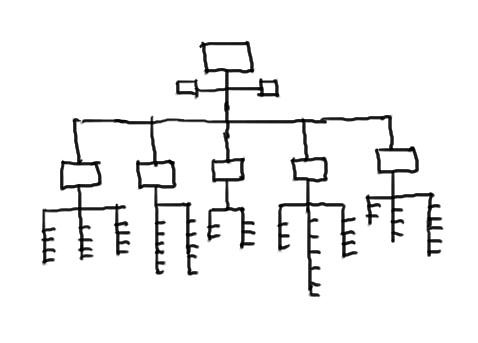
This was an incredible presentation which essentially compared large companies and large cities, and how large cities are able to adapt, while large businesses struggle. Companies are Complex Systems, and he had a graphic of the org chart at Microsoft. It’s so large and complex, an external company compiles this and sells it to vendors.

Research has shown a 3/2 Rule, meaning that as organizations scale larger, profits drop at a 3/2 rate. More employees have proven less profits. In cities and urban planning however, there’s a 2/20 rule. As you double the size of a city, productivity in that location goes up nearly 10 fold. The reason has to do with relationships to environment, which essentially establishes – are you flexible/adaptable, or process/machine driven?

Both cities and companies start out small. As companies grow, the machine/processes established don’t work because of the increase in people, so they have to re-organize their structure or re-program the machine. Companies need to break down silos and processes, because studies of long-lived successful companies have shown they were:Companies are often like machines – very process oriented, and the CEO is in charge, pulling levers to make things happen. The problem is that processes are designed to sit on a stable foundation. No time has been worse for that then the present environment of change. People and technologies are changing because they are based on people and behaviors.

Decentralized – There are porous boundaries and no big strong central command and control.
Had a Strong Identity – Shared values, cultures, and beliefs.
Active Listeners – They are able to identify and jump on new opportunities (and have the cash to do so).
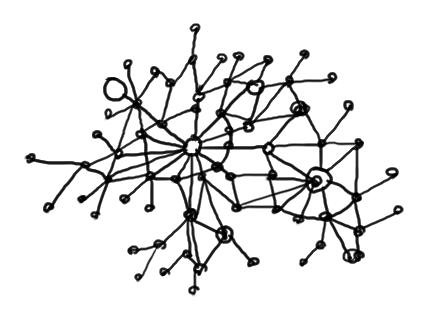
Most companies are designed by division (for labor specialization). This creates territory or turf when you create separate tasks. Companies should be designed with connections, connecting the core with periphery, or flocking, where they share standard protocols and shared services, learning from each other. Imagine companies as they are today with large organizational charts, vs a connected business or web of cross-functional, cross-experienced teams. If a chain breaks in a hierarchy, everything under falls down. In hierarchies, if a link in the chain breaks, the system breaks, but in a web, you can work around it.Lessons from Urban design:

Think at the level of the street – Get an organization wide initiative that requires a cross-functional team.
Spaces need owners – Wikis needs a gardener, blog owner to organize content, community manager to organize stuff, but they require connectivity for information and support.
Jumping off points – There are opportunities encountered along the way – you came for this, but what about that? Utilize the serendipity to start to make new changes.
Watch, listen, adjust, adapt – Have a strong feedback loop – pay attention, fix broken windows (You know what this means if you’ve read Malcom Gladwell), tweak, small changes add up, tell it what it needs.

Finally, connections within your company are vital, but connections between partner companies are just as important. In a day in age when no one wants to be liable, and things are held to contracts, it creates issues for users, destroying attitudes between both companies. Unless things are easily linked and plug easily into one another easily, this can be just as destructive.

Here’s another article on this presentation.

10 Things I Learned (or re-learned) at SXSWi 2010

Last year was my first SXSW and nothing short of a personal epiphany. This year’s Austin mashup of technology, creativity, and cultural tsunami has once again shifted the way I think about what it all means— to my work and to my life:

10. Crisis = Opportunity.
How do we take advantage of the disruptive innovation that’s toppling business models? Jeremy Gutsche is the founder of TrendHunter.com, the world’s largest network for trend spotting and innovation. He’s also the author of, “Exploiting CHAOS: 150 Ways to Spark Innovation During Times of Change.” There’s one question from Jeremy that I’m now asking myself every day; a question designed to help capitalize on chaos: Can I focus what I’m trying to do in seven words or less?

9. Technology is the new art. 

The notion of left brain/right brain is passé. My ability to adapt and thrive at the intersection of art and technology presents endless opportunities. My insistence on playing on one side, to the exclusion of the other, is an express ticket to irrelevance. What can I do to recast my skills and be ready for whatever comes next?

8. Be a student of “The Next Big Thing.”
Then, step back and see the big picture. There’s a “next big thing” breaking out every day. Great branding and communication isn’t about throwing stuff at every next big thing. It’s about being helpful, relevant, and genuine in the marketplace. I need to understand the difference between “thin value” and “thick value” and do the right things to be relevant every day, while strengthening value over the long haul.

7. Content is king.
So why has it taken us so long to figure out that content requires user-centered message architecture? According to Margot Bloomstein, the principal of brand and content strategy consultancy based in Boston, a comprehensive user experience shouldn’t be a carrot on a stick where we try to lure people to our content on our terms. It should be a big, delicious plate of cookies carefully crafted ingredient by ingredient.

6. Words won’t work.
Dan Roam has helped leaders at Microsoft, Wal-Mart, Boeing, eBay, and the United States Senate solve complex problems through visual thinking. He wrote the international bestseller, “The Back of the Napkin: Solving Problems and Selling Ideas With Pictures.” Why do we spend so much time talking to clarify our ideas? The person who draws the best picture wins. My goals: Fewer words. Better pictures. Stronger stories.

5. I didn’t know Twit.
Twitter is my primary news source. The shape, speed, and value of information on Twitter is unlike anything we’ve ever seen. At SXSW, Twitter co-founder and CEO Evan Williams changed the way I think about it. The No. 1 company principle @twitter? Be a force for good. Why? Democratization of information changes the world. Tools like Twitter reach the weakest signals and can have profound impacts (think Haiti, Chile). Easy exchange of information gives people control. Everyone wins.

4. Corporate America is cautious.
Andrew McAfee is a research scientist at the Center for Digital Business, MIT Sloan School of Management. He researches and works extensively with corporations around the “2.0” model of communities, collaboration, and transparency. According the McAfee, the biggest corporate mindset challenges to embracing 2.0: We are risk-averse, busy, budget-constrained, uninterested in social revolution, hostile to auto-obsolescence, ROI-seeking, and overly convinced of our own uniqueness.

3. There’s no such thing.
There’s no such thing as social media or social marketing. It’s media. It’s marketing. It requires interesting, clear, helpful, user-focused content like it always has. There’s no such thing as Web content, mobile content, tablet content, Wii content. Everything is converging and users just want it to work and work right everywhere.

2. Technology = inclusion.
I tweeted. I posted. I photo’d. I video’d. I checked in. Got followed. Got retweeted. Direct messaged. Played contact and conduit. This is where I belong … with one foot inside the office and one on the path to the future of media.

1. After living in the future for five days at SXSW, I need to ask more questions:

  •  What are the right levers for change?
  • How do we create the right measurements of success?
  • What can I do to help solve problems, not solve symptoms?
  • How do I help strengthen our resolve as communication consultants that “less bad” is not the same as good?
  •  What can I do to help move the friction of process to real momentum and flawless execution?

Every profession bears the responsibility to understand the circumstances that enable its existence.

Tired of “Transparency” Yet?

Ran into Evan Williams while out at SXSW.

During his keynote conversation, Evan Williams, CEO of Twitter (@ev), discussed recent conversations the company was having about its identity.  Like any young company, they are strugging to define their culture and principles.  One thing that resonated with me was his discussion about “transparency.”

We’ve all heard or used the word, probably fairly recently, and we can all agree it’s becoming a bit cliché.  During his discussion, Williams talked about Twitter’s philosophy of not being focused on transparency, but rather openness.  He used the analogy of a door, “It can be transparent and you can see through it, but when it’s open, it’s about getting in, shaping it, and defining it.”

So many, especially brands, struggle to provide “transparency,” and are unwilling to lose control of their brand or message.  As the world evolves, audiences will expect openness (more than just transparency), and they’llhave to let go of a little control to succeed (See “New Rules of Marketing & PR” post about David Meerman Scott’s presentation).

Twitter encourages users and developers to take their APIs and create new things built upon their service.  While they may not be thrilled with all of the uses (Williams noted that they’ve recently sent several cease and desist letters, mostly to Twitter spam services), they know that its been the company’s openness that has allowed it to succeed.  Similarly, it was Facebook’s openess to application developers which also helped it to leave MySpace in the dust and even pass Google as the most visited site on the web.

While most brands are still working on “being transparent,” those who will succeed in this new world will be those who focus on being open.

Brand 2.0

Presenter: Kevin Yam – Directer, mobile and interactive platforms, National Geographic

500-x-BusHomeFew other publications have the longevity of National Geographic, but like any magazine, it has had to adjust to adapt to technological changes and the way that users choose to experience media.  A few years ago, the company looked at all of its media offerings – magazines, tv, games, online, image collection, music, books, films, and maps – and discussed how it could offer that compelling content together across all of that existing media.  As they develop new content, they consider how it could be used (licensing) and how to best tell the story in many different ways.

Developing this led to a heavy focus on user experiences, which forced them to examine the context in which their content was consumed.  With the emergence of mobile, consumers now have immediate access to information and resources, and National Geographic wants to be there with their rich, outstanding content.  This recent led to the development of a Bird Finder app which helps users identify birds (using location information), and incorporates sounds and video.  Additionally the app allows them to “check in” the bird, creating crowdsourced maps of where types of birds have been seen.

They also recently completed a project to tell the story of going to Antarctica – Bus 2 Antarctica.  They used new and social media to help tell the story of, “1 man, 10 weeks, and 10,000 miles,” traveling from National Geographic’s offices to Antarctica.  He kept followers up-to-the-hour on his travels via Twitter (@bus2antarctica), a blog, facebook, an interactive map, and media partnerships with FOX, ABC, and CBS.  The traveler used only an iPhone, still camera, video camera, GPS, and a tracking device to report his stories through all of these media.  It helped to prove they could tell a tremendously compelling story, in real time, for an extremely low cost.  Every brand needs to consider how they can take advantage of new and social media to tell their story or provide brand content.

Slashing Red Tape to Revolutionize Corporate Communications

Presenter: Paula Berglinhartpr.com – formerly at Southwest Airlines

When Paula Berg started in the customer service area at Southwest Airlines, she never thought she’d end up where she did – with a seven personal social media team.  She started doing some of the social media stuff on the side and made it her goal to integrate social media into every internal and external communication effort in a way that made sense for the community and brand.  She offered five tips for inspiring organization change and helping both the organization and its executives to “get it.”

1. Make jaw-dropping reports – Don’t just focus on the numbers and great looking charts (although great design helps).  Be sure to thoroughly evaluate what the numbers mean, especially in terms of your business and communications goals (make sure they care about the results).  Include what you learned and your intended next steps to do things differently.

2. Launch an Internal PR Assault – People can’t just hear about social media, they have to live it.  Insert social media into every newsletter, magazine, mailer, department update, every meeting, lucheon, summit, etc.

3. Make your executives love it – Make sure you dazzel them, scare them, hypnotize them, and whatever you have to do to get them to understand and appreciate social media.  They need to understand that the risk of not going into it is greater than the risk of doing it.

4. Get your house in order – Social media is more than just PR and/or marketing.  It’s about engaging with consumers when/how they want.  This requires speed, agility, and trusted employees who know the business.  Too often companies try to hand this job over to the “young guns” – the interns or first year people – who must know social media.  It’s better to get people who know your culture implicitly and teach them how to use the tools to communicate.

5. Get tough – It’s a new world, and it’s not going to be easy.  You have to be willing to fight and you have to be willing to take risks and be wrong.  No matter what, things are going to fail, or things will go wrong, and you have to be ready and willing to personally take it on the chin for your company.

Connected Brands

Presenter: Adam Lavelle – iCrossing

iCrossing examined the top 10 “best global brands” and examined how well these brands connect with consumers in the digital world.  They evaluated the brands on visibility, usefulness, usability, desirability, and level of engagement.  Each category has a multiple variables, with a total of 65 data points measured.  The data points were developed by iCrossing to develop a baseline, and the data used for measurement can be debated.  The company did use publicly available data in order to develop a baseline for measurement.

Not surprisingly, the top company was Google  scoring a 7.9 (out of 10).  Most of the other brands scored significantly lower (most under 5 out of 10), and included Disney, Intel, Microsoft, Coke, IBM, Toyota, GE, Nokia, and McDonalds.  When all of the data was scored, all of these brands scored extremely low on engagement scores.  It shows an incredible need for brands, even these well known ones, to improve on their methods of communicating and engaging with consumers in social media.  When you see that Facebook now has more hits than Google, and users visit the site an average of 55 minutes each day, the time for brands to have conversations with consumers in social media is now.

You can download a copy of the full report.

Geolocation on the “Horizon”

Presenter: Jason Finkelstein, Director of Product Management & Marketing, WaveMarket, Inc.

Geolocation is here, but it’s still got a long way to come (pun intended).  Geolocation started with in-car navigation systems and then moved to personal navigation devices.  Now we’re onto personal location devices that can track you or devices.  The focus of this presentation was on mobile phones.

55% of all SMS messages are “where r u?” – That’s about 650 billion location based text messages in 2009.

We are just starting to see the future of location based services:

Today:

  • Navigation
  • Enterprise tracking
  • Family locator
  • Friend finding
Tomorrow:

  • Checkins and notifications when friends are nearby
  • Facebook widgets
  • GPS-indexed local search
  • Location aware advertising/marketing/couponing
  • Crowdsourced traffic systems
  • Location aware messaging applications
  • Security/Fraud Prevention/Compliance

Location is a feature of many kinds of products and services, not an industry unto itself or a vertical market.

Types of Geolocation Data:

  • Latitude/longitude
  • Latency – how long does it take to find your signal/location
  • Confidence – radius – still not a lot of confidence in cellular tower location
  • Reverse Geocoded (real world address) and Points of Interest – pre-populated locations
  • Location Tagged Info (Tweets, Flickr photos, etc.)
  • Map Data Layers/GIS (This is a whole industry) – City names, street names, street geometry (one way street, speed limits), Satellite/birdseye/terrain

The industry is working on a “Z” (XYZ axis) to be able to track altitude.

Variables influencing ability to get location information from mobile devices:

Carrier Network – different carriers have different kinds of location built-into their networks, this location is accessed in different ways on each carrier network and can vary in accuracy and latency.

Device Type – 200 million mobile subscribers, Most (81.5%) have limited devices which generally don’t have GPS, but can be found. Some (18.5%) have smartphones with GPS built in.

While the use of GPS chips is increasing, if you are planning to develop location based apps today, you must still cater to the 4/5 of people who do not have this functionality.  The value chain for this development is structured like this:

1. Infrustructure players – Do the calculation of where that phone is – Qualcomm, Nokia Siemens Networks, Sony Ericson, Redknee

2. Wireless carriers – AT&T, Sprint, T-Mobile, Verizon – provide the phones and services

3. Location Aggregator – Veriplace – pulls together location data for API tie in by developers

4. LBS Developer/Content – develop the apps and plug-ins

5. End User – uses the device, apps, etc.

However, when GPS is built into the phone, this chain is not completely required.  Apps can then be built to interact with the internal GPS API to utilize location data.

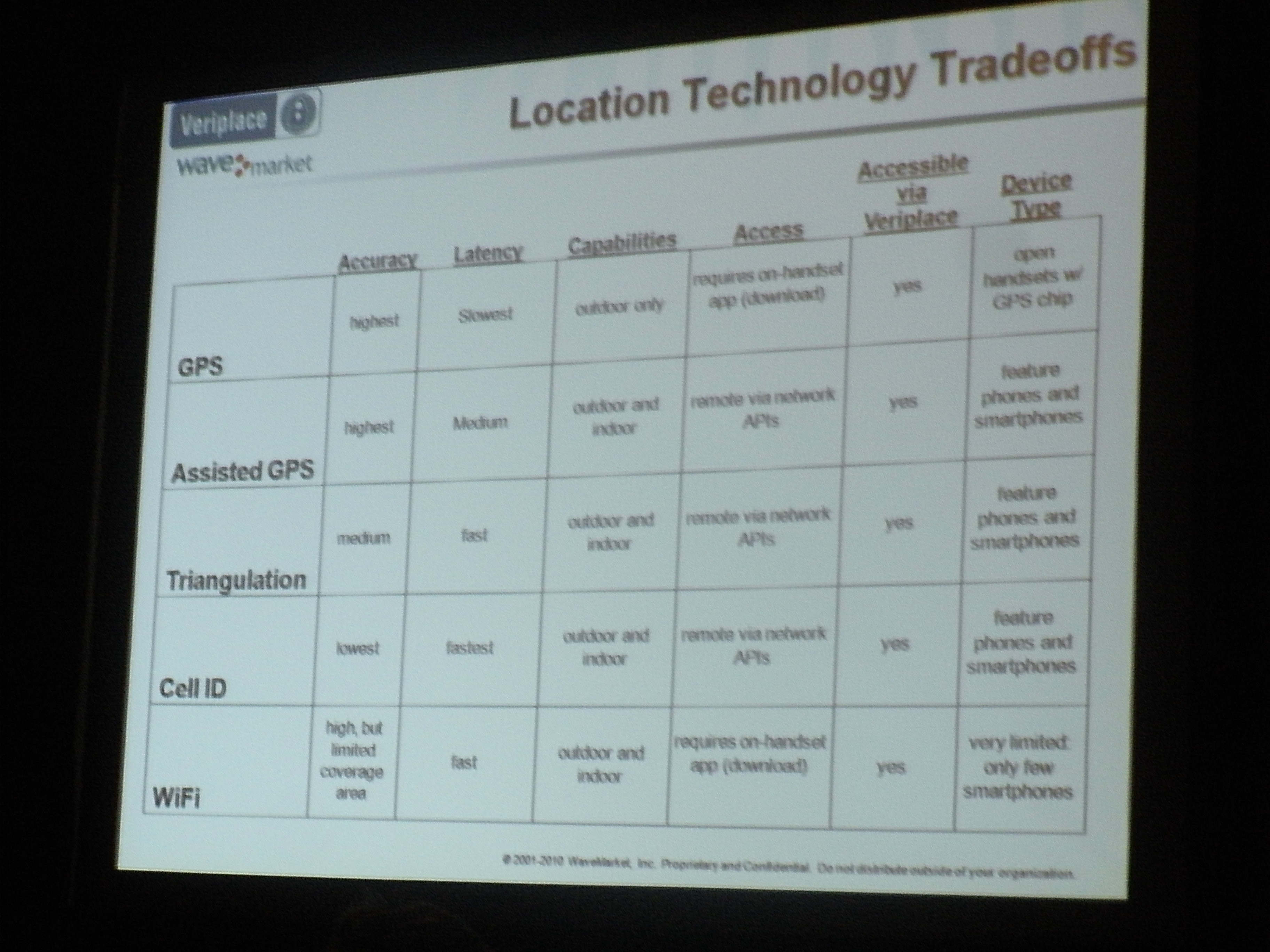
Here are the ways location can be accessed today along with advantages and disadvantages of each:

Standalone GPS – It’s free, uses GPS satellites, so need line of site location.  It’s high accuracy, but it takes a long time to get location (minutes), and some carriers lock the GPS chip.  Download and install an app is still a challange for most people and app developers must develop for different devices.  Also, the app must be running to access location.  It does provide latitude and longitute, which the others don’t.

Cell ID – It depends upon a location database of cell towers.  The phone connects to cell tower and this “location” uses knowledge of where the cell tower is located.  The accuracy of this is lower, but it’s used for both smartphones and feature phones, because it can be located indoors, and has quick location fix (<3 seconds).

WiFi – This also depends on a location database.  It’s similar to Cell ID, but uses MAC addresses on WiFi hotspots – which have limited coverage today.  It can be unreliable due to wifi spots that move. However, if the device has open access to wifi the cost is zero.

Carriers are supporting more location based technolgies on both smarphones and feature phones and sometimes use a combination of the methods above for identifying location:

Assisted GPS – A hybrid of GPS and Cell ID

Triangulation – AFLT – The next level of Cell IDs, it uses multiple Cell ID’s to center a location.  It’s easily accessible via carrier networks and quick  (<10 seconds)

Location is still a challenge for many developers because of this confusing web of networks and the many ways devices can use to find location.  App developers in this area are still sorting through the challenges of location information and authentication and a whole new layer of legal and privacy challenges have arisen.  A recent study showed that people are more concerned about privacy surrounding their location than their credit card data.

Therefore, developer have proceeded forward with a few approaches, such as choosing to focus only on downloadable apps for limited smartphones (iPhone/Android).  Some have made deals with carriers, but there’s a high barrier to entry, so some are working through aggregators like Veriplace to add location to certain app types like sms/voice/web.