Media Relations Goes Social

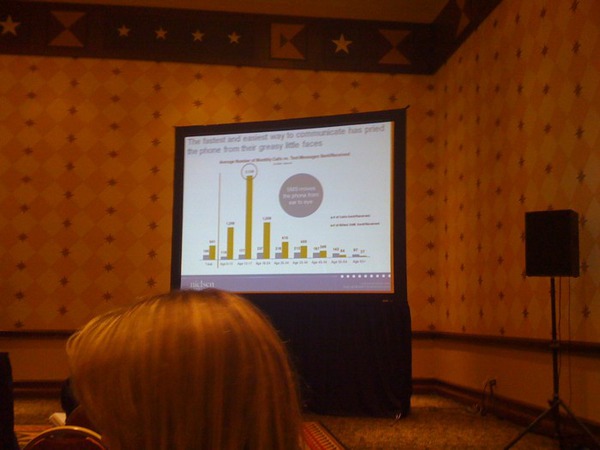
Presenter: Capt. Nathan Broshear, US Air Force

The US Air Force has recognized the power or social media and has been actively opening up its network allowing every airman to post their experiences (in photo, video, etc.) to their personal Twitter, Facebook, etc.  Their goal is to humanize military members, and they feel that this helps enable that mission.  Of course there are concerns about what they may post, and geolocation as part of social media is creating concerns, but as Broshear put it, “you’ve got a 26 year-old kid in charge of a $50 million airplane, and you’re not going to trust him with a Facebook page?”

Obviously, during times of crisis, war, etc. the military is sought out by the media for information.  “I don’t have to find them,” says Broshear.  “They find me.”  Social media has made it easier than ever for media to connect with their public affairs officers.  The Air Force has stopped sending out press releases and manages their relationships with various media through social networking  outlets.  “Only 16 percent of people trust PR people,” says Broshear, ” but 70 percent trust people like themselves or their peers.  It only makes sense to connect via social networks and build relationships with people.”

The theme is that social media enables relationships – which is essential for PR people.  People are coming to the Air Force for bite sized pieces of information when they need them, and that’s a benefit that social media offers.  They are always connected to each other through social media and the flow of communication goes both ways.

Crush It! with Gary Vaynerchuk

Gary Vaynerchuk, Author of Crush it! – Cashing in on your passion

Filled with energy, gratitude, and passion Gary Vynerchuk demands attention (and it doesn’t have to do with him dropping the regular f-bomb).  He’s passionate about what he does and is an evangelist for using your passion to promote your love on the web.  He’s all about using social media to connect with individuals, whether its for your personal brand or your business.

He’s passionate about his belief that everyone is, or should be, in the customer service business and technology is only making that more necessary.  He relayed a story about his brother showing up at a restaurant after calling for a reservation.  They told him he’d have to wait, so he pulled out his phone to call to let people know, and as soon as he pulled out his phone, the hostess told him she’d find him a table immediately.  In the age of social media, and review sites like Yelp, companies are starting to realize they have to change the way they do business and start paying attention to customers needs.  “Word of mouth connects us to good shit, or tells us what to avoid, and that’s the new way of the world,” says Vaynerchuk

Vaynerchuk believes in investing in customer relationships, showing you care for them, and eventually it will pay off.  He says, “everyone is trying to be a 19 year-old dude – they’re trying to close too fast.”  Every business needs to be providing their customers/communities with the attention and content they’re looking for.  Content has never been more valuable, and everyone is in the content business.  People told him his book wouldn’t sell (it made the NYT best sellers list) because he “gave too much content away,” but he believes we live in a “thank you economy” where people are appreciative of his knowledge and buy because of the trust and relationship that has been built.  “You have to care and do good first,” he says, “it’s the only way to convert.

Twitter’s ‘@anywhere’ Third-Party-Integration App Announcement

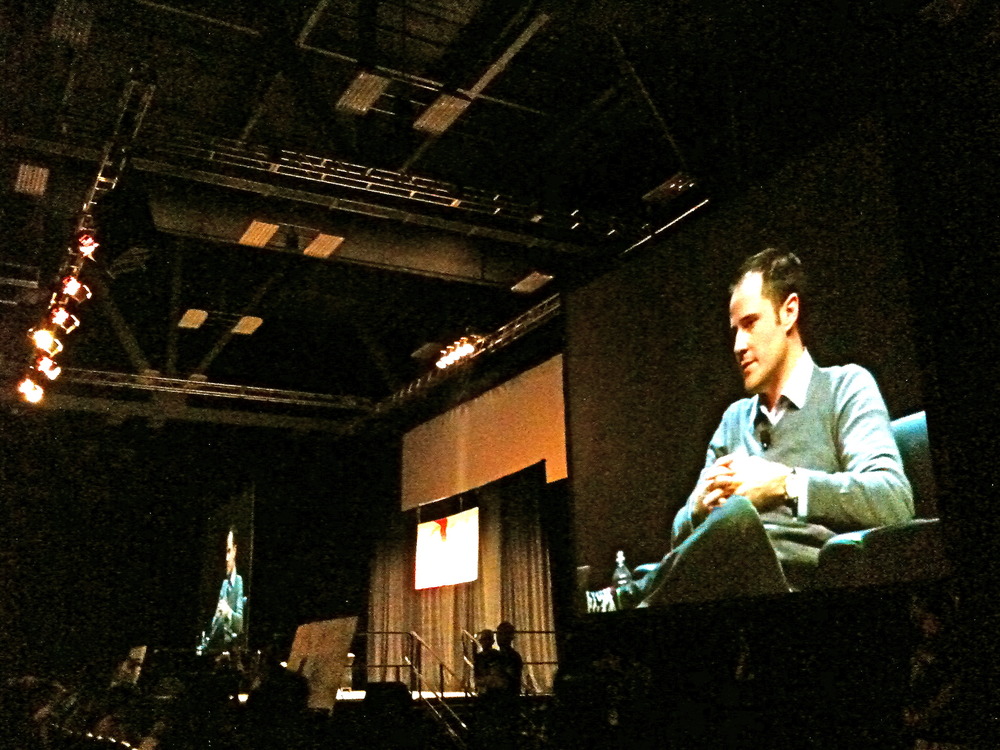
Just a quick follow-up to the video clips Koz posted yesterday from Twitter co-founder and CEO Evan Williams’ SXSW Keynote interview:

  • There’s been a flood of analysis, opinion, and information on the heels of Williams’ (@ev) announcement of the new Twitter third-party-integration application, “@anywhere.”
  • If you’re not currently a Twitter user, the ability @anywhere will provide to seamlessly mesh Twitter with other sites, such as The New York Times, Amazon, and eBay, and let users share links and add “follows” without leaving the sites, may certainly bring more users to Twitter.
  • Here’s a good write-up from TechCrunch about the features and third-party partners (so far).

I can easily see how @anywhere will change the way I use Twitter. It may sound silly, but I also get how it aligns with Twitter’s No. 1 company principle: Be a force for good.

As @ev said yesterday, “Access to information … is about reducing the walls between influencers and the influenced. Democratization of information changes the world.”

ANYONE can Create a Video Game

Panel: Dustin Clingman – Full Sail University, Dave Werner – Atmosphir, Michael Agustin – GameSalad, Adam Saltsman – Flixel, Troy Gilbert – Mockingbirdgames, Shanna Tellerman – Wildpockets

Building a game is getting easier and easier, and the panelists build tools to help people without tech skills/knowledge build video games.  From simple to complex, it sounds like the video game industry is hungry for new ideas since many games are built upon the same premise – shoot ’em up, explore, etc.

Games don’t have to be just fun and/or entertaining, they have proven to be used to teach very effectively.  While it can obviously be used to teach simple tasks, games are tremendously good at teaching individuals organization or organizational models such as world-politics, physics, math, science.  If you have trouble explaining your business model to employees, consider a game that teaches them what the elements/values/principles of your model are.  When used for good, these games can communicate and engage users in things like the impact of natural disasters, geopolitics, and other significant societal issues.

Some games and systems choose to take advantage of “regular operative conditioning” which rewards you for a repetitive task.  It has been proven that people have an innate need to solve things and with things like gambling, people become addicted to the dopamine that is released when they are challenged and rewarded.  This is a tremendously effective tool for getting people engaged in your game, but it can also be dangerous if people start working toward “points” rather than pursuing the true purpose of the game.  However, reward structures – in the form of points, virtual items, money, etc. – can be a tremendously effective way of hooking people in and keeping them engaged.  Feedback, recognition, rewarding, earning, and achieving are human urges that come through in games.  You don’t necessarily have to make a “game” in order to incorporate this or exploit these urges.

If you are interested in getting started building your own game, here are a few resources to consider:

  • Game Maker, by yo-yo games – Not great, but it does the things people want it to do.
  • Game Jam – An event that is a good way to get with a group of developers.
  • Mockingbirdgames – Provides easy, super basic tools, and very limiting.  It’s flash based for the browser with plug-ins with existing communities.
  • GameSalad – Good for scaling and porting across formats. Xml format to be ported to mobile devices, flash for browser, etc. – want to be able to scale.
  • Flixel – Flash games for pc/linux – both web browser and download and play – incorporates social sharing
  • Wildpockets – Web based 3-D games that supports community – all points/currency shared across games

What does corporate America think of 2.0?

Do mainstream companies get Twitter? Are executives in non-high tech industries embracing social technologies and the communities that form on top of them, or are they scared to death?

A report from the field was delivered at South by Southwest Interactive today by MIT scientist Andrew McAfee, who coined the phrase “Enterprise 2.0.”

McAfee laid out some good news and some bad news about the corporate mindset on the free-form collaboration that is 2.0, and offered some advice on how to talk to your boss about social tools that are evolving around the user:

  • Corporate mindset challenges: We are risk-averse, busy, budget constrained, uninterested in social revolution, hostile to auto-obsolescence, ROI-seeking, and convinced of our own uniqueness.
  • Some good news: We can be swayed by theory, evidence, narratives, peers; we’re afraid of being left behind.
  • Talking to the boss: Present theories and frameworks, not jargon. Use data, case studies, and narratives. Make it relevant to our business; combat “time-wasting narcissism” perceptions about social tools.

According to McAfee, social software is maturing and we’re beginning to see more evidence of the business benefits of 2.0 (McKinsey Study, CEO case studies). Only time will tell if a tipping point is in the cards.

For more highlights, see the Twitter stream from today’s event. More at SXSW Report.

Presenter: Andrew McAfee, Principal Research Scientist, Center for Digital Business, MIT Sloan School of Management. Contact: @amcafeeamcafee@mit.edu. Resources: 2.0 Adoption Council

ROWE: No schedules, no meetings, no joke.

Imagine a work environment where you work when you want, how you want, and where you choose. A work environment where strict accountability for results is the norm. It’s simple: If you don’t deliver results, you don’t have a job.

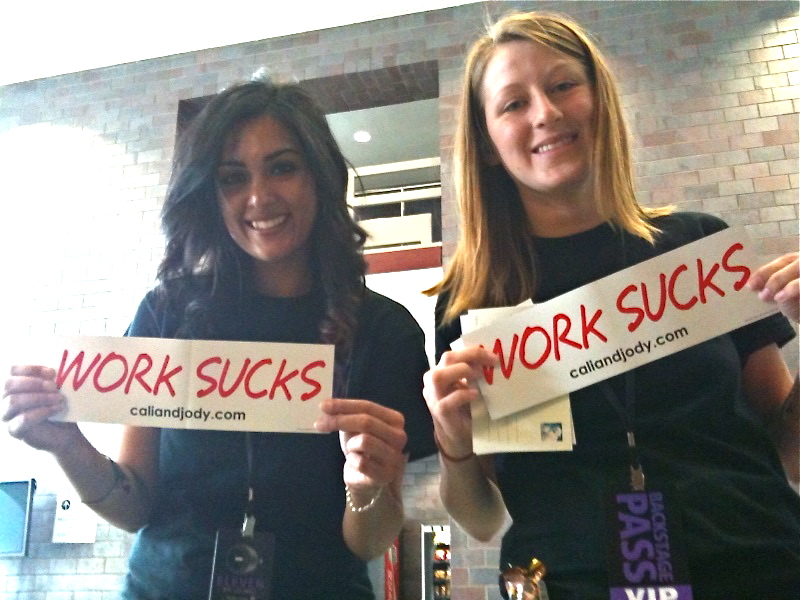
That’s the premise of the Results-Oriented Work Environment (ROWE), a concept pioneered and implemented by Cali Ressler and Jody Thompson when they were co-workers at Best Buy. It’s also the topic of their book, “Why Work Sucks and How to Fix it.”

I met them at a South by Southwest panel today, where they were by joined by workplace author and Wall Street Journal columnist, Alexandria Levit, and two CEOs of organizations that have implemented ROWE.

It was an honest discussion of the challenges and benefits, and the cultural shift required for ROWE to work. There’s a summary of the discussion here and more at GO ROWE.

Panelists: @jessicalawrence, @jeffgunther, @caliandjody, @alevit. Meet them on YouTube.

Tags

Related Posts

Share This

Evan Williams SXSW Keynote

Here’s a few quick clips from the Evan Williams Keynote conversation…


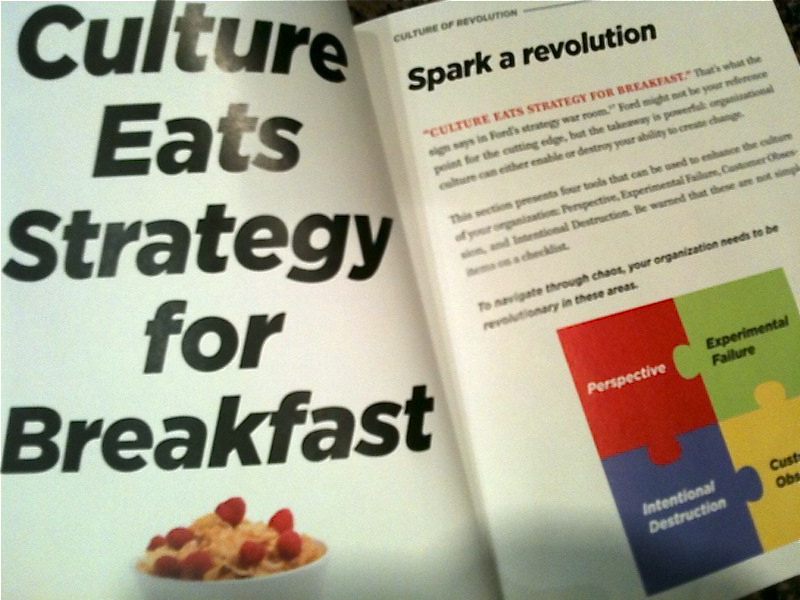
Exploiting Chaos: What’s more important, culture or strategy?

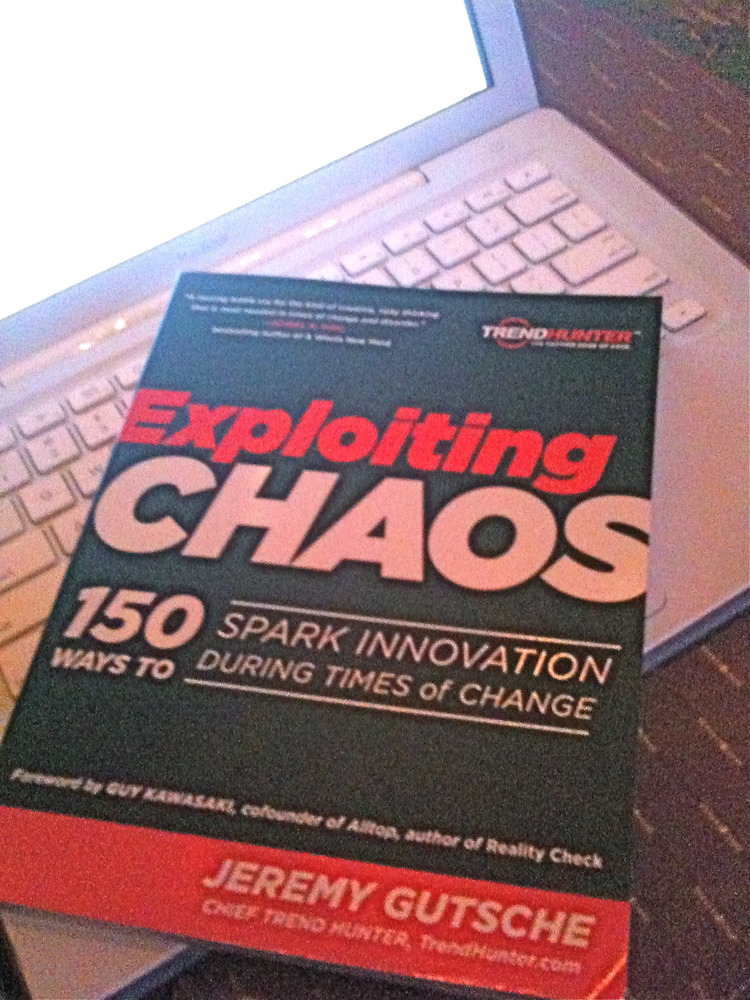
According to Jeremy Gutsche, culture eats strategy for breakfast. Gutsche, MBA, CFA, is founder of TrendHunter.com, the world’s largest network for trend spotting and innovation. He is also the author of, “Exploiting CHAOS: 150 Ways to Spark Innovation During Times of Change.”

Did you know that Hewlett-Packard, Disney, Hyatt, MTV, CNN, Microsoft, Burger King, and GE all started during periods of economic recession? Periods of uncertainty fuel tremendous opportunity, but the deck gets reshuffled and the rules of the game get changed.Gutsche offers some pretty compelling insights for capitalizing on the chaos. Here are a few choice quotes from today’s event (and some secret goodies at the bottom):

    • Can you focus what you’re trying to do in seven words or less?
    • There is no point in innovating if you think you already know the answer.
    • Find a way to be irresistible to a specific group.
    • Successful businesses innovate and create opportunities to fail.
    • Win like you’re used to it. Lose like you enjoy it.
More good stuff in the live-blogging stream here. And click here for Jeremy’s secret goodies just for SXSW insiders.

SXSW: Missed opportunity

This is my 2010 South by Southwest Interactive badge. New this year is a QR Codethat enables attendees to “scan” each other’s codes with their smartphones instead of exchanging business cards. Scan. Download. Export. Follow up.

I haven’t really seen scanapalooza catching on among attendees, but that’s OK. To me, there’s a more obvious aspect that’s missing.
With this data source hanging around my neck, I expected that at every session, panel, workshop, and after-hours event, someone would be capturing the code when I arrived and opening the door to some pretty-good granular data about who attended everything. And from that data, formulating some who, what, when, and where assumptions to apply to the future vision for SXSWi.
After all, this is a technology conference. Next year, I’m thinking my badge will be a smart card––and wherever I go (and whatever I spend) will be tracked and processed seamlessly.
I’m just sayin’.

Tags

Related Posts

Share This
Mobile – The Great Channel Equalizer

David Gill – Neilsen

Mobile is growing, but in what ways and what audience?  Mobile is growing, but one of the largest areas of mobile growth is mobile video.  This area experienced 57% growth last year as people viewed an average of 3 hours of mobile video each month.  This isn’t cutting down on TV viewing though – 59% of Americans with home internet access use TV and the Internet simultaneously at least once a month.  Subscription video content and downloaded video content are the areas of largest mobile video growth over the last year.  Teens overindex in the area of time spent with mobile video, with 36% of them spending 30 minutes to an hour on mobile video each month.

What’s driving this growth – better hardware, a better user experience, apps, sharing and discover, and expanded access to both devices and networks.

How big is it getting – There are currently 30 million people with smart phones, which is expected to nearly double by the end of 2010.  Neilsen is predicting that smart phones will be the majority of mobile phones by Q3 2011.  This is evident by the fact that year-after-year, people who get new phones are choosing smart phones.  Last year hit the highest marks ever in this area – 28.4% of people who got a new phone last year chose a smart phone.

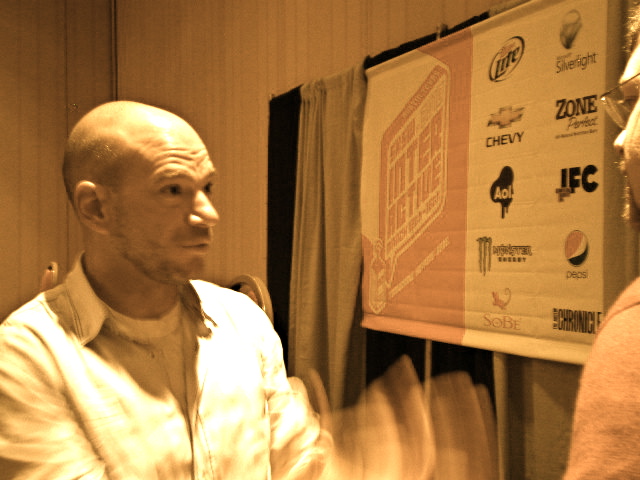
Apps are obviously a growing area.  They have not been very successful on Blackberries since most of these are “enterprise controlled” and downloading apps on them are restricted or frowned upon.  However, the area of most growth is among young kids who are downloading free apps.  Neilsen predicts this area will only continue to grow further.  Texting is a huge area for teens, but particularly among 13-17 year olds.  They text nearly twice as much as any other group (see the photo of the chart.

Overall, Neilsen is keeping a sharp eye on how teens are using mobile – video, texting, apps – because they believe this will drive the future of mobile.

News via Social Media

Well, I just found out – via a friend’s status update on Facebook – that there was a U.S. Air plane that crash landed in the Hudson River (about an hour ago). I first turned to the usual places, CNN, NBC, etc. and thought I’d see if there was anything on Twitter. Sure enough, I found a person on twitter who was actually on one of the Ferry boats going out to rescue people(http://twitter.com/JKrums) and had taken a picture with his (I assume) cellphone and also posted it to Twitter. Not only did “JKrums” photo posting to twitpic.com seemingly shut down the site (due to heavy traffic), but I watched as his Twitter “followers” grew from around 500 to nearly 1000 in the last 15 minutes or so (that guy’s email must be insane with Twitter notifications of new followers… although he seems to be responding as the number of people he’s “following” seems to be growing almost as fast). It’s a sign of the rise of citizen journalism and by being in the right place, at the right time, with the right equipment can make you an instant “journalist.”

UPDATE: In the time it took for me to write this, JKrums added an additional 150 followers (he’s up to around 1100) and is now following that many more people as well.

UPDATE 1/16/09: JKrums is up to over 2700 followers now and twits that he’s making appearances on Good Morning America and other shows.

UPDATE 1/16/09 approx. Midnight: JKrums now has over 3100 followers.

CES 2009

I’m getting ready to head to the 2009 International Consumer Electronics Show in Las Vegas. All of the new technology toys, tools, and gadgets will be on display there – too bad Christmas is over. I’ll try and give some updates on the stuff I see and do while there. Vegas baby, Vegas.