Family Emergency

I had a family emergency and had to leave SXSW yesterday. I still have several blog posts that need to be edited for posting. I’ll get to them as soon as possible, so please check back over the next week or two. In the meantime, please pray for my mom.

Branded Entertainment: Do Brands Hurt Good Storytelling?

Panel: Jesse AlbertKristin Jones – Chief Creative Officer, Vuguru, Matt Di Paola, Proximity Canada, Shira Lazar – Co-Founder, Disrupt Group
Hashtag: #brandsvsstories

It’s about cooperating with brands to tell stories or integrate them into the story.  At worst, you’re supporting something viewers find cool, and by association, they find you cool.

Everyone wants the same thing – brands and content creators – to tell a good story.  So best practice is to develop stories and then determine how brands can be involved.

Brands are necessary because someone has to pay for the content.

HP email to print – live event with Upright Citizen’s Brigade – a live improve where people could submit by emailing to the printer.  Printer was necessary to the story and illustrated the immediate value. – http://h30507.www3.hp.com/t5/Data-Central/HP-brings-improv-comedy-to-the-Internet-era-with-YouTube-Rob/ba-p/86787

The brand has to work with the story and be involved in the storyline… it’s not just a product placement or sponsorship – that’s the media people.  Needs to be part of the content.

Relationships are key – content creators and brands need to know each other, so when something that comes up that is a right fit, you’re involved in it.  Go to conferences and events, network, build relationships – leads to many opportunties.  You need to give back if you want to get something from it.

Via @mattdipaola – Share clients’ briefs w/ content creators to find opportunities and good fits for your brands #brandsvsstories

Content creators: Find out when brands’ fiscal year end.  Lots of opps lie in the need to spend at eoy via @mattdipaola #brandsvsstories

Finding the right content producers – use awards shows to find out who the good people are.  Have an arsonal of content ideas, so when you find the right opportunities.

Good content creators know how to create their own great content and have venues to distribute it on their own.  Don’t necessarily need big support to get started, but can get you recognized.

Old spice was successful from the perspective of being able to collaborate and come up with very creative content and get it produced and published within an extremely short amount of time.

Facebook video campaign with facebook integration – stepping into theatre

Funny or Die with K-swiss

Guy that lived in an IKEA for a week – it was the idea of the content producer to do it.

Disruption? Stuff that comes out through the brand – like P&G and their blogs, videos, etc. – brands creating their own intellectual properties

Vuguru is constantly reviewing agency briefs to see what they can do to develop content around those briefs.

Good characters have both a good and bad side, but brands only want the good, which can be bad for storytelling.  Need to get the brand comfortable with this concept and make sure the “faults” of characters are acceptable.

Big opportunties lie with brands that are #2, 3, 5 in their industries because they want to take risks.

Tags

Related Posts

Share This

Getting Your Breakthrough Idea Approved

Presenters: Fara Howard – Exec. Dir. Global Site Design, Dell, Andrew Runyon – Disney, John Ellett – nFusion, Nicole Cochran – Chili’s
3 Key Criteria
1. Clearly define the business objective

Fatal flaws – Overpromising and underdelivering – technology often comes with glitches

Fara Howard – internal agency at Dell – getting to yes from internal clients

3 criteria for getting an idea approved

  1. Tie your work to business rationale and priorities – Speak in their language. Remember work needs to pay back to the P&L. Listen closely in meetings and rearticulate their objectives, not yours
  2. Provide customer – not personal – insight – Remove “I think” from your vernacular – show customers insights and use
  3. Be consistent in the design guiding principles and speak about them often – write them down build them with the client and ensure you are aligned

– Be patient – often the innovation comes in stages – present your work as such.
– Pre-wire – Knowing your client allies and share the work with them first.

Common fatal flaw that causes a rejection – Not incorporating client and customer feedback into the big ideas
Problems – not listening to customer feedback
– not asking clarifying questions – eg assuming

Success story: Next generation Dell.com
Business need – simplify customer dell.com consumer create a globally scalable site structure
Goal – incorporate compelling product and branding into the site to drive higher brand affinity
Challenge – Receptivity to rich content and branding was high at project start, but transactional needs started to trump branding

Andrew Runyon – Disney
Two different perspective
Internally (client side) – budget withstanding, no good idea is rejected
Externally (vendor/agency) – What are we really looking for and how could your idea be better.

Internal Perspective – client side
4 key marketing objectives/criteria
Reach – encouage widespread sampling of our product to drive anticipation toward opening weekend
Recognize a marketing averse target – Provide value, use marketing as story telling, introduce characters and expand film fiction
Measurability – Ability to prove purchase conversion, opportunity for data-collection, demonstration of ROI, and contributiontowards awareness/intent
Media Agnostic – creating and idea that is complimentary to rest of film campaign, doesn’t live in a vacuum, and amplifies trad efforts by giving them “social legs.”
Optimized for social – Integrates the social graph/social design into our initiatives – Organize people around social platforms – strngthen our movie assets within the social graph – opitimize all Disney-owned propoerties to utlize social platforms
Word of mouth is second biggest reason people go to see a movie – so social is crucial

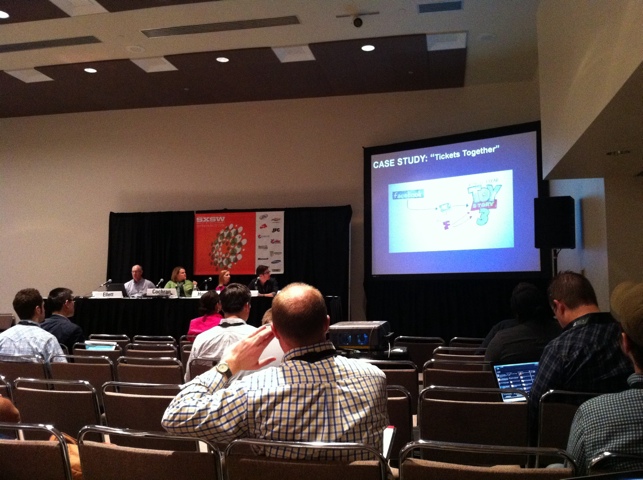
Case Study – “Tickets Together”

In partnership with Digisynd (internal social communcations division of Disney we were able to solve a fundamental marketing challenge
Challenge: In celebration of theme of friendship in Toy Story 3, we wanted to creat an innovative and immersive destination that could successfully bridge the social experience of toing to the movies with the capabilities of social networking.
Experience: Disney Tickets Together – Facebook’s first in-site movie ticket purchase application allows fans to view movie times at their local theatre, create viewing events, invite their friends, and buy tickets via Fandango and movietickets.com. In the end, no friend got left behind
Results: 64 million unique readers – could actually measure the purchase process.
External Perspective – Vendor/Agency Side – Fundamental understand of marketing objectives should guide your process of ideation to deliver more on-target ideas
– Know our business – simply put – Get butts in seats
Understand the Disney Brand vs specific Disney projects
– Unique brand equity relative to other Studio competitors
Ask for information. Don’t take an intro meeting without having an idea
Never been done before – what would you and your org like to do that you’ve never been able to? In casy you haven’t heard, as Disney “We make magic.”

Talk with Paul Ruebens / Pee Wee Herman

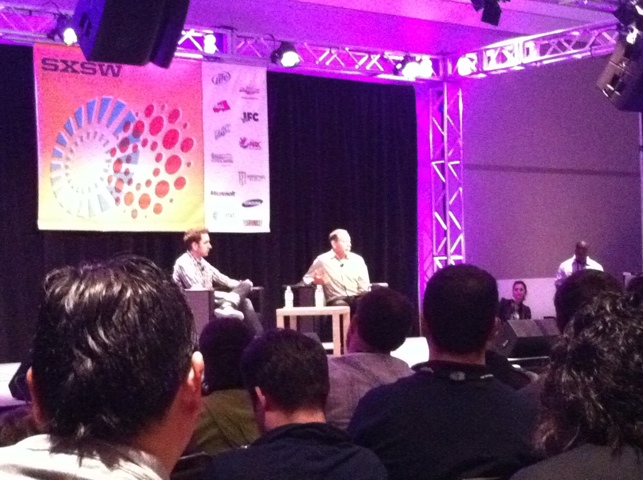
Like last year, I’ll periodically attend a session that’s a little more self indulgent (like the Booze and Blogging session I attended last year).  This year, it was attending this session.  It was an interesting perspective in several ways.  I learned about his background a bit, but also a little about what it takes to make it.

Pee Wee Herman Paul Reubens SXSW

Ruebens started with the Groundlings, an improve troupe, and developed the character of Pee Wee because in a performance one night, he had to play a bad comedian.   It all came out that night – suit, bowtie, voice (based on an earlier character), behaviors (based on kids he knew).  He wrote a play based on the character in 1981.  He said he was an up and comer in comedy and missed out on his shot at SNL (to Gilbert Gottfried).  So on the way home from the audition, he wrote the show in a bit out of a panic of what to do with his life.  He said, “It was a bit of a ‘let me show you.'”

One piece of advice he gave was to learn how to write, as he said that if you a good writer and can tell stories, you can write your future.  In fact, he said he had to read a book on screenwriting to write Pee Wee’s Big Adventure.  In fact, the storyline followed the guide in the book almost directly.

He also gave some insights on a conversation he had with fellow comedian, Phil Hartman.  Hartman felt that Reubens was throwing away other great characters from his Groundlings days to concentrate on this one.  However, he said he had a gut feeling about this character.

He fully committed to it, almost never going out in public, except as Pee Wee.  To him it was performance art, but others started to see he as being just like the character.  He feels that it was what made his arrest an even bigger issue.  Since then, he been acting and rewriting his play to include his work from Pee Wee’s playhouse.  He’s in the process of shooting an HBO special as well.  Early on Pee Wee was sweet, but he got a bit snarkier over time. Snarky Pee Wee was what most people liked, so he’s headed a bit in that direction.  He also said he’s working on a new movie with Jud Apatow, but can’t reveal yet what it is – “2011 and the internet has changed everything, you can’t do anything in secret anymore.”

He provided some other insights, such as how Tim Burton became the director of Pee Wee’s Big Adventure.  The studio approached him with their choice and he didn’t like it.  He stuck to his guns and was told he had a week to find someone who was available, affordable, and approvable. He found Tim Burton through a friend on the groundlings, and loved his attention to art direction.

He also said the most fun he had was writing Pee Wee’s playhouse – especially when they would think of something that they knew was successful for a 6 year old – it was the most gratifying for him.  The first season of the show, he had 5 writers, working together to write all 13 episodes.   After that, he would hire a couple or a duo and together they write the season – putting in long, long days.

Overall, it was interesting to learn a little more about his background and get his perspective on what it took to succeed.

Thank You Mapquest and @GaryVee

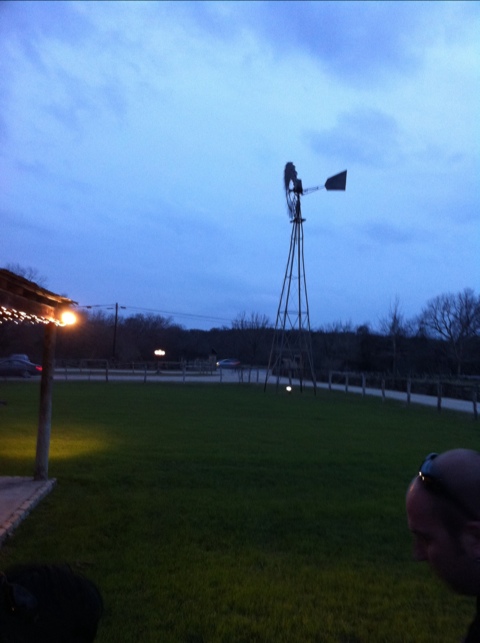
I had a great evening tonight and in the spirit of @Garyvee‘s new book, I just wanted to say, thank you! First, I enjoyed an great night at The Salt Lick in Lockwood, TX thanks to @Mapquest. Then I came back in to downtown Austin and had a great time at Gary Vaynerchuk’s SXSW 2011 Secret Wine Party. Secret Wine Party? As the legend goes… A few years ago, Gary, from tv.winelibrary.com was hanging out in the lobby of the Residence Inn and decided to grab a box of wine. Fueled by Twitter, a spontaneous party broke out and people started showing up. Last year, he showed up at the Silicon Prairie party and started serving wine. So, after a couple of years of this, many, many folks at SXSW were wondering when the “Secret Wine Party” would be this year.

I was wondering around downtown looking for friends when I saw Gary’s tweet that he would announce his party at midnight. fortunately for me, when he announced the party tonight at The Phoenix, I was right across the street. Within a span of about 10 minutes, the line in front of The Phoenix grew from about 20 of us to about 300. It was a virtual flash mob of activity as soon as Gary tweeted the location of the event. When I got into the party, I got a chance to meet Robert Scoble, and get served by Gary himself. I enjoyed Gary’s Presentation last year and hope to catch him again this year.

Mobile Social Gaming

Started off the day with a mediocre session about Social Gaming but I left with a few more nuggets that further emphasize the importance of Mobile.  The session provided some good insights into what are some key pieces that make up a successful social game. If you hope to be successful, you need to create resources and drains.  The opportunity to grow revenue lies in providing an opportunity for users to spend. Mobile is of course an important part of social games because…

  • It’s BIG
    • 475 Million –  Worldwide circulation of newspapers
    • 825 Million – Registered Cars
    • 1.8 Billion – Unique Credit Card Holders
    • 2.25 Billion – Tooth Brushes in Use
    • 4 Billion – FM Radios
    • 4.965 Billion – Mobile subscribers
  • It’s PERSONAL
    • 91% of people have their mobile within arm reach 24/7
    • 60% of married people won’t share with their device with their spouse
    • It takes on average of26 hours for a user to report lost wallet, 68 minutes to report a lost mobile phone.

Video From My First Few Days of SXSW 2011


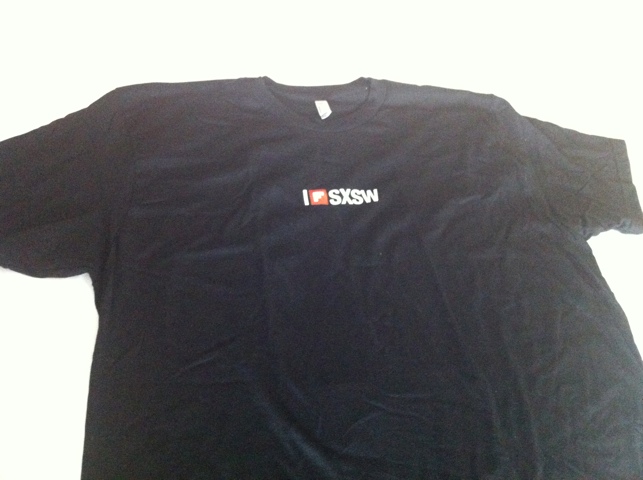
Flipboard T-Shirt

Flipboard SXSW T-shirtNamed Apple’s iPad App of the Year and one of TIME’s top 50 innovations of 2010, Flipboard is a free, fast, beautiful way to flip through the news, photos and updates your friends are sharing on Facebook, Twitter, Google Reader, Flickr and Instagram. See your social media in a magazine layout that is easy to scan and fun to read. Share articles and photos, comment on posts, and like or favorite anything. Customize your Flipboard with sections created from your favorite news, people, blogs and topics.

I saw a great presentation with one of their founders –Handheld Media Revolution: Insights on Tablet Development – and was able to score one of their limited edition Flipboard SXSW T-shirts, seen here.  As with all the swag I’m getting… I’m giving it away.  Comment on this post and I’ll give the shirt away to one lucky commenter.  BTW, the shirt is a XXL.

Transmedia Storytelling

Presenter: Barbara R. Vance
Hashtag: #brvance

With traditional storytelling, the audience enters at a certain point and exits at a certain point. There’s control over when it begins and ends. With transmedia storytelling, you’re creating a world where people can enter and continue following the story as far as you take it. Transmedia storytelling allows you to take a story beyond a one-off, it’s a deeper story which allows you to create more. Transmedia storytelling is about building a good story, it’s not necessarily a “marketing gimmick,” but good marketers know how to tell good stories.

If you want to build a good story, you first need to deeply understand 3 things – The Character, The Plot, The Story World. In order to keep this information straight, you need to keep in a database – because you need to know it all, inside and out. Central database so all contributors know the world and keep the stories consistent. This is your foundation, cohesion, and it makes your world easier to develop. You need to know the story even deeper than what you actually reveal to the audience. You can use this technique to drop in hints and information that is revealed later. The only way to have good forshadowing is to do this.

Character

A story is not about a character, it’s about many characters, a network of characters. The job of the other characters is to make the main character real and flesh them out. You don’t need to tell people about a character, we should learn about them by watching them interact with other people, and you need that network to show how they compare to others.

We like stories because we like to understand ourselves, and we want to get a certain emotion out of it. This means, as a writer, you are a slave to the audience. Keep your audience in mind and what they’re looking for, and offer that to emotional connection in your story.

Character traits:

Selectivity – Only choose traits that are relevant to the story, and when you’re developing the character, you need to only reveal things that are relevant to the story. It’s OK to have quirks with a character, but it needs to have some relevance to the story. People pick up on these things and try to anticipate how it will be applied, but only give as much information about a character is needed. Don’t forget that the more information revealed about a character, the more perceived importance there is.

Reason Why – Why does the character have the traits they have? it needs to be strategic about why they do it. For example, it wasn’t until the 3rd movie we learn why Indiana Jones hates snakes. But what it revealed was that he was adventurous, even as a boy, and has a heroic streak. Constantly ask yourself why surface traits matter on a deeper level, as it helps you build character traits across stories.

Play off each other – Character traits should play off of each other. They should be fun. If you’ve got someone who can’t stand pompus people, put him in a room with them. Capitolize on purposeful inconsistencies in characters. If your hero is perfect all the time, and doesn’t have inconsistencies, they’re not a human character, but make sure they are consistent inconsistencies.

Archetypes
They provide a universal form to build the foundation on which your story sits. There’s no shame in building a story on archetypes, but make sure you make it a somewhat unique archetype. Gives the audience a foundation of understanding, relateability to how we understand people. People come to the story faster when they know a little of what to expect from the person. That’s why many transmedia stories are based off of superheros – because they’re easy to understand.
Transmedia Narratives

Hero vs Main Opponent
They are the 2 most important people in the story, and the audience should know and care more about what’s going on with these two than anyone else.

HERO
Flawed – If you’re hero doesn’t have problems, he won’t be genuine, won’t be relateable. If the audience can’t find a bit of themselves in the hero, they won’t be able to relate to them.
Interesting/Quirks – They have some interesting little things that make them unique.
Mysterious – We want to know more about this person. As a writer, you have to plant this mystery. For example, in the opening scene of Mad Men, we see him look at a purple heart – reveals there is something about him we don’t know. That’s where you go back to the database and know what is revealed and when.
Moral problem – The hero always has an issue they are dealing with. The opponent challenges the hero, forcing them to restle with it more.
Tries Options – The hero will always try to take the easy way out first. It makes the story build along with the pressure to succeed.

Opponent
– They should always be as fleshed out of a character as the hero – if not, they don’t seem formidable
– Wants the same thing as the hero – this is what creates the conflict
– Not necessarily someone the hero hates – but they kind of hate each other because they want the same thing

Event = Change
If something happens, it’s a transition in the plot. Every event needs to elicit a change. The hero needs to be under pressure the entire time, and these changes amount to a greater amount of pressure on the hero. For example, the hero should embody this quote from Martin Luther King, “The true measure of a man is not how he behaves in moments of comfort and convenience but how he stands at times of controversy and challenges”

Story & Character Progression
Introduce Hero -> Reveal Hero’s True Nature -> How true nature is at odds with outer appearances -> Pressure -> Climax -> Hero is changed

Your story is about polarity and it’s about a balance. The good guys get something and bad guys get something – back and forth. For example, here’s the story contradiction from Lord of the Rings illustrated whether it was positive or negative for the hero Frodo:

+Frodo has the ring -almost encounters Ringwrath +Encounter Strider -Ringwrath attack +Strider fights them off -Frodo wounded +Frodo healed +frodo gets a fellowship +Frodo says, I will take the ring -cannot pass over the mountains -Mines of Moria -Orcal -Baltrog

The audience has to feel like no one has the upper edge for too long, so you have to make sure you keep the ball in the air, going back and forth like a tennis match. The conflict progression gets worse and worse with constant rising pressure. You have to make these changes big and extreme, because the audience finds a middle ground boring.

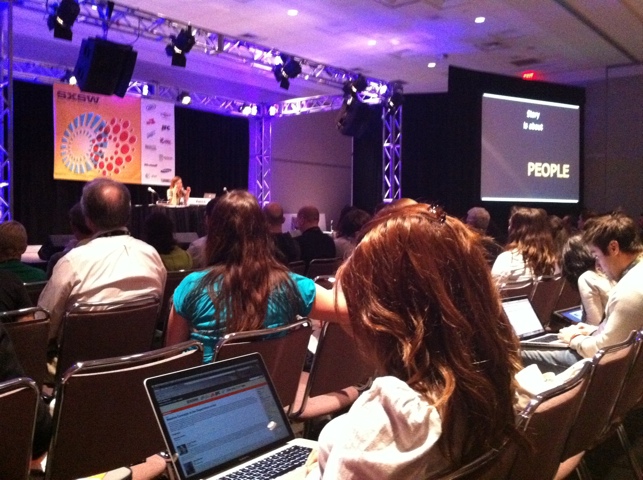
Ultimately, stories are fundamentally about people, and when you’re building a whole world for transmedia storytelling, you can’t forget that it’s about people. A lot of effort goes into creating the world, but people won’t want to explore that world if the story is not there.

Kicking off SXSW

It took me a bit to get this put together, but I wanted to give you a quick update, kicking off SXSW…


Content Creation and Curation

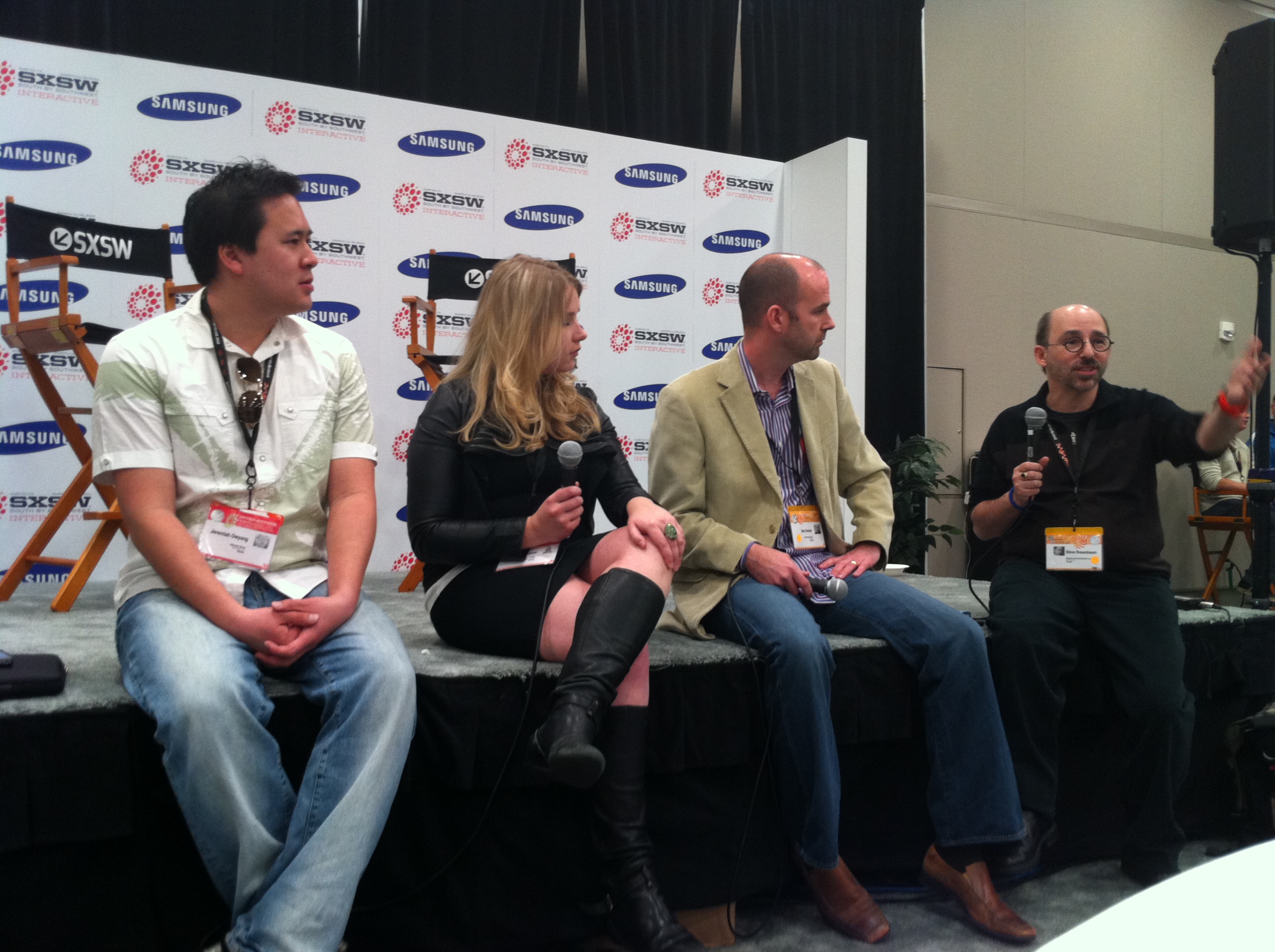
Samsung Blogger Lounge panelPanel: Jeremiah Owyang – Altimeter Group, Leslie Bradshaw – Jess3, Steve Rosenbaum, Sam Decker

One of the things I love about SXSW is serendipity.  I was a bit bummed, as I tried to go into 2 different sessions, and there were long lines at both.  I thought I’d head back to the Samsung Blogger Lounge to catch up on these blog posts.  I ended up hanging out with @redboypodcast and stumbling into this great panel discussion on content creation and curation.

One mistake sites often make is sending people off of their site to their social networks or other places to get to content.  The best thing you can do is to begin aggregating that content on your site.  You can curate content from all over the web and have people looking at it from within a context you are comfortable with and adds brand equity.

There was a bit of debate around the difference between a curator and an editor.  While nothing was decided, the thought was that a curator looks at different multi-sourced content and writers, whereas an editor pulls from a fixed group of resources.  It’s not all wonderful, as many people, especially writers see content curation and aggregation as leeching off of their content.  However, it seems to be an increasing acceptable method of getting content.


Tags

Related Posts

Share This

Banking on Big Brands/Celebs for the Web

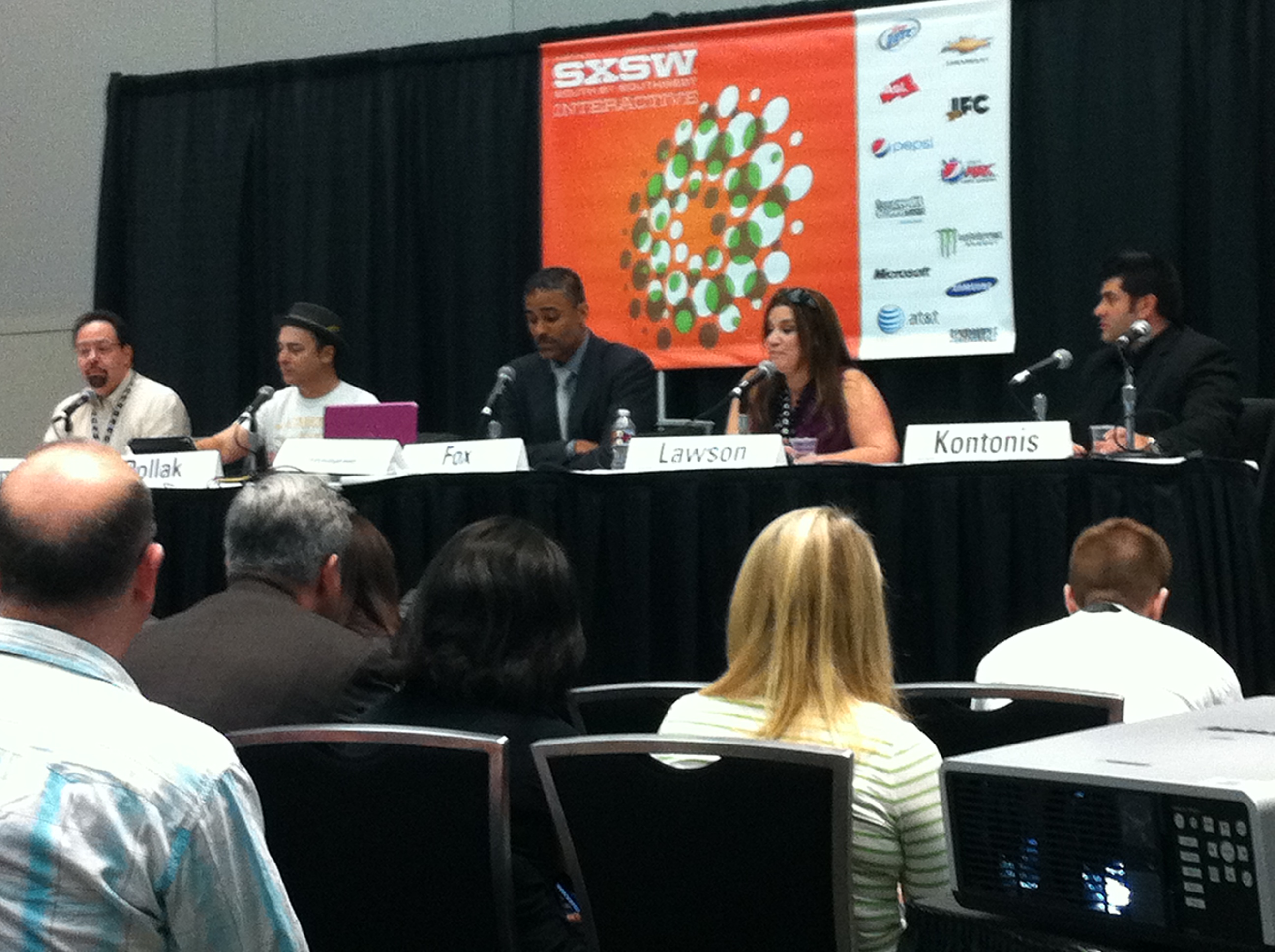
Panel: Amber J Lawson – Head of Original Programming, AOL, David Tochterman – Head of Digital Media, Innovative Artists, Rick Fox – NBA All star/Entertainer, Kevin Pollak – Actor, Paul Kontonis – Digitals
Hashtag: #sxswbigbrandsKevin Pollak and Rick Fox panel at sxsw

This panel discussed how traditional media is changing and how brands can get involved to take advantage of this shift.  In particular, two celebrities on the panel are taking slightly different approaches to this.

Actor Kevin Pollak, created Kevin Pollak’s Chat show – http://kevinpollakschatshow.com – because he said, “If you’re not creating your waiting.”  As an actor, you wait for the phone to ring for the next thing.  He felt that new media provided a tremendous opportunity to create his own content.  He used Felicia Day as another example of someone who created their own show to take their future and potential in their own hands.  He simply tries to create interesting content to draw an audience, as he said, “If you can earn an audience you can earn a living.”

Pollak gets brands involved from a very traditional perspective, through pre-roll advertising, display ads around the content, etc.  He feels that this helps big brands who may not be comfortable jumping into this area, get involved.  Therefore, they primarily use impressions as a way to sell the show to brands.

NBA all-star, and now entertainer, Rick Fox, takes a slightly different approach.  What’s important to him is telling a good story, and he looks for opportunities to integrate brands into the story.  For example, on one of his shows, you may see a basketball player having a Gatorade after a game.  It’s a bit like celebrity endorsements, but extends it by showing how the product is used and its benefits.  This takes cooperation between the celebrity/producer and the brand.

Working through partnerships like VuGuru/AOL, he can offer these product integrations, as well as non-traditional promotions.  He believes you are not only bring on a celebrity to use/endorse your product, but you’re also utilizing their Twitter followers and other social media “klout” to influence their fans.  And it’s not just the celebrities’ followers, but their personal networks.  For example, when Rick Fox was on Dancing with the Stars, he was able to get friends (Kobe Bryant and Shaq) to post messages to their followers asking for support.  This can get a little muddy when you’ve got multiple projects going on at the same time.