Debating Brands’ Role as Publishers

Panel: Tom Ashbrook – NPR, Lora Kolodny – TechCrunch, Pawan Deshpande – Hivefire, Gary Kim – Carrier Evolution, Joe Pulizzi – Junta42
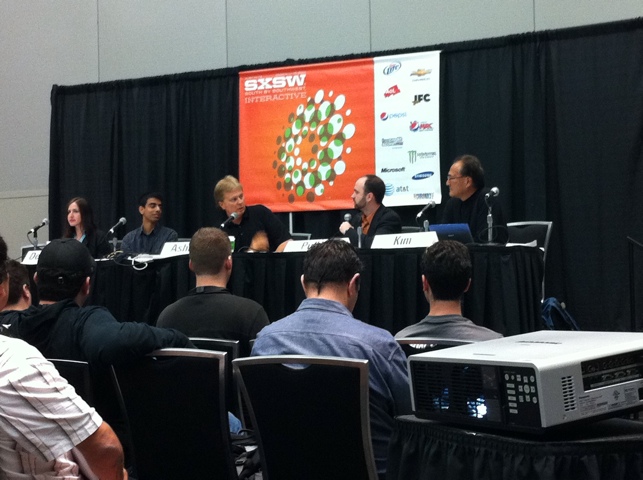
brands as publishers sxswHashtag: #curatedebate

The purpose of journalism is to inform or educate, while the purpose of brands is to drive profitable customer action. The Internet allows for the democratization of information, but we’re also starting to see the corporatization of information.

People will make time for a good, relevant story, no matter who tells it. If brands can tell compelling, interesting stories on a regular basis, they can cut through the clutter (those 30 billion messages a day, as Shiv Singh discussed here). The more money that comes in from doing this, the more money there is to do this.

We are all media publishers, and all brands need to think of themselves as publishers.  They need to take a viewer/reader/listener centric approach that asks: What are their painpoints?  What keeps them up at night?  You have the ability to tell a story that shows how your brand can solve this issue. Content will be successful if it targets those customers painpoints. We now have the ability to communicate directly to consumers without having to go through another channel – advertising.

Even media companies are realizing a decrease in advertising and rise in “advertiser services” which essentially teach brand advertisers how to be content publishers.  One company on the panel – Hivefire – aggregates and curates content for brands on industry topics.  This allows these brands to continually publish information, and be a resource on industry topics.  Another example is P&G’s Home Made Simple.  It’s tremendously similar to Real Simple – providing nearly identical types of information, but Home Made Simple highlights their own products as examples within stories.

Brands need to make sure they are seen to be the trusted authority, and they need to be straightforward and honest about their perspective and motives.  As hard as it tries, journalism is not objective. Everyone has a perspective – and brands need to be up front about their motives.  Consumers get to decide who they pay attention to – journalists or branded content.  More importantly, social media allows for a broader application of the “Fourth Estate” among corporations, so they also need to be honest, or they’ll get called out on it.

O’Reilly/Calacanis Fireside Chat

The O’Reilly/Calacanis fireside chat today was a great session to kick-off my SXSW experience. O’Reilly covered topics from brands to discussing his knack for using pattern recognition to predict the future.

Key Takeaways:

  • Great brands have a core; they mean something. Brands belong to anyone who uses it.  Create a barrier to entry. Create an identity.
  • Hardware used to be the source of value. Microsoft realized the value in software and then open source commoditized it. Value has now moved to user contribution.
  • If there was a “Web 3.0”, it would not be user data but sensor data; whatever harnesses collective intelligence.
  • Chase the idea. Innovation requires fun. “They don’t think it will make them rich, they think it’s fun”

O’Reilly also discussed Government and shared an analogy regarding government as a vending machine. We put money in (taxes) and expect it to spit out something (services). We shake the machine when we don’t get what we want. O’Reilly proposes that government needs to act like a platform. He called Reagan the founder of Foursquare. The government undertook the difficult development of GPS and opened it up for commerce.

Will it Blend?

A bonus that was not on the agenda at the Tweet House today was the addition of Blendtec’s Tom Dickson.  He spoke a bit about how they started and got to be as successful as they’ve been with their “Will it Blend?” series on YouTube.  Here’s a brief video of his presentation.


As a BONUS, I received a DVD of 50 Will it Blend videos as well as a behind the scenes video of how they make it.  I’m giving it away to one blog reader.  As usual if you comment on this post, I’ll select one commenter to give the DVD to.  Please make sure to include your email address when commenting.

Tags

Related Posts

Share This

Free Square Device

squareIf you’ve not heard of Square, it’s a device that allows anyone with a phone to accept a credit card payment. You plug it into your phone, start the app, put in the amount, and run the card. You can even have the person sign their name on your touchscreen. At the Chevy Tweet House, they were giving a ton of them away. I grabbed 5 for readers of this blog. The first 5 people to comment on this post will get the free Square devices.
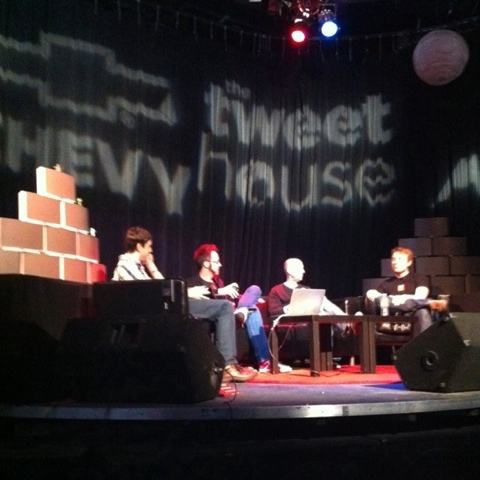
Handheld Media Revolution: Insights on Tablet Development

Speakers: Evan DollCo-founder, Flipboard, William “Whurley” HurleyCo-Founder & Chief Technology Officer, Chaotic Moon Studios, Oren JacobCTO at Pixar, Executive Producer for Ready, Set, Bag., Moderator: Jason Preston

I was extremely impressed with the panel, which included the founder of Flipboard, a hot iPad app for aggregating social info, the CTO of Pixar and producer for the movie Ready, Set, Bag, and the CTO of an app development company. They discussed the challenges and insights they’ve gained in developing for tablet, including the iPad.
The most important, and unanimous, point made was considering the user experience when developing. Mobile/handhelds/tables are all about context – how are you using it? How are they going to access it? What situation is it in? People are frantic with their phones, you don’t see that with tablets, it’s a more deliberate use.

There’s a growing number of places to put this content, but the predominant feeling of the panel was that Apple may be the best choice to develop for. The feeling was that Apple has a large user base, they support their platform – ensuring quality, and help you monetize it. When it comes to monetization, the feeling was that the mobile environment is easier to monetize than the web because with mobile, you’re in the moment – more than likely, you’re at the point of purchase. At least the context is often much better than the web.

One frustration of the panelists was the common belief that you could design apps once and then port them over to different devices.  You need ton consider the context of each device, as well as the capabilities/advantages/disadvantages of each.  In fact, the one panelist – the Chief Technology Officer of Pixar had hired Chaotic Moon Studios to do his iPad app.  Despite his great knowledge of technology and design, he knew that he didn’t know best practices for the iPad.  So that’s why he hired these developers to do it for him.

Finally, if you’re going to enter into developing apps, know that it’s not a once and done thing.  Despite the fact that most apps aren’t very successful, if it is successful, you had better prepare to support it and change it as devices change and evolve.  One panelist compared it to Flash – when it came out, it was cool and everyone wanted it.  After a while, you had a bunch of old flash websites that never changed because they invested a lot of money initially into something that was cool.

Giveaways

As you’ve already seen, I’ve gotten a couple extra Delivering Happiness Books, as well as a couple copies of Eyeballs Out that I’m giving away here on the blog.  I’ve gotten a few more things here that I’m planning on giving away to readers of the blog.  Keep an eye out for a few more things to come!

Innovations in Community Building: The Latest in Social Marketing

Speakers: Mary HenigeDirector, Social Media & Digital Communications at GMErika Brookes – Vice President, Marketing for VitruePaull Young – Director of Digital Engagement and Fundraising, charity: water, Moderator: Steve Broback

I decided to spend the afternoon at the Tweet House, an intimate setting with some pretty good panels on social media.  This panel included folks from GM, charity: water, and Vitrue.  The discussion really covered managing communities and managing relationships and brands in the social media space.

All panelists agreed that one of the strengths of social media is the ability to tell an interesting story.  It gives brands a platform for storytelling.  In particular, Mary Henige from GM discussed how they’ve tried to use social media to humanize their brand.

“You can hate a brand, but it’s hard to truly hate a person if you get to know them.  You have to humanize your brand, and this provides a great venue to do that,” said Henige.  They’ve created a site called the Faces of GM – http://www.facesofgm.com – where they’re telling interesting stories and giving a behind the scenes look at the brand.

Getting people with passion for creating content is key, as Ericka Brookes from Vitrue illustrated.  While they have a blog owner, they’ve tried to get anyone who wants to participate involved – someone from engineering, marketing, etc.  People who are passionate about it will create content and will express their passion in their messages.

Of course any discussion of social media these days comes around to ROI and whether or not you’re being effective in this space.  As Henige said, “you can’t always measure ROI directly.  Sometimes you do something because it’s the right thing to do.”  Being in social media and interacting with customers is a relationship building activity and relationships can’t always be measured quantitatively.   However, all of the panelists agreed that you need to measure what you’re doing and estimate the impact it’s having.  One brand uses a customer happiness index which compiles interactions, mentions, and sentiment.  Whatever you choose to measure, you have to look at it as an indicator, not a direct measurement.

Henige also mentioned that there’s a tendency in the industry to focus to much on those who don’t like us, instead of spending time on/with brand advocates.  During the auto show, GM met with fans and interacted with them, giving a few of them a behind the scenes tour.  They’ve found them to be tremendous brand advocates, even helping other customers themselves in the social media space.

Charity Water had a kid who asked friends not to give him a 17th birthday gift, and instead donate$17 to charity water on his behalf.  He did it on his own and raised $50k in a couple days.  Paull Young from charity: water said that when he started they tried to focus on the 50% of site visitors who hadn’t donated.  He found it to be unsuccessful, so he has turned his focus on the 50% who do donate.  He’s found it to be much more successful.  Similarly, one of the most successful campaigns Brookes said she has seen was the release of Katy Perry’s new album.  Facebook fans were given a preview before anyone else, and these fans shared the content and had the feeling of being rewarded for their loyalty to Perry.

Meeting with Josh Bernoff

Josh BernoffAfter getting a chance to see Josh Bernoff from Forrester speak at the Social Business Summit yesterday, we got a chance to sit down with him this morning to dig a little deeper into a few topics.  It was really a special opportunity to pick his brain about social media applications and organizational structures to deal with empowered consumers.  He shared some great insights and advice regarding the use of Facebook and organizing to be able to respond in real-time to consumers.

I was really interested in what could be done to collaborate in an environment which might be fractured into various silos with slightly overlapping responsibilities. We discussed the need to bring these groups together on a very regular basis to have discussions regarding monitoring, strategies, and execution. He brought forward a case study from Dell, mentioning how they bring together all of their social media folks for a weekly phone call to discuss these issues. Further, he mentioned the importance of challenging each other on these topics as well – making sure strategies are in place and metrics are being monitored. All areas need to be aware of what each other are seeing and doing in order to most effectively execute in this space.

Unfortunately, and understandably, he wasn’t very excited for me to video record parts of our meeting, but thanks again to Josh for taking the time out of his busy schedule to talk with us!

Dachis Group Social Business Summit

At the iMedia Brand Summit, several of us were talking about whether or not we were going to be attending SXSW. A few of us are, and I found out that Robert Freeman, from Michaels was staying at the same hotel as well. As we got to talking, he mentioned that he and his boss were planning to attend the Dachis Group Social Business Summit. Well, as it turns out, Robert’s boss wasn’t able to make it into town in time for the Social Business Summit, and since they aren’t able to refund his fee, Robert invited me to attend.

I had seen this earlier, but after iMedia and SXSW, there was no way I was going to be able to talk to my boss about footing the tab for yet another conference on this trip. I’m really excited about being able to attend this, particularly because one of the speakers will be Tony Hsieh, CEO of Zappos.com, and I just finished his book Delivering Happiness.  There are some other tremendous speakers on the agenda, including Josh Bernoff of Forrester, Shiv Shingh of Pepsi (got to see him speak last year at work when he was with Razorfish), and Jesse Thomas of JESS3, a data visualization group.  I’m certain the other speakers will be great, and the topics on the agenda look awesome.  As you would expect, I’ll be tweeting and blogging from there as well.

The Power of Brand Relationships

The presenter was Donna Sturgess of Buyology, and she discussed the importance of understanding how non-conscious thinking impacts relationships, and ultimately whether or not someone buys your product. These non-conscious things include influencers, such as memories and values, intuition, wants, desires, and reflexes.

Her company uses neuromarketing tools to dig into how these non-conscious influencers impact buying decisions. There are 10 key brand relationship drivers:

  1. Symbols
  2. Rituals
  3. Sense of belonging
  4. Sensory appeal
  5. Evangelism
  6. Storytelling
  7. Power of the enemy
  8. Mystery
  9. A clear vision
  10. Grandeur

They evaluated many different brands on these areas, and looked at how they differed in how they connected with people on a non-conscious basis. For example, people tended to like Apple because of sensory appeal, symbols, and storytelling.book

She then dug into a case study about Mattel’s new campaign for Barbie and Ken, utilizing memories and nostalgia among those who might be buying the toys for their kids or grandkids. At the same time, they’re bringing to life the story of Babie and Ken for a new generation. They’re running across many different channels – Facebook and Twitter, out of home, and PR placements.

Buyology has also developed a way to measure the type and strength of a brand’s relationship with its consumers with 4 Neurotypes of non-conscious relationships – Awe, Exploration, Superiority, and Harmony.  These insights should be used by brands to look at the impact of its marketing and utilize them to strengthen their relationships with customers.

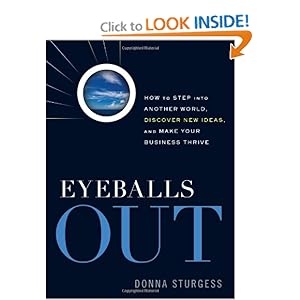
BONUS: Donna was giving away copies of her book after the presentation.  I was able to secure a couple extra copies for readers of this blog!  I’ll select 2 names from anyone who comments below and send you a copy of Donna’s book – Eyeballs Out: How To Step Into Another World, Discover New Ideas, and Make Your Business Thrive – upon my return from SXSW.

Brand as Channel/API

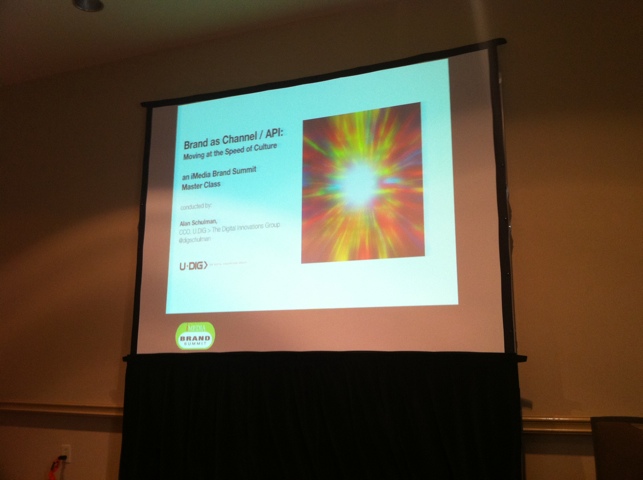
Brand as Channel/API at iMedia Brand Summit 2011

A week or so ago, I was asked if I could sit on this panel discussion about how some brands are starting to create their own content in lieu of, or along with, traditional advertising. The discussion was led by Alan Schulman, Chief Creative Officer at U.DIG – The Digital Innovations Group, and included myself and Scott Koehler, VP, OPEN Digital Prospect Media & Marketing, American Express.

Alan pointed out that API’s or “Application Programming Interface, was simply a mechanism for distributing content persistently – or having “always on” messaging. As a brand, it requires a change in how you message, going from a campaign mindset to a brand reinforcing content ecosystem. This is important because of consumers growing intolerance to traditional media – they are over-saturated with messages and becoming increasingly fragmented. So as a brand, you need to become a realtime content creator, curator, app developer, content distributor, content syndicator,and brand storyteller, instead of an “advertiser.” He used examples from several companies, including American Express and State Farm.

We discussed the importance of telling the brand story consistently, across all forms of media, not just in a TV campaign. After he shared the When Love is in the Air, State Farm is There video, and I talked about the importance of utilizing our agents and zones to find out and help tell the brand story. Scott shared his experiences with the OPEN Forum for small businesses, requiring the ability to handle editorial type responsibilities in-house to generate and curate the content on the site. We both talked about the importance of agency partnerships, as well as internal resources, to generate as much content as possible, while at the same time, making sure it’s on message and reaching an increasingly fragmented audience. Overall, it really made me feel very fortunate to have the skill and resources we have available throughout the company to help tell our brand story in unique and interesting ways.

Foursquare at SXSW

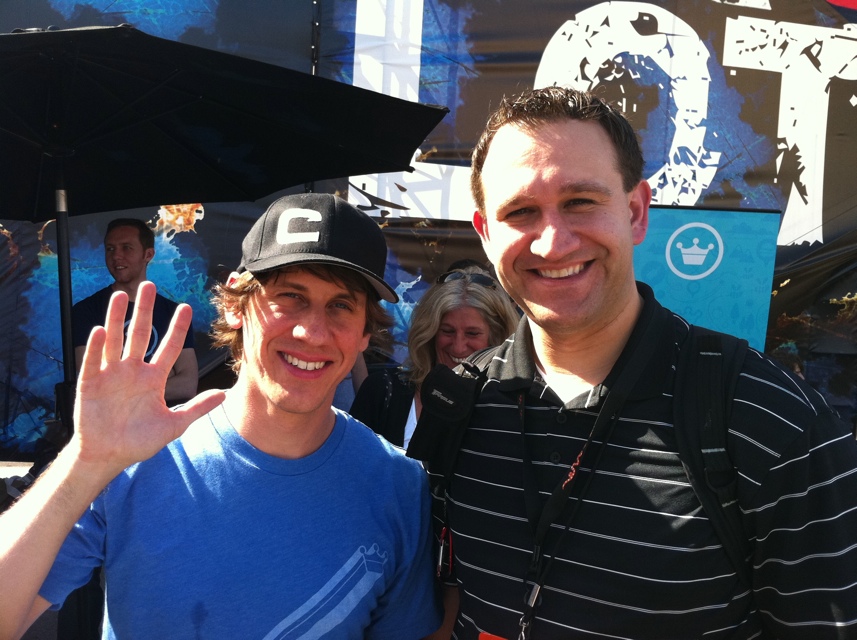
Dennis Crowley Founder of Foursquare and meFoursquare had been a bit coy these last couple weeks regarding their plans for SXSW, simply tweeting, “SXSW IS LESS THAN THREE WEEKS AWAY! NEW APP + NEW BADGES + PARTIES + CONCERT + MOAR FOURSQUARE. DETAILS COMING. OKTHXBAI.”

A few hours ago, they started to let us all in (a little) on what is to come. Their site – http://foursquare.com/sxsw – has been updated, and what we know is this:

  • They’re releasing a new version of the app – Foursquare 3.0
  • They’re hosting a party on 3/12 at the Cedar Street Courtyard
  • They’re hosting a concert on 3/14
  • They’re introducing 18 new badges (not sure if they’ll be exclusive to SXSW or not)
  • They’ve partnered with American Express

I’m really excited and interested to see what becomes of the American Express partnership.  When I saw American Express’ own version of Foursquare built on Foursquare’s API – Social Currency – I was immediately impressed.  Not only did they add photo capabilities before Foursquare did, but they added a feature which allowed you to enter in how much you had spent at that venue.

With the partnership, any purchases made with an Amex card would not only check you in via Foursquare, but could provide incredible individual and aggregate data to retailers.  For example, with Best Buy’s Rewards card, they know how much you’ve spent with them – and provide you rewards based on how much you’ve spent.  They also know who you are, along with when and where you made the purchase.  That’s incredible data for targeted marketing and predictive modeling.

Now, every retailer (who accepts Amex), even the small business down the street could have this type of data on their customers, thanks to Foursquare and Amex.  It has the potential to be the retail version of Google analytics for businesses.  When you add the gaming incentives that Foursquare provides, you’ve got something that people want to do and are willing to give up this data for gaming and loyalty incentives.