The Shakespeare Brand & What it Teaches Marketers in 2011

After a break for lunch and a very interesting presentation by Google regarding their display advertising capabilities, there was a session by @BradBerens, Chief Content Officer, Digital Marketing Sector.

He started out by illustrating that Shakespeare created one of history’s most powerful brands.  He was able to do this because of the resources and skills available to him.  He was an actor, sharer, theatre owner, and writer/dramatist.  By understanding the environment, and owning the Globe Theater, he was able to move from simple meaning transmission to environment cultivation.

Berens condensed Shakespeare’s marketing brilliance and methodology into his use of space, time, and identity:

  • Space – Context is critical, and Shakespeare created a different kind of emersion – a “theater in the round” – which created a unique viewing experience for participants.
  • Time – He compared watching The Globe Theater  to watching a football game today. It was powered by the presence of other people and their shared emotion.
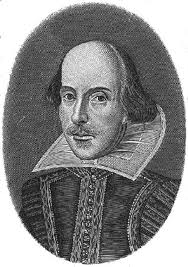
  • Identity –  Shakespeare divided his audience into “first timers” and “loyal customers,” writing dynamic storylines where he created a sense of discovery for first timers, and a sense of expertise for repeat viewers.

He broke down the foundation to friction and frames.  Friction leads to satisfaction, whereas framing is how you experience the context of the message.  His stories created friction, and The Globe Theatre created the context.

Marketers have the ability to use marketing experiences and technologies to create deeper bonds with and between people and to give them more richly satisfying experiences in relation to our brands.

Brands should strive to create an environment where consumers contribute, get to be creative, and feel like experts using Shakespeare’s techniques.

Brand as Channel/API

Brand as Channel/API at iMedia Brand Summit 2011

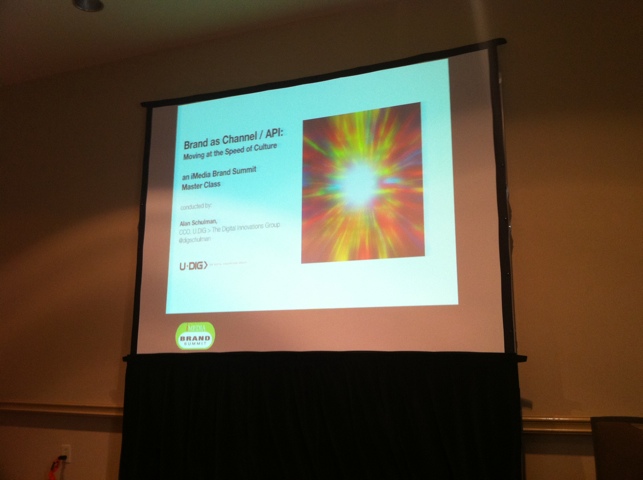
A week or so ago, I was asked if I could sit on this panel discussion about how some brands are starting to create their own content in lieu of, or along with, traditional advertising. The discussion was led by Alan Schulman, Chief Creative Officer at U.DIG – The Digital Innovations Group, and included myself and Scott Koehler, VP, OPEN Digital Prospect Media & Marketing, American Express.

Alan pointed out that API’s or “Application Programming Interface, was simply a mechanism for distributing content persistently – or having “always on” messaging. As a brand, it requires a change in how you message, going from a campaign mindset to a brand reinforcing content ecosystem. This is important because of consumers growing intolerance to traditional media – they are over-saturated with messages and becoming increasingly fragmented. So as a brand, you need to become a realtime content creator, curator, app developer, content distributor, content syndicator,and brand storyteller, instead of an “advertiser.” He used examples from several companies, including American Express and State Farm.

We discussed the importance of telling the brand story consistently, across all forms of media, not just in a TV campaign. After he shared the When Love is in the Air, State Farm is There video, and I talked about the importance of utilizing our agents and zones to find out and help tell the brand story. Scott shared his experiences with the OPEN Forum for small businesses, requiring the ability to handle editorial type responsibilities in-house to generate and curate the content on the site. We both talked about the importance of agency partnerships, as well as internal resources, to generate as much content as possible, while at the same time, making sure it’s on message and reaching an increasingly fragmented audience. Overall, it really made me feel very fortunate to have the skill and resources we have available throughout the company to help tell our brand story in unique and interesting ways.

What Marketers Can Learn from Bing Case Study

The second speaker of the day was Natalie Bowman of MSN to discuss what Bing has done as a “challenger brand” to try to attract users.  She indicated that they were looking to “Break the habit of people using Google.”  In order to do so, they knew they had to do 4 things:

Be disruptive
They started with a big advertising campaign to grab people’ attention, attempting to make it disruptive and capture people’s attention.

Be different
They attempted to do this, not only through their disruptive and different advertising, but also through unique online features, such as their travel, restaurant, Q&A, and Map features.

Be data driven
They utilize metrics and measurement to see how they were doing.  She said, “We’re an engineering organization, so Microsoft doesn’t do anything unless we can track or measure it.”

Be dangerous
They had key sponsorship activations around the Sundance film festival and Jay Z’s new book launch.  They used some celebrities at Sundance and decisions they had to make, to show how their “decision engine could help.”  They took a risk with Jay Z’s book launch, turning every page of his book into something physical and symbolic that could be found somewhere around the globe.   Fans had to use Bing to decode and find the items in the real world.  If they were the first person to find it in the real world, they would get a signed copy of the book.  They had over a half million people participate.  It provided a lot of out of home opportunities for co-promotion.

Personally, I think the Bing advertising was very disrupting and gained a pretty good amount of traction.  I also believe they did a pretty good job of trying to develop some unique offerings in travel, dinning, etc. to differentiate themselves… and, no doubt track and measured the heck out of it.  However, I can’t say that sponsorships with celebrities is all that “risky” as the speaker claimed, or “dangerous.”  All in all, it was an interesting perspective on how Bing tried to gain some traction.

iMedia Opening

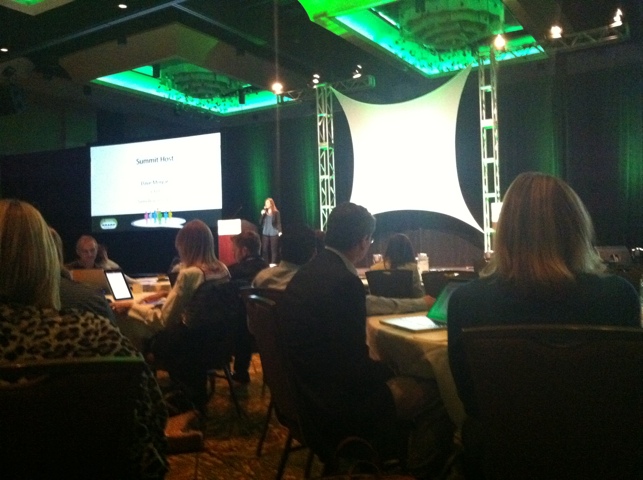
The summit opened with a quick introduction from Dave Morgan of Simulmedia. Since the theme of the conference is storytelling beyond advertising, he briefly discussed the importance of thinking beyond the computer. He touched on Bill Joy’s Six Webs. He envisioned:

imedia summit opening

  • Far web – the typical TV viewer experience
  • Near web – desktop computing
  • Here web – mobile devices with personal information one carried all the time
  • Weird web – voice recognition systems
  • B2B web – business computers dealing exclusively with each other
  • D2D web – intelligent buildings and cities

Joy sees these as the foundation for how the internet will continue to change. He predicted the “here” web would be most prominent due to its portability. Morgan points out that despite the fact that Facebook represents 25 percent of all page views on the internet, if its audience size were compared directly to a TV network, it would be equivalent to being PBS. He showed numbers to illustrate that Facebook’s “viewership” paled in comparison to that of CBS. So there’s a long way to go to get to the “here” web, but conferences like this help to bring to light the importance of designing content for the evolution we are in the midst of.

Following Morgan was a presentation by Claudia Batten, the COO of Victors & Spoils, an ad agency that uses crowdsourced production. Your brand is whatever consumers say it is, so you might as well engage them in helping you to establish what the brand is and stands for. Her agency worked with WD-40 to generate ideas for innovating the brand. Here’s what they got: 336 ideas submitted, 26 investigated, 10 validated, 5 awarded, 1new ownable platform. This outside perspective gave the brand some freshing thinking, and provide for endless stimuli for internal ideation. Similarly, Starbucks idea submission campaign had 70,000 ideas submitted in its first year with over 100,000 total submitted. A team of 40 people reviewed the ideas, and they implemented about 100 of them.

Her advice was to engage these fans and audiences who want to contribute to your brand, but you must be prepared for it. To do so, you must be prepared for the worst, not everything goes perfectly; you must be a collaborator, and not an intruder in these discussions and brainstorming; you must be transparent and willing to share your problems/challenges; you must spread the word and promote it, targeting key influencers and advocates. If you’re able to do this, you’ll get solutions to some of your biggest challenges, as well as a way to connect with consumers and tell your brand story.


iMedia Brand Summit Marketers Only Meeting

Today was the first day of the iMedia Brand Summit, and it’s only for brand marketers.  There are a ton of great folks here from brands like Dell, Procter & Gamble, Target, Bank of America, JetBlue, and more.  The discussions have been great, centering around how brands are utilizing Facebook to how their companies are organizing their structures to handle social and interactive media.

I walked away with several good insights, tips, and quotes.  I had a chance to talk with the person from JetBlue about their recent entry into location based deals and geo-fencing efforts with AT&T’s Placecast technology.  I got some tips on who were some great vendors for Facebook and mobile app development, as well as vendors for Facebook Fan generation.  The discussion made me think about the “Facebook Fan Funnel” and what to do with them after they “like” your brand.  Some great quotes included:

“Your Facebook page is like a store in the mall.  You need to staff accordingly and have people involved who are empowered to handle everything from customer service issues to marketing and sales, and are knowledgeable about your products and services.”

“Getting customers to share your content on Facebook is important, because you can block me, but you can’t block your momma.”

And as promised, I’m planning to do a lot more videos and photos.  Please excuse the shakiness of the video, it’s all shot and edited on my iPhone, so I can get this up and out to you as quick as possible.

iMedia Brand Summit – Austin, TX


A short video of my trip to Austin, and the Lost Pines Resport and Spa where the iMedia Brand summit is being held.

Foursquare at SXSW

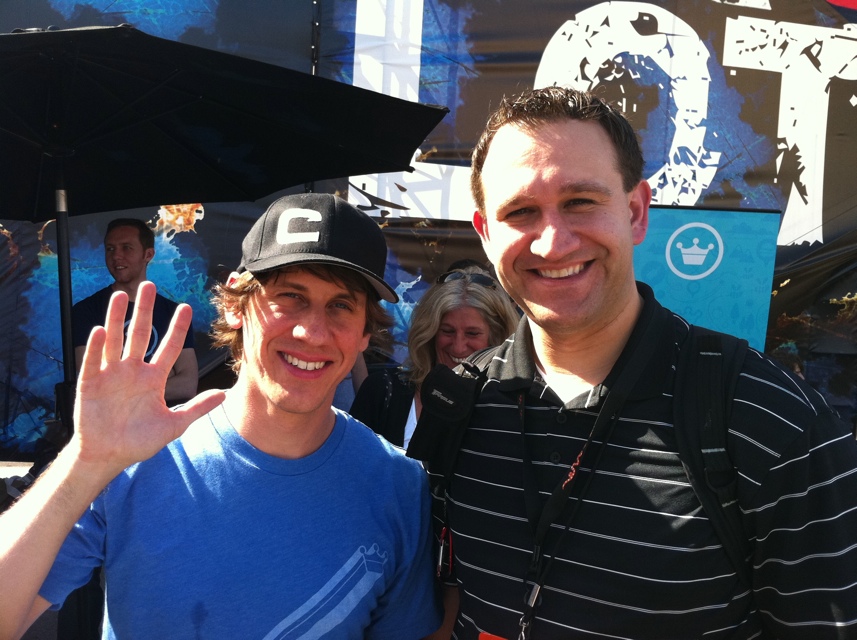
Dennis Crowley Founder of Foursquare and meFoursquare had been a bit coy these last couple weeks regarding their plans for SXSW, simply tweeting, “SXSW IS LESS THAN THREE WEEKS AWAY! NEW APP + NEW BADGES + PARTIES + CONCERT + MOAR FOURSQUARE. DETAILS COMING. OKTHXBAI.”

A few hours ago, they started to let us all in (a little) on what is to come. Their site – http://foursquare.com/sxsw – has been updated, and what we know is this:

  • They’re releasing a new version of the app – Foursquare 3.0
  • They’re hosting a party on 3/12 at the Cedar Street Courtyard
  • They’re hosting a concert on 3/14
  • They’re introducing 18 new badges (not sure if they’ll be exclusive to SXSW or not)
  • They’ve partnered with American Express

I’m really excited and interested to see what becomes of the American Express partnership.  When I saw American Express’ own version of Foursquare built on Foursquare’s API – Social Currency – I was immediately impressed.  Not only did they add photo capabilities before Foursquare did, but they added a feature which allowed you to enter in how much you had spent at that venue.

With the partnership, any purchases made with an Amex card would not only check you in via Foursquare, but could provide incredible individual and aggregate data to retailers.  For example, with Best Buy’s Rewards card, they know how much you’ve spent with them – and provide you rewards based on how much you’ve spent.  They also know who you are, along with when and where you made the purchase.  That’s incredible data for targeted marketing and predictive modeling.

Now, every retailer (who accepts Amex), even the small business down the street could have this type of data on their customers, thanks to Foursquare and Amex.  It has the potential to be the retail version of Google analytics for businesses.  When you add the gaming incentives that Foursquare provides, you’ve got something that people want to do and are willing to give up this data for gaming and loyalty incentives.

How to be South by South Best

This is from the IFC Crossroads house folks. I thought it was pretty good. Despite the sarcasm, it’s scarily on target (not sure about the tent though).


SXSBest

This is pretty good, from the IFC Crossroads house. Despite the humor, he’s pretty much dead on with his suggestions.

Tags

Related Posts

Share This
Gearing Up for SXSW

I’ve only got a week to go before I leave for Austin.  As I mentioned, I’ve got the iMedia Brand Summit for a few days prior to the SXSW activities starting up.  That means I’ll be spending this weekend tracking down last minute items for my trip.  I’ve already purchased a few things, but here’s my list of gear and gadgets I’m prepping for my marathon of technology and social media:

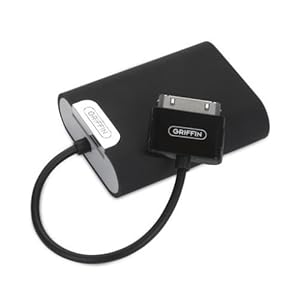
Tunejuice by Griffin iPhone portable battery

Extended laptop battery – I recently replaced the battery on my laptop, and surprisingly, the cost wasn’t too bad. However, the 6-cell battery would only get me about 2.5 hours of power before I had to plug in.  So, I managed to find a 12-cell battery that would fit my laptop that can get me through a couple SXSW sessions before I need to plug in.

Griffin TuneJuice 2 Battery Backup for iPod – Even though I’ll use my laptop quite a bit, my iPhone will get a ton of use as well.  Especially since it’ll probably spend 1/3 of its time searching for a signal with the 15,000 other iPhones within a half mile radius.  It takes 4 AAA batteries, which should be easy to find should I run out of juice.

Product Details

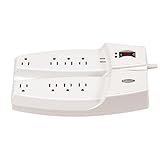
Dual Power Strip – I actually brought this with me last year, and I can’t tell you the number of friends I would make in each session when I pulled it out.  In every ballroom people were gathered around the outlets.  Most people didn’t mind letting me plug in so we could all share the power.  The only bad thing is when I would get set up and realize about 5 minutes into the session that it sucked and I wanted to bail.  Unfortunately, I’d have to literally pull the plug on 6-7 people. However, most seemed to understand and were just happy to get 5 minutes worth of recharging time.

Verizon Air Card – While the wifi wasn’t bad last year, it would go in and out on me sporatically, so I learned not to count on it.  At least with the air card, I pretty much knew I could get a signal, even if it was a little slower than the wifi.  I’m just hoping that all those new Verizon iPhones won’t bog down the network too bad.

Joby Gorillamobile for iPhone 4Joby Gorillamobile for iPhone 4 – I’m planning to shoot a whole lot more photos and video this year, now that I’ve got the iPhone 4.  However, when I have shot video, I’ve noticed how shakey the video has been.  I just got this little device which can sit and grip while holding my phone will help me produce some decent video from SXSW.

Not necessarily gear, but necessary in your gear – Here’s a list of a few things I’d recommend having on hand in your backpack or slingbag: asprin, bottle for water, snacks (granola bars), 5 Hour Energy, business cards, power cords, pen & paper, a mouse, sunglasses, and memory cards.

Let me know in the comments what other gear you are bringing or recommend for SXSW.

SXSW App Now Available

SXSW iPhone App

A week or so ago, I posted about the apps I’m planning to use at SXSW. One of the most important apps I used last year, and will use this year, wasn’t yet released. However, today I noticed the official SXSW app has been released (for the iPhone). Called “SXSW Go,” it contains a list of all of the SXSW events and activities (including your customized schedule), a map of the locations of all of the activities, trade show information, and links to SXSW social media sites. I would definitely include this in the must-have apps for SXSW. This will come in particularly helpful when you find yourself shut out of a session you wanted to attend due to the large crowds, and then you have to scramble to find a new one.

Also available on Android and iPad.


iMedia Brand Summit and SXSWi

iMedia Brand SummitI found out that I will also be attending the iMedia Brand Summit in Lost Pines, Texas (just outside of Austin), right before SXSW. This will take place March 5-9, and I will head downtown for SXSW from March 10-16. Since this conference will be part of the same trip for me, and the content still relates to topics covered at SXSW, I’m planning to cover it here as well.

The conference will cover “Corporate Storytelling Beyond Advertising,” and will feature speakers from Victors & Spoils, McKinsey & Company, Microsoft, and IBM. The materials say, “As consumers look for experiences through whatever channel is most convenient, marketers must find a way to deliver our stories across a variety of devices and create the kinds of content our targets want to consume.”

Here’s more on the iMedia Brand Summit – Corporate Storytelling Beyond Advertising if you’re interested.