Real Time Marketing

Presenter: Shiv Singh, PepsiCo
This was easily the best and most practical presentation of the day, providing a very clear outline for building a company structure to take advantage of a real-time environment.  The recent revolution in in Egypt highlighted the power of real-time communication and timeliness of information. Businesses can utilize social media for real time marketing, but there are six elements that need to be in place to execute effectively:

  • Real-time Insights – It’s most important to be aware and know what your customers are thinking and doing in real-time.  The listening tools must be in place to provide a stream of updates.
  • Real-Time Response – When you know what your customers are saying, you need to be in a place to act immediately.  A response only has meaning if it’s timely, so having staff who can respond in real-time provides an answer or response immediately.
  • Real-Time Content Studio – Not only do you need to be able to respond immediately, but you need content and creative experts organize to be able to produce content in the moment.
  • Real-Time co-creation – We can work together within the organization and with the consumer to develop the message and let it evolve.
  • Real-Time Distribution – As a brand, the tools should be there to allow you to talk directly to consumers without having to go through your agency or a middle-man.
  • Real-Time Engagement – Interacting and engaging with customers in real time creates engagement and trust.

All of this fits within a pop culture frame, meaning an awareness of the environment and what’s going on in the world at that moment.  The way we think and process information is changing, and new media technologies are literally addictive says psychologist Susan Weinschenk, fueling a “dopamine induced loop of seeking behavior and instantanious reward.”

There are 30 billion Facebook updates a month and a brand’s marketing message is competing for attention with all those status updates.  Therefore, brands need to think like a content company, regularly producing relevant content that cuts through the clutter.  During fashion week, Pepsi launched its new skinny can with a campaign called “Get the Skinny.”  During fashion week, they set up a content center for information on culture and fashion, essentially acting as a small news organization for the week.  It resulted in over 90,000 new Facebook fans and a large amount of engagement online with the brand.

Brands must be aware of culture and what the general public is thinking in order to take advantage of real-time opportunities.  During the BP disaster in the Gulf, Pepsi took the opportunity to expand the Pepsi Refresh Project.  They decided to give away and extra $1.3 million to fund reat ideas to help fund Gulf communities.  Because they were structured as outlined above, within a couple days, they got the idea, had it approved, and launched the site.  The next phase of the Pepsi Refresh Project will take advantage of consumer generated videos, allowing organizations who would like the grants to make a case to consumers via video.

Overall, in order to make this happen, Singh suggests that all of the following are needed to make it happen

  1. Be able to ride “glocal” culture trends as they’re shaped by consumers.  Your company must be organized to communicate in real time, both on a global and local basis.
  2. Target your brand loyalists and let them spread your message, but to do so you need to know who they are and have a relationship with them.
  3. The ability to engage in real-time, meaningfully.  It’s about engagement, not just broadcasing your message, but if you’re able to do so, your message will be amplified by others.
  4. Have a content studio to operate as a media organization in real-time.
  5. Build your own distribution network.
  6. Organize to be able to go from strategy to execution in seconds.
  7. Don’t limit this to digital – make everything addressable, targeted, and instant.
  8. Acknowledge real-time marketing has no geographic boundaries.

I got a question via twitter from @kellythul who asked what KPIs or metrics Singh utilizes for measuring success.  Singh suggested something he helped to develop while at Razorfish – the SIM Score.  The SIM Score for a brand is the ‘Net Sentiment’ for that brand in social media divided by ‘Net Sentiment’ for the industry.  Net Sentiment is defined by Razorfish as “Net Sentiment for the Brand = (Positive + Neutral Conversations – Negative Conversations) / Total Conversations for the Brand.”  He suggested looking at your real time score and comparing it to competitive brands within your industry.  He says that he has definitely seen a correlation with changes in SIM score and sales, mostly in CPG type industries.


Getting People to Share Information

Presenter: Philip Kaplan, Blippy
More than ever, we’re sharing private details of our lives on places like Twitter and Facebook.  Kaplan started a website called Blippy which takes the concept of sharing private information one step further.  The site  asks users to register their credit cards and then socializes your purchases from marketplaces such as iTunes, Amazon, Zappos and many more.  In essence, it tells your Blippy friends what you’ve bought, and allows them to get your feedback and review of the product.

Kaplan outright says, “the only people who care about privacy are old people.”  He goes on to show examples, such as the telephone.  When the telephone came out, there was a huge concern about lack of privacy – people could hear your calls, someone might listen in, etc.  Even more recently, as little as two years ago, people avoided Facebook, considering it “creepy.”  Today, there are over 600 million users of Facebook worldwide.

Kaplan’s feeling is that people have never shared this type of information simply because they have never been able to.  Today, over $1 million in purchases are shared every day on Blippy.  Kaplan feels that more people will share if they see value and a reason to do so.  Thus far, users of Blippy see value in knowing what their friends are purchasing, what they might endorse, if they like what they bought, or even seeing how they might be paying a different amount (like a gym membership) for the same service.

Ultimately, Kaplan feels that people will share if you give them a way to, and he feels that as “old people” move out of the space, a younger generation will be more comfortable – resulting in growth for Blippy.

Only Empowered Employees Can Serve An Empowered Customer

Presenter: Josh Bernoff, Forrester

In his new book, Empowered: Transformed by Social Technologies, he talks about the importance of enabling your HEROs, because only an empowered worker can serve and empowered customer – can’t run company top down anymore.  HERO stands for Highly empowered and resourceful operative.

The sales funnel has been extended, and it no longer ends with customers.  Here’s the new flow – Eyeballs -> Awarness -> consideration ->preference purchase -> Customers -> Supported ->Empowered -> Delighted -> Fan -> Broadcaster – the message then goes to others and starts over again.

Social participation has grown, which only highlights the importance and impact of this new model:

Year Creators Conversationalists Critics Collectors Joiners Spectators Inactives
2007
18%
25%
12%
25%
48%
44%
2010
23%
31%
33%
19%
59%
68%
19%

Bernoff believes there are four technologies empowering consumers: Smart mobile devices, Social technology, Pervasive video, and Cloud computing services.

How frequently do people tell others about products and services?  They looked at various social media and counted how often people told others about a product or service they were using.  They found 500 billion impressions, and during the same time period, total advertising impressions were 2 Trillion.  That means social media had 1/4 of the total number of impressions about products and services.  Which impressions do you think had more of an impact – referrals from friends and others on social media or advertising messages?

We need to start to treat our customers as a channel – they are another group which share our message.  The process for accomplishing this is – IDEA: Identify your mass influencers, Delivering groundswell customer service, Empowering with Mobile Information, and Amplifying fan activity.  Identifying the influencers is important because a small percentage of people control 80% of the influence online.  Delivering groundswell customer service requires reaching out and engaging in social media channels, such as Best Buy’s Twelpforce.  This requires empowered employees who can directly respond to customers. Empower people with mobile information, as the use of immediate information is most important.  Amplifying fan activity means enabling your fans to share their messages with others.  He used an example of a highly regulated health industry providing a way for customers to share their own testimonials on their site.

How do you run your organization to make this work? 3 groups that have to work together:

  1. HEROs – know customer needs, use tech to serve customers, operate safely
  2. Managers – Make innovation a priority, support Heros, work with IT to manage risk
  3. IT dept  – Support Heros with technology, scale up solutions, provide tools to manage risk

You must embrace these new technologies, because HEROs will find a way around your controls.  A recent study showed that despite blocking technologies employees said this, they:

– use smartphone for work – 8%
– Download and use apps on work comp – 12%
– use tools to find access to blocked sites while at work – 27%

Resistance is futile, spend your time empowering your employees.  This requires encouraging experimentation, committing to collaboration systems, and using tools to share best practices across the company.


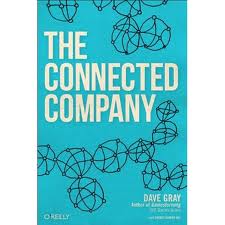
The Connected Company

Presenter: Dave Gray, XPLANE
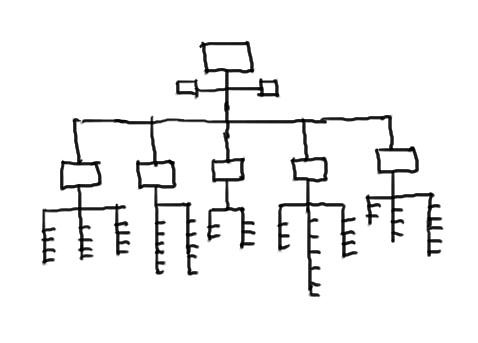
This was an incredible presentation which essentially compared large companies and large cities, and how large cities are able to adapt, while large businesses struggle. Companies are Complex Systems, and he had a graphic of the org chart at Microsoft. It’s so large and complex, an external company compiles this and sells it to vendors.

Research has shown a 3/2 Rule, meaning that as organizations scale larger, profits drop at a 3/2 rate. More employees have proven less profits. In cities and urban planning however, there’s a 2/20 rule. As you double the size of a city, productivity in that location goes up nearly 10 fold. The reason has to do with relationships to environment, which essentially establishes – are you flexible/adaptable, or process/machine driven?

Both cities and companies start out small. As companies grow, the machine/processes established don’t work because of the increase in people, so they have to re-organize their structure or re-program the machine. Companies need to break down silos and processes, because studies of long-lived successful companies have shown they were:Companies are often like machines – very process oriented, and the CEO is in charge, pulling levers to make things happen. The problem is that processes are designed to sit on a stable foundation. No time has been worse for that then the present environment of change. People and technologies are changing because they are based on people and behaviors.

Decentralized – There are porous boundaries and no big strong central command and control.
Had a Strong Identity – Shared values, cultures, and beliefs.
Active Listeners – They are able to identify and jump on new opportunities (and have the cash to do so).
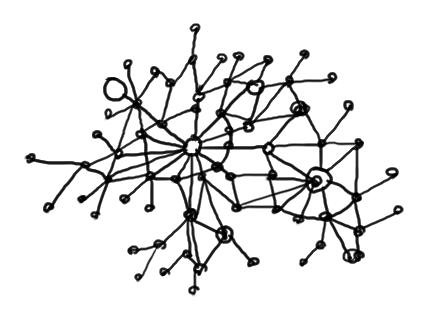
Most companies are designed by division (for labor specialization). This creates territory or turf when you create separate tasks. Companies should be designed with connections, connecting the core with periphery, or flocking, where they share standard protocols and shared services, learning from each other. Imagine companies as they are today with large organizational charts, vs a connected business or web of cross-functional, cross-experienced teams. If a chain breaks in a hierarchy, everything under falls down. In hierarchies, if a link in the chain breaks, the system breaks, but in a web, you can work around it.Lessons from Urban design:

Think at the level of the street – Get an organization wide initiative that requires a cross-functional team.
Spaces need owners – Wikis needs a gardener, blog owner to organize content, community manager to organize stuff, but they require connectivity for information and support.
Jumping off points – There are opportunities encountered along the way – you came for this, but what about that? Utilize the serendipity to start to make new changes.
Watch, listen, adjust, adapt – Have a strong feedback loop – pay attention, fix broken windows (You know what this means if you’ve read Malcom Gladwell), tweak, small changes add up, tell it what it needs.

Finally, connections within your company are vital, but connections between partner companies are just as important. In a day in age when no one wants to be liable, and things are held to contracts, it creates issues for users, destroying attitudes between both companies. Unless things are easily linked and plug easily into one another easily, this can be just as destructive.

Here’s another article on this presentation.

Dachis Group Social Business Summit

At the iMedia Brand Summit, several of us were talking about whether or not we were going to be attending SXSW. A few of us are, and I found out that Robert Freeman, from Michaels was staying at the same hotel as well. As we got to talking, he mentioned that he and his boss were planning to attend the Dachis Group Social Business Summit. Well, as it turns out, Robert’s boss wasn’t able to make it into town in time for the Social Business Summit, and since they aren’t able to refund his fee, Robert invited me to attend.

I had seen this earlier, but after iMedia and SXSW, there was no way I was going to be able to talk to my boss about footing the tab for yet another conference on this trip. I’m really excited about being able to attend this, particularly because one of the speakers will be Tony Hsieh, CEO of Zappos.com, and I just finished his book Delivering Happiness.  There are some other tremendous speakers on the agenda, including Josh Bernoff of Forrester, Shiv Shingh of Pepsi (got to see him speak last year at work when he was with Razorfish), and Jesse Thomas of JESS3, a data visualization group.  I’m certain the other speakers will be great, and the topics on the agenda look awesome.  As you would expect, I’ll be tweeting and blogging from there as well.

5 Key Ingredients for Digital Display Marketing

This presentation was put on by PointRoll, a company which makes interactive banner advertising.  Here were their 5 ingredients for digital display marketing:

1. Audience
– Research your audience and know what they’re looking for
– Consider more than just demographics, think about context and how they use the web

2. Data
– Using your audience data and knowledge to determine who and how to target ads
– Come up with at least 3 Key Performance Indicators to evaluate success

3. Creative
– The Meijer case study included circular ads within the banner ad
– They are now trying to port viewer data out to billboard.  For example, if people are looking at snow shovels on the ad, they’ll use snow shovels on a digital billboard.
– Dynamically generated ads based on user data, which give them a reason to engage

4. Distribution
– Deliver messages across media
– More retail outlets are creating a social shopping experience

5. Performance
– Measure success and give proper credit to display and search – track if people see display ads and then search for item.

iMedia Brand Summit Wrap Up


The Power of Brand Relationships

The presenter was Donna Sturgess of Buyology, and she discussed the importance of understanding how non-conscious thinking impacts relationships, and ultimately whether or not someone buys your product. These non-conscious things include influencers, such as memories and values, intuition, wants, desires, and reflexes.

Her company uses neuromarketing tools to dig into how these non-conscious influencers impact buying decisions. There are 10 key brand relationship drivers:

  1. Symbols
  2. Rituals
  3. Sense of belonging
  4. Sensory appeal
  5. Evangelism
  6. Storytelling
  7. Power of the enemy
  8. Mystery
  9. A clear vision
  10. Grandeur

They evaluated many different brands on these areas, and looked at how they differed in how they connected with people on a non-conscious basis. For example, people tended to like Apple because of sensory appeal, symbols, and storytelling.book

She then dug into a case study about Mattel’s new campaign for Barbie and Ken, utilizing memories and nostalgia among those who might be buying the toys for their kids or grandkids. At the same time, they’re bringing to life the story of Babie and Ken for a new generation. They’re running across many different channels – Facebook and Twitter, out of home, and PR placements.

Buyology has also developed a way to measure the type and strength of a brand’s relationship with its consumers with 4 Neurotypes of non-conscious relationships – Awe, Exploration, Superiority, and Harmony.  These insights should be used by brands to look at the impact of its marketing and utilize them to strengthen their relationships with customers.

BONUS: Donna was giving away copies of her book after the presentation.  I was able to secure a couple extra copies for readers of this blog!  I’ll select 2 names from anyone who comments below and send you a copy of Donna’s book – Eyeballs Out: How To Step Into Another World, Discover New Ideas, and Make Your Business Thrive – upon my return from SXSW.

Beyond Reach: Aligning with a Changing Consumer Decision Journey

Presenter: David Edelman, Partner & Co-Leader, Global Digital Marketing Strategy Practice, McKinsey & Company

consumer decision journey

It starts with a complete story across the Customer Decision Journey.  I know the chart here is hard to see, but it involves the following customer decisions: Consider – Evaluate – Bond (middle) – buy – experience – advocate.

In the course of McKinsey’s research across across brands in the consumer electronics, financial services, and telcom industries, they found that 75% of their budgets focused only on the “consider” and “buy” portion of the journey.

He used a McKinsey case study from electronics maker LG to illustrate why businesses need to look at other parts of the consumer decision journey.  LG believed that Amazon.com was simply an sales channel.  Research indicated that Amazon.com actually influenced 64% of sales made in physical stores as well.  It was actually its most important marketing touchpoint.

Adapting to this took a serious supply chain redesign, as they had to get all content regarding all their different TVs into a consistent format across all potential media – in store and online.  They had to quickly mobilize for content development rather than “traditional marketing” and, it required more focus on media and content development as well as alignment across silos.  New customers were immediately drawn into ongoing dialogue about the brand, fostering engagement, and ultimately a huge sales increase.

A case study from Progressive Insurance illustrated the potential to use your own data as content.  They aggregate competitor quotes both as a service to customers and potential customers, as well as making a strategic decision driver.  However, they’ve flipped the process around and have the ability evaluate the data on how consumers adjust their rates to impact the price.  Thousands of times an hour, they can see exactly what tradeoffs people are making to get the prices they want.  This knowledge has given them more insights to target certain types of consumers, bringing them a lower cost per acquisition than GEICO.

A final case study focused on how Comcast is turning service issues into advocacy content.  They receive 40-50 PR threats posted on blogs each day.  They reply via phone or email, spurring new posts with positive comments.  This often leads to the removal of posts and sites bashing the brand.  In addition, they monitor about 1000 tweets per day.  It turns out that 80% of service issues are resolved by other customers, and then becomes content for Comcast’s own bulletins.  Their sentiment scores have risen and they are in a better position to fend off growing competition from telcos.

The key is to reconstruct the Consumer Decision Journey for your advantage – distribute your presence, integrate the core, and activate the engaged.  In summary, ask yourself these questions:

1. Are your marketing plans focused on push, or on shaping the customer decision journey?

2. Do you have plans and budget for new roles, such as content, software, and product meta-data management?

3. Do you know which battlegrounds to co-opt?

4. Are you building the virtuous loops to fuel data and content?

5. Does your marketing organization reflect new roles and goals?


Data Driven Buying

This was a really hard presentation to take notes on, since a lot of it included charts and graphs.  Fortunately, iMedia put a recap online, so here you go…


Maintaining Connections Across Platforms

Doug Chavez, @dougchavez, from Del Monte discussed a couple of digital media case studies. Obviously, the most important thing is to start with a solid strategy that matches brand objectives along the path to purchase. Online efforts cannot be an afterthought and must be part of the planning process from the beginning. Their planning involves interweaving offline and online efforts via emotion, experience, and relationship, all to drive brand loyalty.

Kibbles ‘n Bits case study
They recently developed a campaign to drive awareness and trial of the product and needed a solution at the point of purchase. Therefore, mobile was identified as a great opportunity, and they have partnered with Whrrl to create the “I love my dog” society.  They developed the campaign to drive traffic to the Whrrl society.  It kicked off with ads in USA Weekend Magazine, and when they joined the Kibbles ‘N Bits society, a follow up was sent by email.  They utilized pet owner bloggers and their Facebook page to connect users and drive traffic to Whrrl page.  The Whrrl society is fairly new, but has generated over 4,500 members and is growing rapidly.

Milk Bone case study
Milk Bone supports Canine Assistants, which trains dogs to help the disabled, with a campaign called, “It’s Good to Give.”  They donate a portion of sales to the cause.  They extending this partnership by utilizing a Facebook page to document the work that the organization does.  They followed a puppy being born to growing up, being trained, and eventually being adopted.  The trainer regularly updates the site with photos and video of the puppy.  They have seen strong growth trends – their page traffic is above norms and industry averages.  With the social media integration, consumers spend 3-4 times more time on the brand sites, and it’s helping organic search results.

Finally, Doug says that consumer engagement must be completely integrated into the development of any campaign or marketing.  Search, display, social, and shopper marketing must all be considered, which often requires working across silos and including marketing, legal, consumer affairs, ir/pr, c-suite, etc.

The Shakespeare Brand & What it Teaches Marketers in 2011

After a break for lunch and a very interesting presentation by Google regarding their display advertising capabilities, there was a session by @BradBerens, Chief Content Officer, Digital Marketing Sector.

He started out by illustrating that Shakespeare created one of history’s most powerful brands.  He was able to do this because of the resources and skills available to him.  He was an actor, sharer, theatre owner, and writer/dramatist.  By understanding the environment, and owning the Globe Theater, he was able to move from simple meaning transmission to environment cultivation.

Berens condensed Shakespeare’s marketing brilliance and methodology into his use of space, time, and identity:

  • Space – Context is critical, and Shakespeare created a different kind of emersion – a “theater in the round” – which created a unique viewing experience for participants.
  • Time – He compared watching The Globe Theater  to watching a football game today. It was powered by the presence of other people and their shared emotion.
  • Identity –  Shakespeare divided his audience into “first timers” and “loyal customers,” writing dynamic storylines where he created a sense of discovery for first timers, and a sense of expertise for repeat viewers.

He broke down the foundation to friction and frames.  Friction leads to satisfaction, whereas framing is how you experience the context of the message.  His stories created friction, and The Globe Theatre created the context.

Marketers have the ability to use marketing experiences and technologies to create deeper bonds with and between people and to give them more richly satisfying experiences in relation to our brands.

Brands should strive to create an environment where consumers contribute, get to be creative, and feel like experts using Shakespeare’s techniques.