Content Creation and Curation

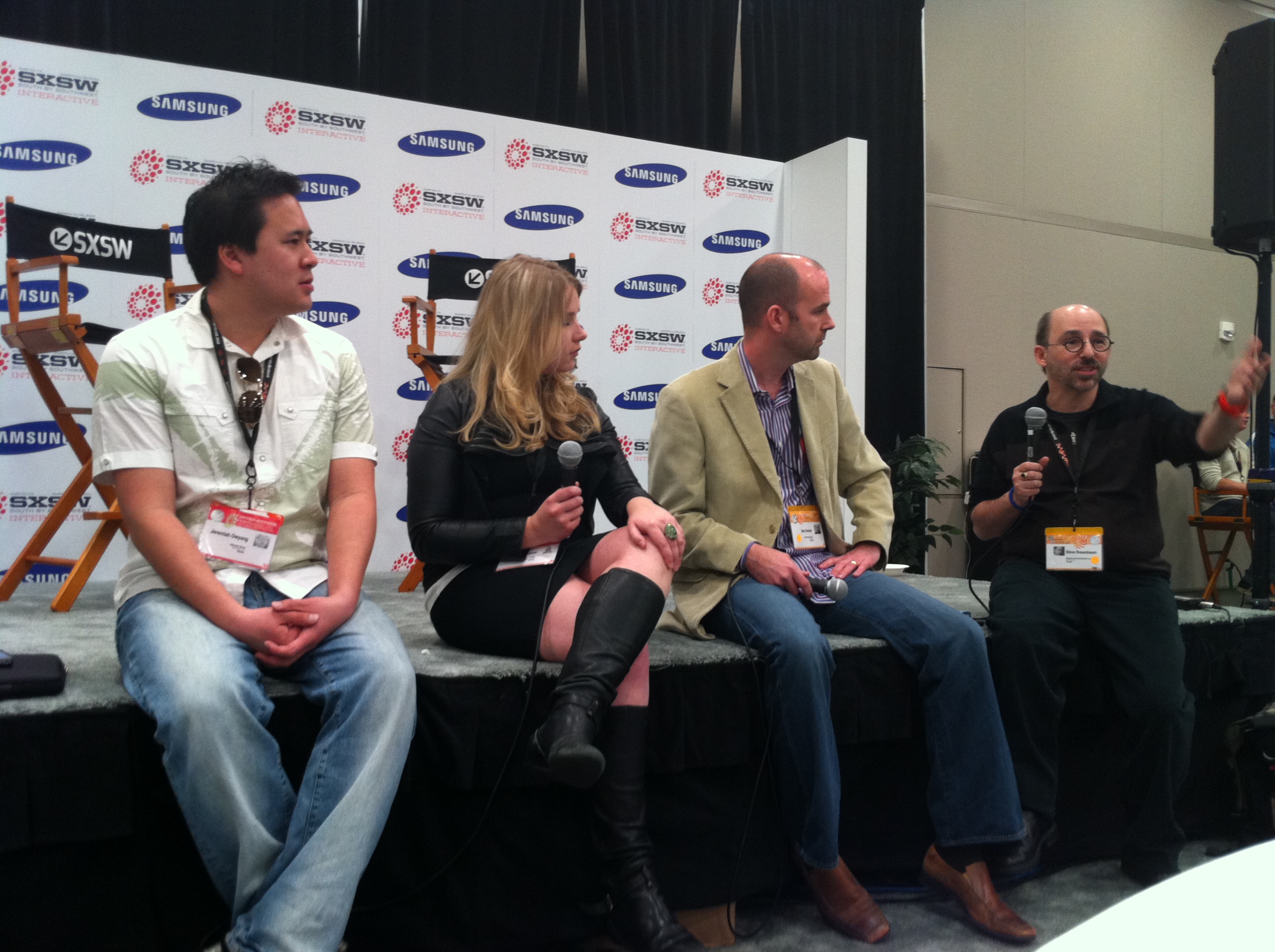
Samsung Blogger Lounge panelPanel: Jeremiah Owyang – Altimeter Group, Leslie Bradshaw – Jess3, Steve Rosenbaum, Sam Decker

One of the things I love about SXSW is serendipity.  I was a bit bummed, as I tried to go into 2 different sessions, and there were long lines at both.  I thought I’d head back to the Samsung Blogger Lounge to catch up on these blog posts.  I ended up hanging out with @redboypodcast and stumbling into this great panel discussion on content creation and curation.

One mistake sites often make is sending people off of their site to their social networks or other places to get to content.  The best thing you can do is to begin aggregating that content on your site.  You can curate content from all over the web and have people looking at it from within a context you are comfortable with and adds brand equity.

There was a bit of debate around the difference between a curator and an editor.  While nothing was decided, the thought was that a curator looks at different multi-sourced content and writers, whereas an editor pulls from a fixed group of resources.  It’s not all wonderful, as many people, especially writers see content curation and aggregation as leeching off of their content.  However, it seems to be an increasing acceptable method of getting content.


Tags

Related Posts

Share This

Banking on Big Brands/Celebs for the Web

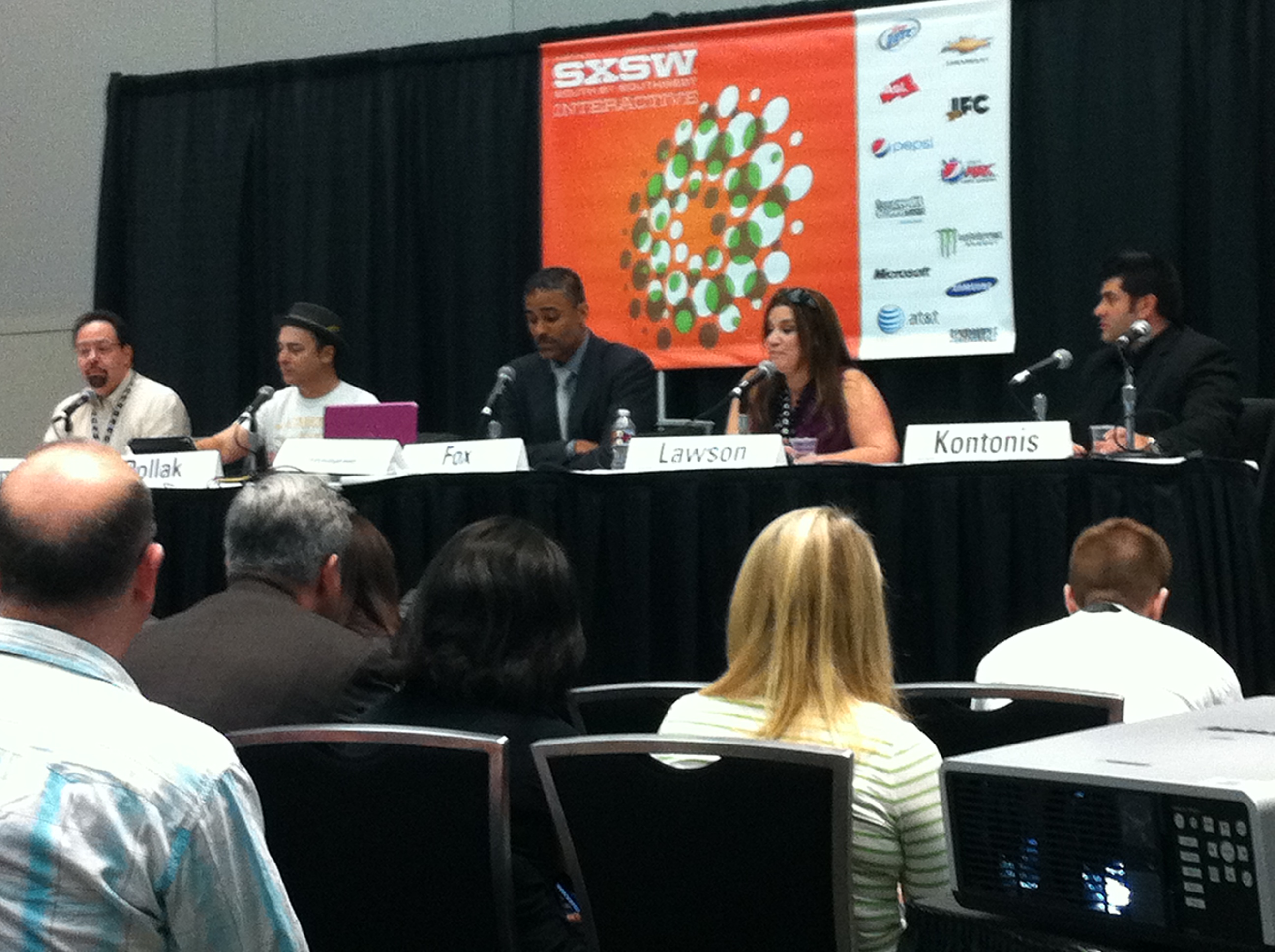
Panel: Amber J Lawson – Head of Original Programming, AOL, David Tochterman – Head of Digital Media, Innovative Artists, Rick Fox – NBA All star/Entertainer, Kevin Pollak – Actor, Paul Kontonis – Digitals
Hashtag: #sxswbigbrandsKevin Pollak and Rick Fox panel at sxsw

This panel discussed how traditional media is changing and how brands can get involved to take advantage of this shift.  In particular, two celebrities on the panel are taking slightly different approaches to this.

Actor Kevin Pollak, created Kevin Pollak’s Chat show – http://kevinpollakschatshow.com – because he said, “If you’re not creating your waiting.”  As an actor, you wait for the phone to ring for the next thing.  He felt that new media provided a tremendous opportunity to create his own content.  He used Felicia Day as another example of someone who created their own show to take their future and potential in their own hands.  He simply tries to create interesting content to draw an audience, as he said, “If you can earn an audience you can earn a living.”

Pollak gets brands involved from a very traditional perspective, through pre-roll advertising, display ads around the content, etc.  He feels that this helps big brands who may not be comfortable jumping into this area, get involved.  Therefore, they primarily use impressions as a way to sell the show to brands.

NBA all-star, and now entertainer, Rick Fox, takes a slightly different approach.  What’s important to him is telling a good story, and he looks for opportunities to integrate brands into the story.  For example, on one of his shows, you may see a basketball player having a Gatorade after a game.  It’s a bit like celebrity endorsements, but extends it by showing how the product is used and its benefits.  This takes cooperation between the celebrity/producer and the brand.

Working through partnerships like VuGuru/AOL, he can offer these product integrations, as well as non-traditional promotions.  He believes you are not only bring on a celebrity to use/endorse your product, but you’re also utilizing their Twitter followers and other social media “klout” to influence their fans.  And it’s not just the celebrities’ followers, but their personal networks.  For example, when Rick Fox was on Dancing with the Stars, he was able to get friends (Kobe Bryant and Shaq) to post messages to their followers asking for support.  This can get a little muddy when you’ve got multiple projects going on at the same time.

Debating Brands’ Role as Publishers

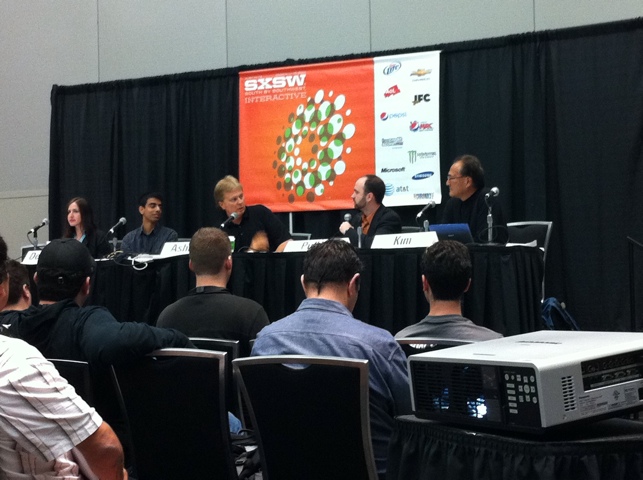
Panel: Tom Ashbrook – NPR, Lora Kolodny – TechCrunch, Pawan Deshpande – Hivefire, Gary Kim – Carrier Evolution, Joe Pulizzi – Junta42
brands as publishers sxswHashtag: #curatedebate

The purpose of journalism is to inform or educate, while the purpose of brands is to drive profitable customer action. The Internet allows for the democratization of information, but we’re also starting to see the corporatization of information.

People will make time for a good, relevant story, no matter who tells it. If brands can tell compelling, interesting stories on a regular basis, they can cut through the clutter (those 30 billion messages a day, as Shiv Singh discussed here). The more money that comes in from doing this, the more money there is to do this.

We are all media publishers, and all brands need to think of themselves as publishers.  They need to take a viewer/reader/listener centric approach that asks: What are their painpoints?  What keeps them up at night?  You have the ability to tell a story that shows how your brand can solve this issue. Content will be successful if it targets those customers painpoints. We now have the ability to communicate directly to consumers without having to go through another channel – advertising.

Even media companies are realizing a decrease in advertising and rise in “advertiser services” which essentially teach brand advertisers how to be content publishers.  One company on the panel – Hivefire – aggregates and curates content for brands on industry topics.  This allows these brands to continually publish information, and be a resource on industry topics.  Another example is P&G’s Home Made Simple.  It’s tremendously similar to Real Simple – providing nearly identical types of information, but Home Made Simple highlights their own products as examples within stories.

Brands need to make sure they are seen to be the trusted authority, and they need to be straightforward and honest about their perspective and motives.  As hard as it tries, journalism is not objective. Everyone has a perspective – and brands need to be up front about their motives.  Consumers get to decide who they pay attention to – journalists or branded content.  More importantly, social media allows for a broader application of the “Fourth Estate” among corporations, so they also need to be honest, or they’ll get called out on it.

O’Reilly/Calacanis Fireside Chat

The O’Reilly/Calacanis fireside chat today was a great session to kick-off my SXSW experience. O’Reilly covered topics from brands to discussing his knack for using pattern recognition to predict the future.

Key Takeaways:

  • Great brands have a core; they mean something. Brands belong to anyone who uses it.  Create a barrier to entry. Create an identity.
  • Hardware used to be the source of value. Microsoft realized the value in software and then open source commoditized it. Value has now moved to user contribution.
  • If there was a “Web 3.0”, it would not be user data but sensor data; whatever harnesses collective intelligence.
  • Chase the idea. Innovation requires fun. “They don’t think it will make them rich, they think it’s fun”

O’Reilly also discussed Government and shared an analogy regarding government as a vending machine. We put money in (taxes) and expect it to spit out something (services). We shake the machine when we don’t get what we want. O’Reilly proposes that government needs to act like a platform. He called Reagan the founder of Foursquare. The government undertook the difficult development of GPS and opened it up for commerce.

Will it Blend?

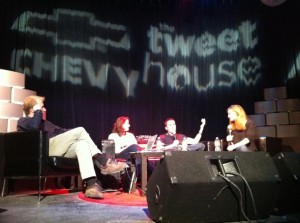
A bonus that was not on the agenda at the Tweet House today was the addition of Blendtec’s Tom Dickson.  He spoke a bit about how they started and got to be as successful as they’ve been with their “Will it Blend?” series on YouTube.  Here’s a brief video of his presentation.


As a BONUS, I received a DVD of 50 Will it Blend videos as well as a behind the scenes video of how they make it.  I’m giving it away to one blog reader.  As usual if you comment on this post, I’ll select one commenter to give the DVD to.  Please make sure to include your email address when commenting.

Tags

Related Posts

Share This

Free Square Device

squareIf you’ve not heard of Square, it’s a device that allows anyone with a phone to accept a credit card payment. You plug it into your phone, start the app, put in the amount, and run the card. You can even have the person sign their name on your touchscreen. At the Chevy Tweet House, they were giving a ton of them away. I grabbed 5 for readers of this blog. The first 5 people to comment on this post will get the free Square devices.

Handheld Media Revolution: Insights on Tablet Development

Speakers: Evan DollCo-founder, Flipboard, William “Whurley” HurleyCo-Founder & Chief Technology Officer, Chaotic Moon Studios, Oren JacobCTO at Pixar, Executive Producer for Ready, Set, Bag., Moderator: Jason Preston

I was extremely impressed with the panel, which included the founder of Flipboard, a hot iPad app for aggregating social info, the CTO of Pixar and producer for the movie Ready, Set, Bag, and the CTO of an app development company. They discussed the challenges and insights they’ve gained in developing for tablet, including the iPad.

The most important, and unanimous, point made was considering the user experience when developing. Mobile/handhelds/tables are all about context – how are you using it? How are they going to access it? What situation is it in? People are frantic with their phones, you don’t see that with tablets, it’s a more deliberate use.

There’s a growing number of places to put this content, but the predominant feeling of the panel was that Apple may be the best choice to develop for. The feeling was that Apple has a large user base, they support their platform – ensuring quality, and help you monetize it. When it comes to monetization, the feeling was that the mobile environment is easier to monetize than the web because with mobile, you’re in the moment – more than likely, you’re at the point of purchase. At least the context is often much better than the web.

One frustration of the panelists was the common belief that you could design apps once and then port them over to different devices.  You need ton consider the context of each device, as well as the capabilities/advantages/disadvantages of each.  In fact, the one panelist – the Chief Technology Officer of Pixar had hired Chaotic Moon Studios to do his iPad app.  Despite his great knowledge of technology and design, he knew that he didn’t know best practices for the iPad.  So that’s why he hired these developers to do it for him.

Finally, if you’re going to enter into developing apps, know that it’s not a once and done thing.  Despite the fact that most apps aren’t very successful, if it is successful, you had better prepare to support it and change it as devices change and evolve.  One panelist compared it to Flash – when it came out, it was cool and everyone wanted it.  After a while, you had a bunch of old flash websites that never changed because they invested a lot of money initially into something that was cool.

Giveaways

As you’ve already seen, I’ve gotten a couple extra Delivering Happiness Books, as well as a couple copies of Eyeballs Out that I’m giving away here on the blog.  I’ve gotten a few more things here that I’m planning on giving away to readers of the blog.  Keep an eye out for a few more things to come!

Innovations in Community Building: The Latest in Social Marketing

Speakers: Mary HenigeDirector, Social Media & Digital Communications at GMErika Brookes – Vice President, Marketing for VitruePaull Young – Director of Digital Engagement and Fundraising, charity: water, Moderator: Steve Broback

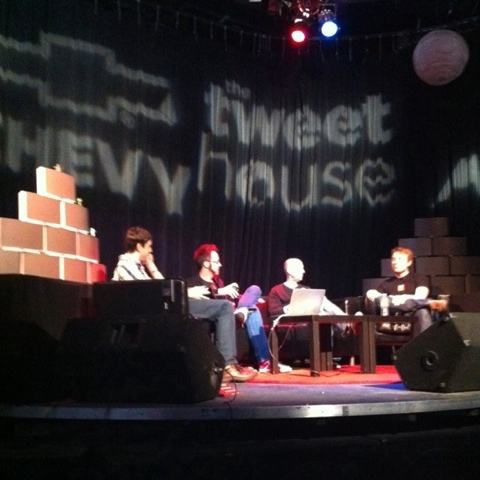
I decided to spend the afternoon at the Tweet House, an intimate setting with some pretty good panels on social media.  This panel included folks from GM, charity: water, and Vitrue.  The discussion really covered managing communities and managing relationships and brands in the social media space.

All panelists agreed that one of the strengths of social media is the ability to tell an interesting story.  It gives brands a platform for storytelling.  In particular, Mary Henige from GM discussed how they’ve tried to use social media to humanize their brand.

“You can hate a brand, but it’s hard to truly hate a person if you get to know them.  You have to humanize your brand, and this provides a great venue to do that,” said Henige.  They’ve created a site called the Faces of GM – http://www.facesofgm.com – where they’re telling interesting stories and giving a behind the scenes look at the brand.

Getting people with passion for creating content is key, as Ericka Brookes from Vitrue illustrated.  While they have a blog owner, they’ve tried to get anyone who wants to participate involved – someone from engineering, marketing, etc.  People who are passionate about it will create content and will express their passion in their messages.

Of course any discussion of social media these days comes around to ROI and whether or not you’re being effective in this space.  As Henige said, “you can’t always measure ROI directly.  Sometimes you do something because it’s the right thing to do.”  Being in social media and interacting with customers is a relationship building activity and relationships can’t always be measured quantitatively.   However, all of the panelists agreed that you need to measure what you’re doing and estimate the impact it’s having.  One brand uses a customer happiness index which compiles interactions, mentions, and sentiment.  Whatever you choose to measure, you have to look at it as an indicator, not a direct measurement.

Henige also mentioned that there’s a tendency in the industry to focus to much on those who don’t like us, instead of spending time on/with brand advocates.  During the auto show, GM met with fans and interacted with them, giving a few of them a behind the scenes tour.  They’ve found them to be tremendous brand advocates, even helping other customers themselves in the social media space.

Charity Water had a kid who asked friends not to give him a 17th birthday gift, and instead donate$17 to charity water on his behalf.  He did it on his own and raised $50k in a couple days.  Paull Young from charity: water said that when he started they tried to focus on the 50% of site visitors who hadn’t donated.  He found it to be unsuccessful, so he has turned his focus on the 50% who do donate.  He’s found it to be much more successful.  Similarly, one of the most successful campaigns Brookes said she has seen was the release of Katy Perry’s new album.  Facebook fans were given a preview before anyone else, and these fans shared the content and had the feeling of being rewarded for their loyalty to Perry.

Meeting with Josh Bernoff

Josh BernoffAfter getting a chance to see Josh Bernoff from Forrester speak at the Social Business Summit yesterday, we got a chance to sit down with him this morning to dig a little deeper into a few topics.  It was really a special opportunity to pick his brain about social media applications and organizational structures to deal with empowered consumers.  He shared some great insights and advice regarding the use of Facebook and organizing to be able to respond in real-time to consumers.

I was really interested in what could be done to collaborate in an environment which might be fractured into various silos with slightly overlapping responsibilities. We discussed the need to bring these groups together on a very regular basis to have discussions regarding monitoring, strategies, and execution. He brought forward a case study from Dell, mentioning how they bring together all of their social media folks for a weekly phone call to discuss these issues. Further, he mentioned the importance of challenging each other on these topics as well – making sure strategies are in place and metrics are being monitored. All areas need to be aware of what each other are seeing and doing in order to most effectively execute in this space.

Unfortunately, and understandably, he wasn’t very excited for me to video record parts of our meeting, but thanks again to Josh for taking the time out of his busy schedule to talk with us!

Delivering Happiness

Presenters: Tony Hsieh, CEO of Zappos.com

tony Hsieh Delivering HappinessZappos focus is on the customer experience, to an almost fanatical extent.  In pursuit of customer service, they’ve coined the term, “Delivering Happiness” to describe their mission.  Much like he describes in his book of the same name, Hsieh talked about how they focus on culture.  It’s their #1 priority, and he feels that if they can create the right culture and focus on customers, the results will follow.

Hsieh has done a lot of research in his own pursuit of happiness, and outlined a framework for happiness.  It requires these elements:

  1. Perceived control
  2. Perceived progress
  3. Connectedness
  4. Vision/meaning (being part of something bigger)

They use these concepts to select the right employees and focus on growing them from a job to a career, to eventually making it a calling.  Additionally, there are 3 types of happiness

  1. Pleasure – chasing the next high (Rock star)
  2. Engagement – time flies – flow
  3. Meaning/higher purpose – being part of something bigger than yourself

Therefore, in order to build a great business, Hsieh focused on ensuring the culture provided employees with pleasure, passion, and purpose.  They hire for the culture and won’t hire someone who is great if they don’t fit in.  Many have heard of their $2000 offer, where they offer new employees a bonus for leaving the company after training if they don’t feel they are a fit.  Things like connecting employees with twitter have helped improve all of those areas, as well as a sense of connectedness.  Ultimately, the culture is about commitable core values.  It’s not just “a meaningless plaque on the wall,” it’s about being willing to hire and fire based on those values.  In fact, if you Google any one of Zappos core values, their site will appear #1 in the rankings.

Most of the presentation covered things he talked about in his book, Delivering Happiness.  At the end of the talk, Hsieh gave everyone a copy of his book.  Since I’ve already read the book  I’m giving away a copy of Delivering Happiness to 2 blog readers.  Simply click on the comments above and send us a note (be sure to include your email address), and we’ll select 2 winners to receive a copy of the book!

Also, don’t forget about my other book giveaway from the iMedia Brand Summit.


Leadership in a Socially Calibrated Business

Presenter: Lee Bryant, Headshift

Social media is a new world, especially for corporate executives.  Bryant started by dispelling a few myths about leadership as it applies to social media within the business world.

Myth 1. Flat structures don’t need leaders
In fact, social business opens up new opportunities for traditional leadership strengths.  Those who have strengths in communication, strategy, planning, engaging people will naturally rise to the top.

Myth 2. Distributed leadership is based on distributing process, not passion
Passion works better than process control, such as Zappos – if they don’t see a connected purpose, they’re not going to do well.  Common purpose is more important than strategic planning.  He used an example of a military exercise in which the defense had no plan, but was able to pull off a victory repeatedly.  A famous quote – “If you want to build a ship, don’t drum up the men to gather wood, divide the work and give orders… instead teach them to yearn for the vast and endless sea.”

The question is how can we actually do this and make it repeatable.  And what to do if you don’t have exceptional leaders?  What does social business have to offer?

Connected systems and social networks allow for intimacy & presence at scale.  In the past, good leaders “walked the floor” and had a physical presence with their employees.  Social networks now allow you to virtually walk the floor as a leader.  Social media also encourages personal quests and re-invention on the edges of the organization.  Essentially it helps like-minded folks organize, encourage each other, and share information.  Leaders should open the taps on internal social media to create feeds and flows of data.  Sharing of information internally improves performance and reduces friction.

Smart leaders don’t limit employees access to, or ability to hold conversations.  Real leaders thrive in open culture with feedback.  Typically they thrive on being challenged to solve problems and improve situations.  It takes moving beyond carrot and stick thinking to connect with peoples’ intrinsic motivation and sense of purpose – and then enabling them network.  You must provide them with the tools to do so.

Harness the power of open data to evolve.  Data gives you feedback, and you can use to adjust what you’re doing based on the needs of the customer (or employees).  A social business strategy and infrastructure create the conditions for buisnesses to evolve and succeed.

Ecosystems + passion + active listening = transformation